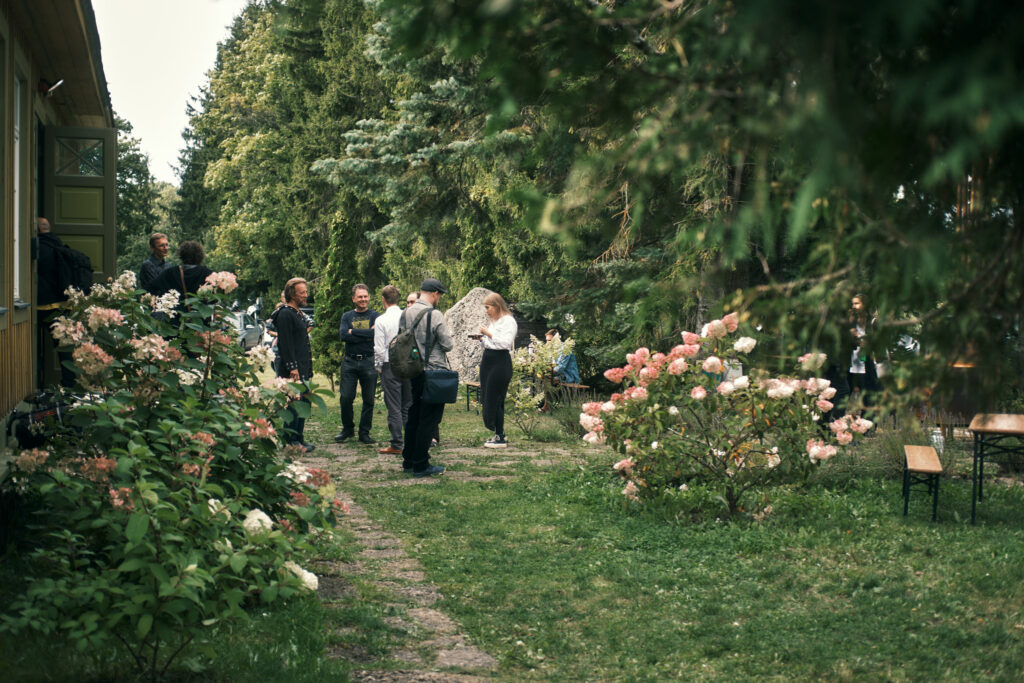
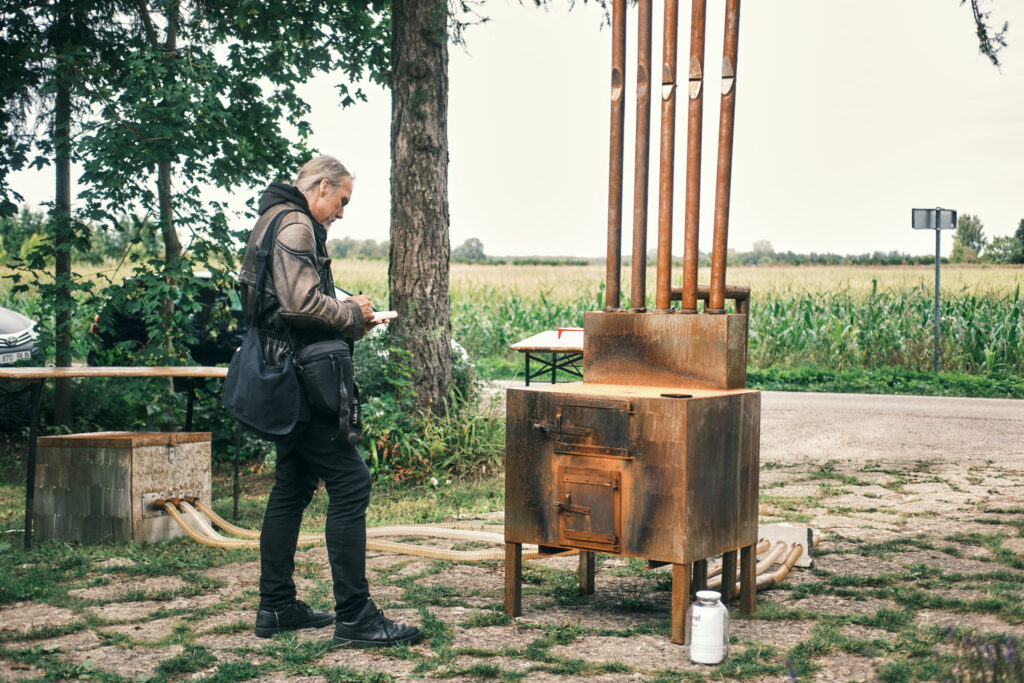
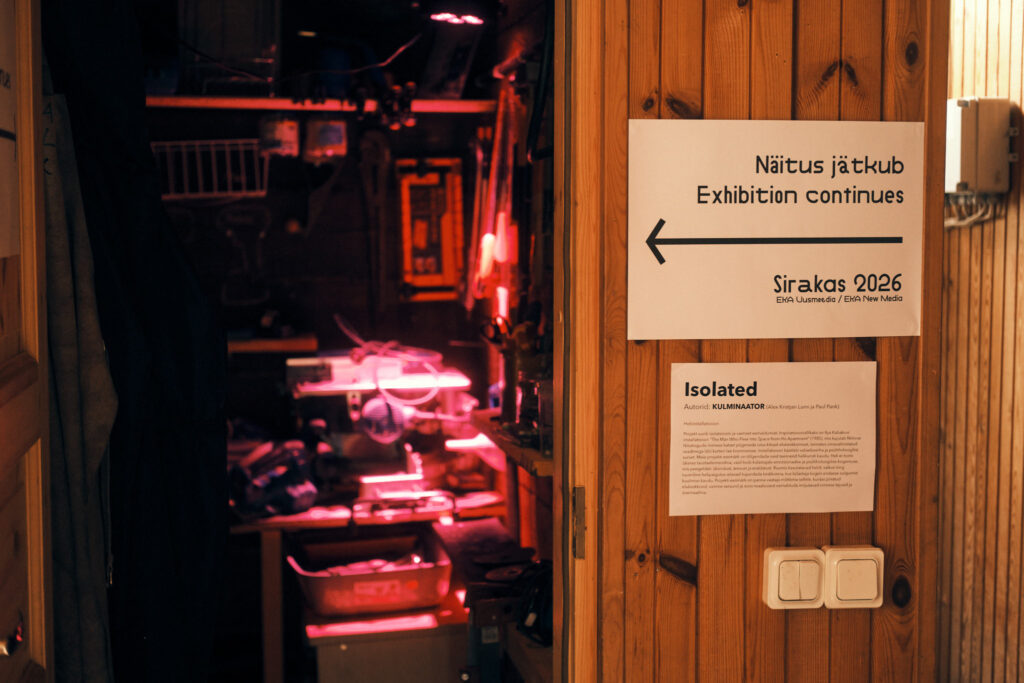
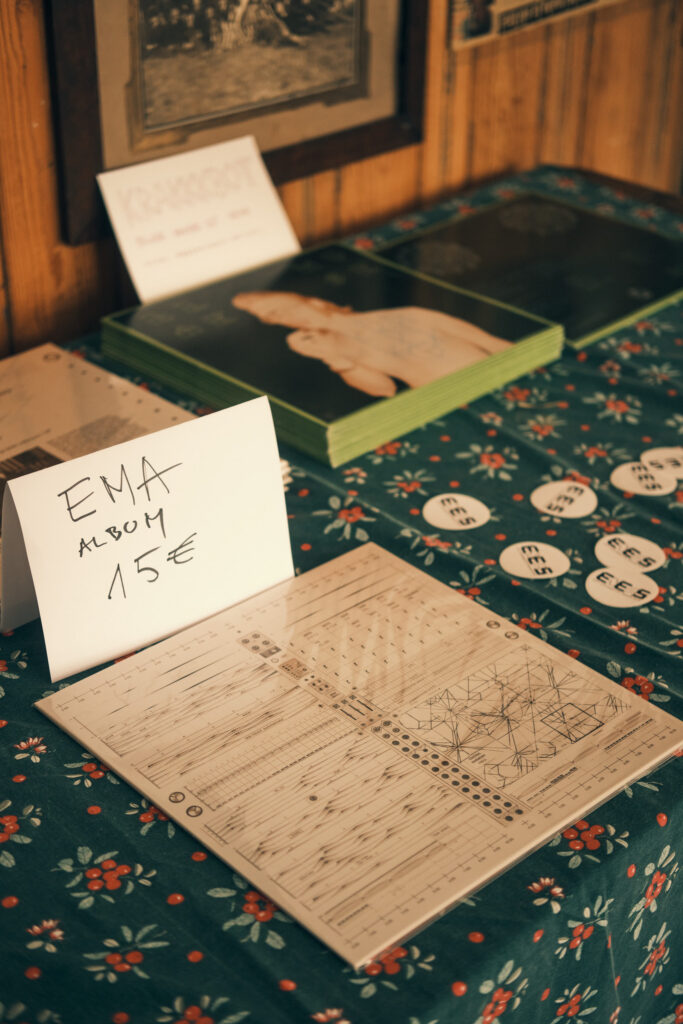
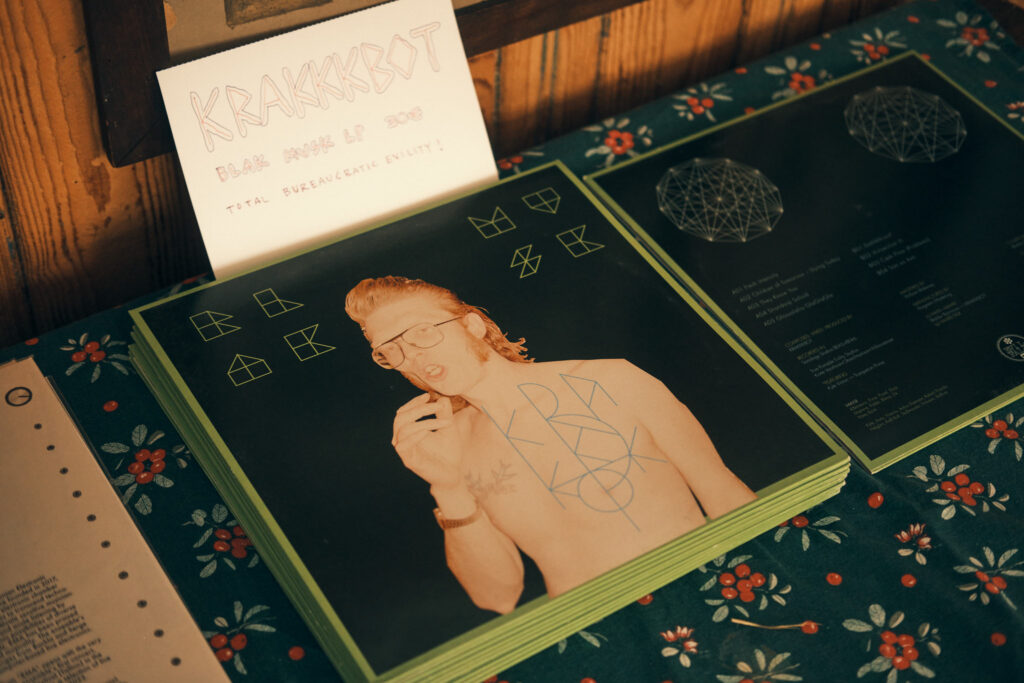
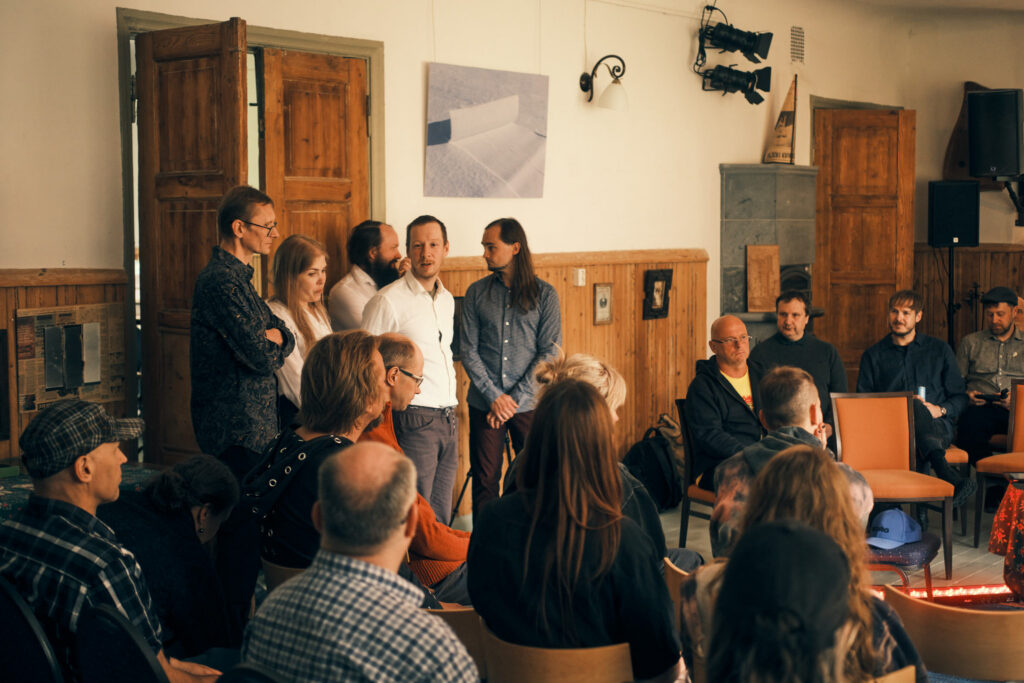
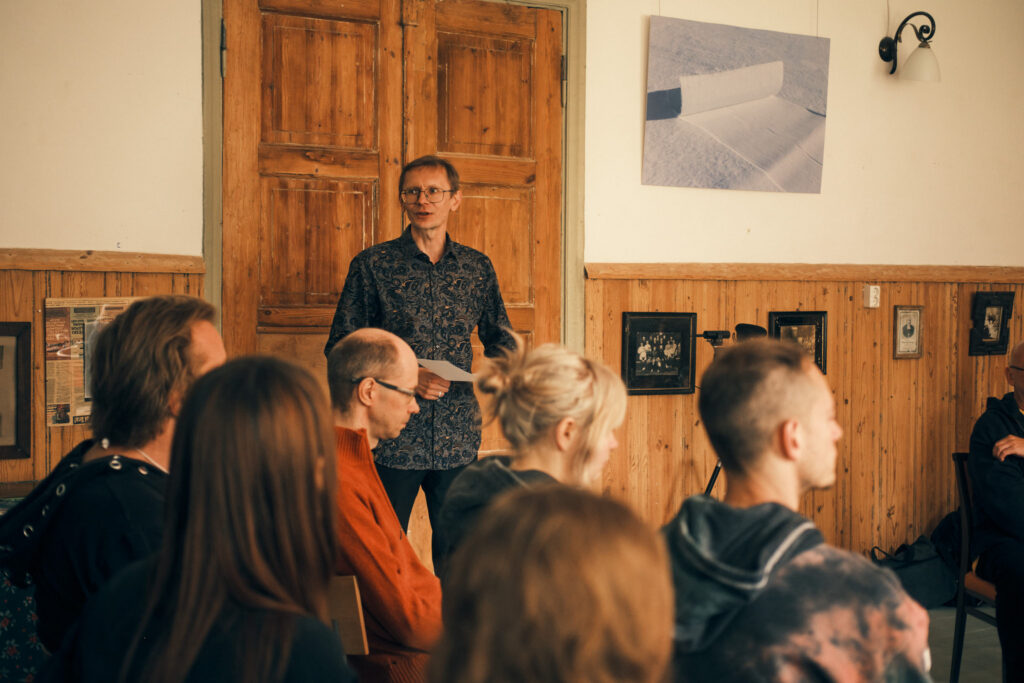
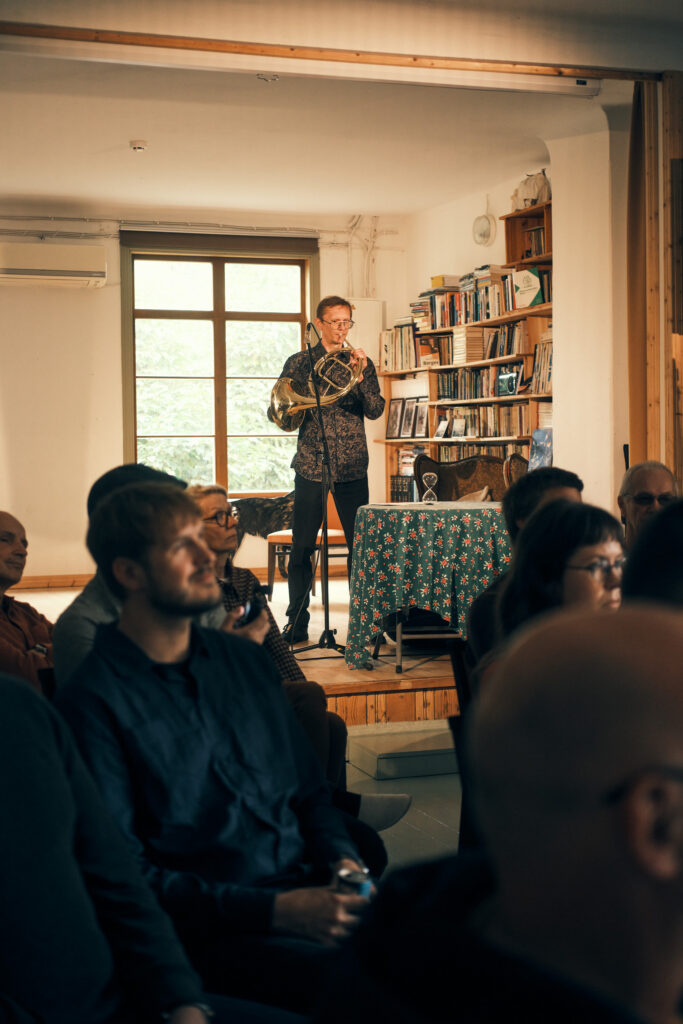
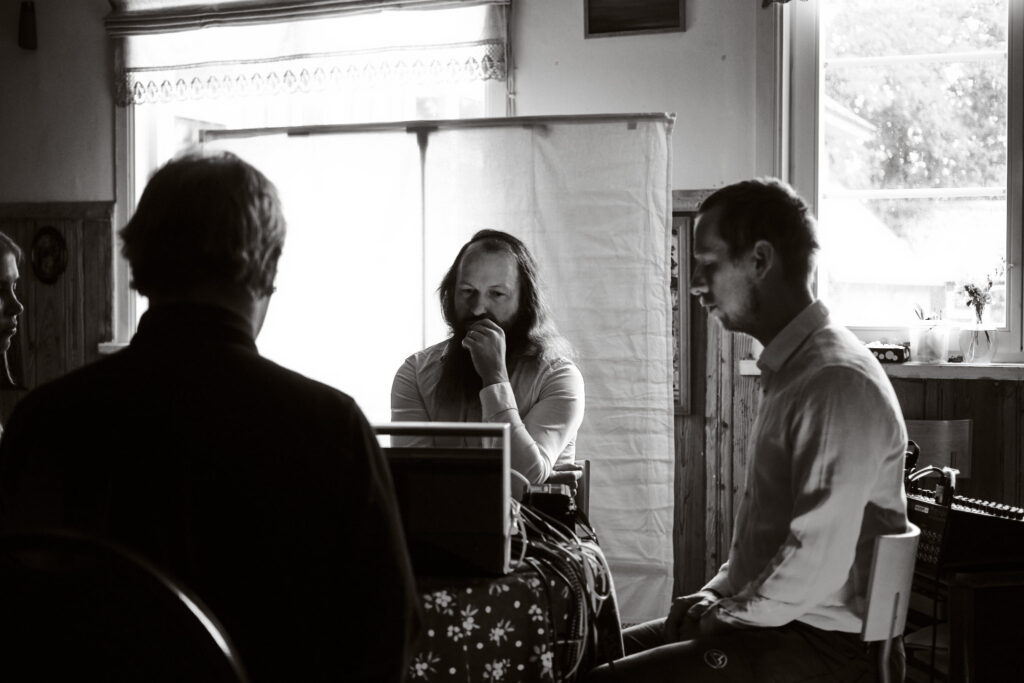
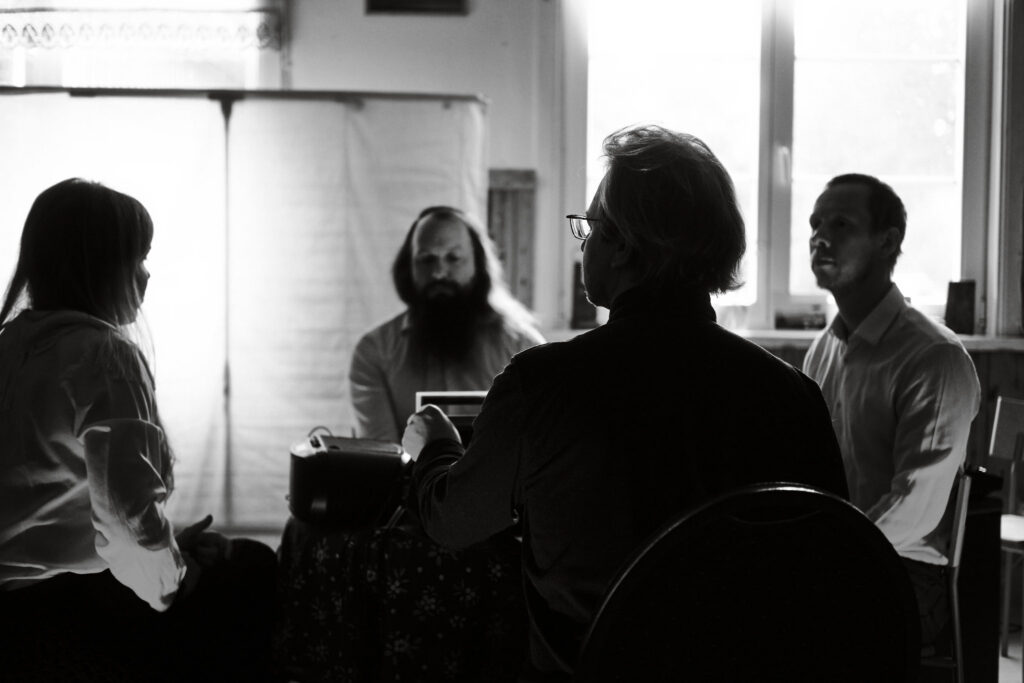
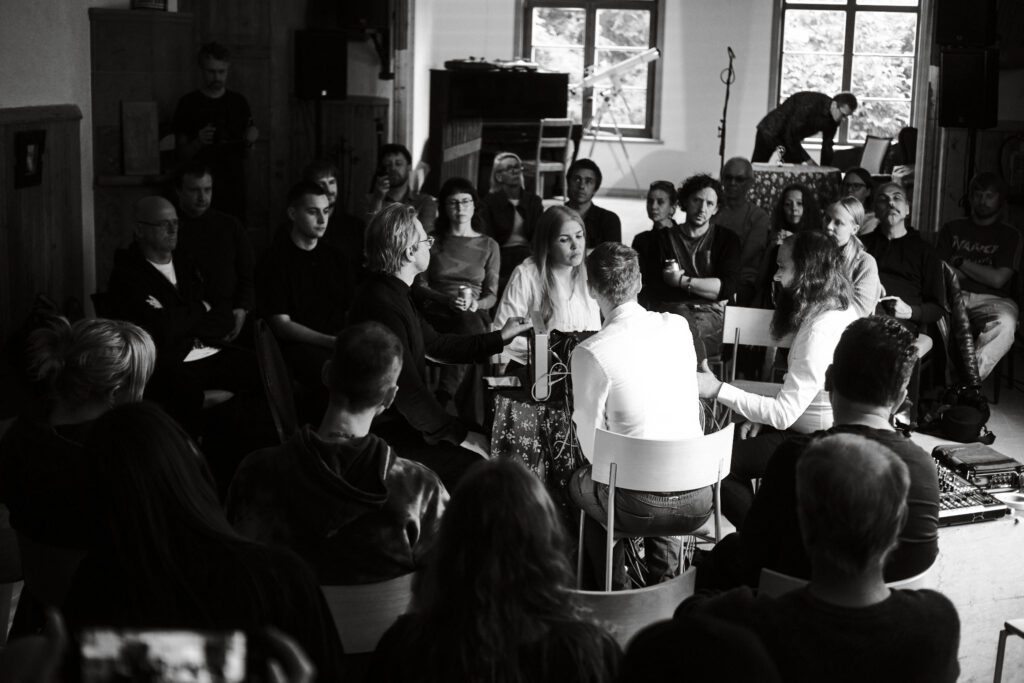
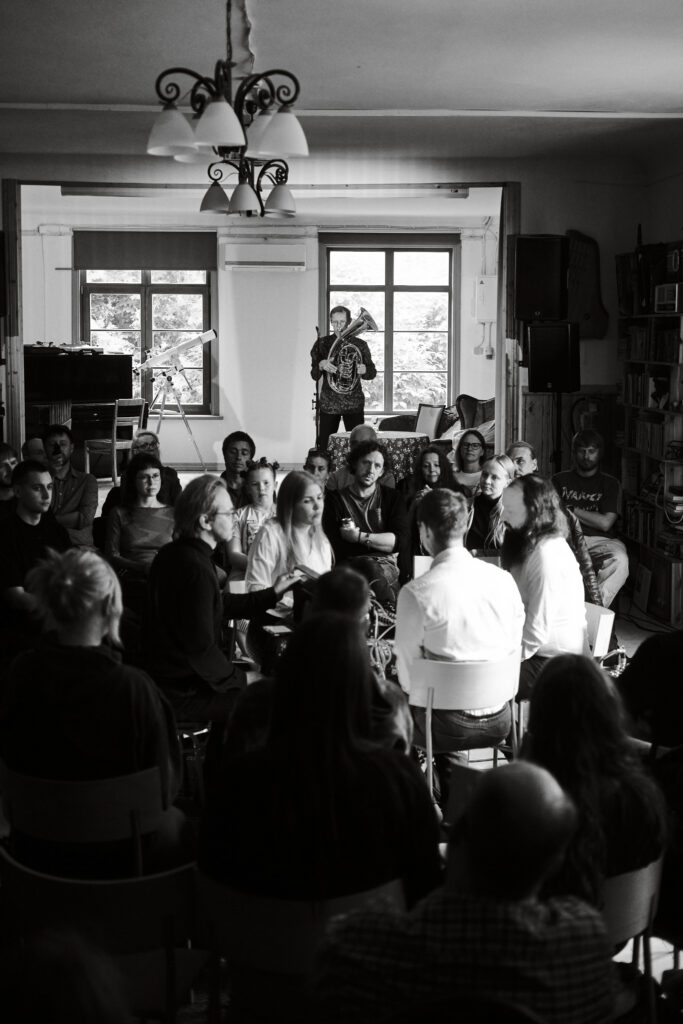
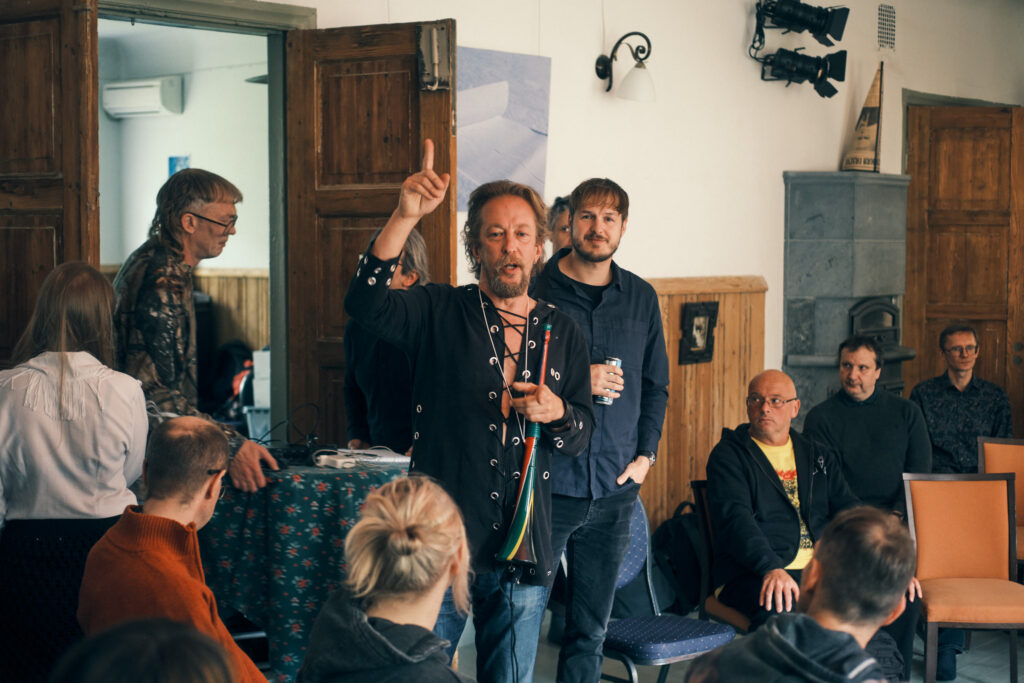
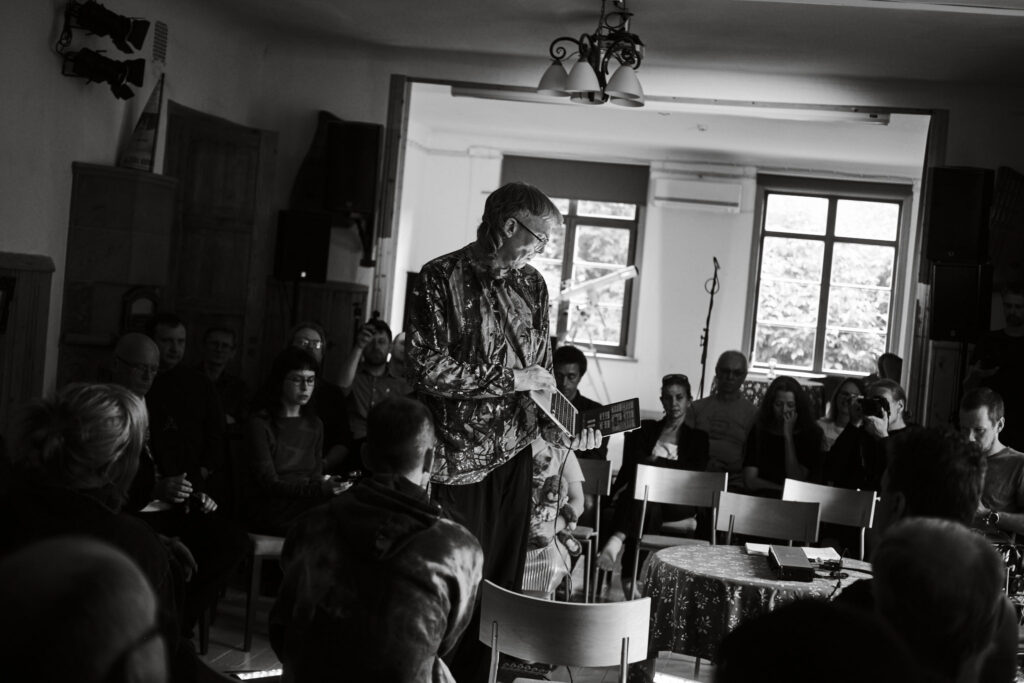
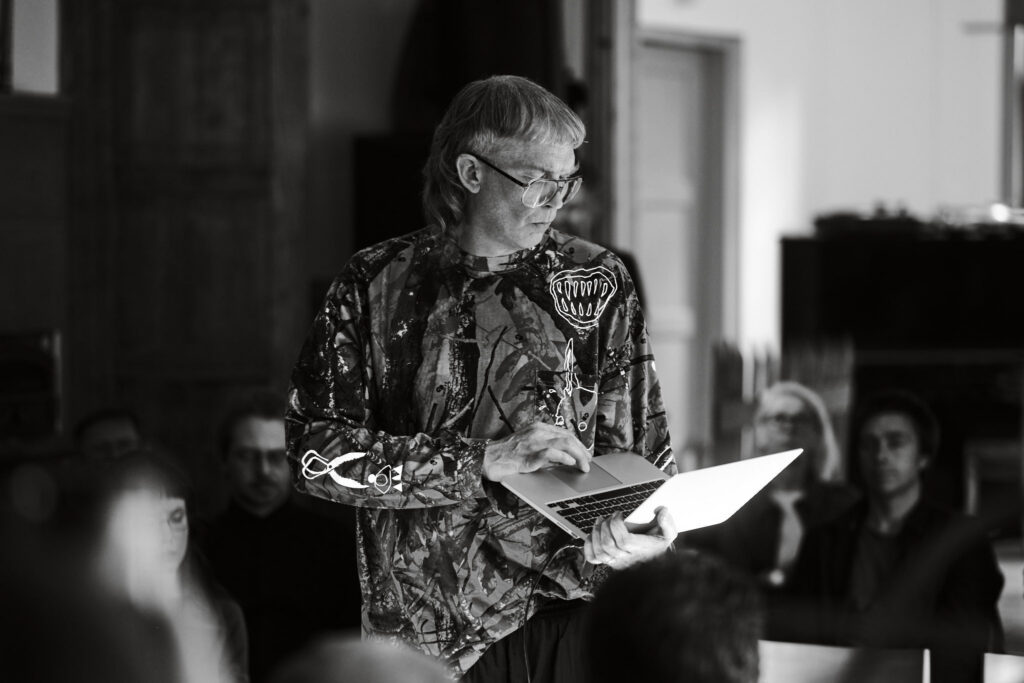
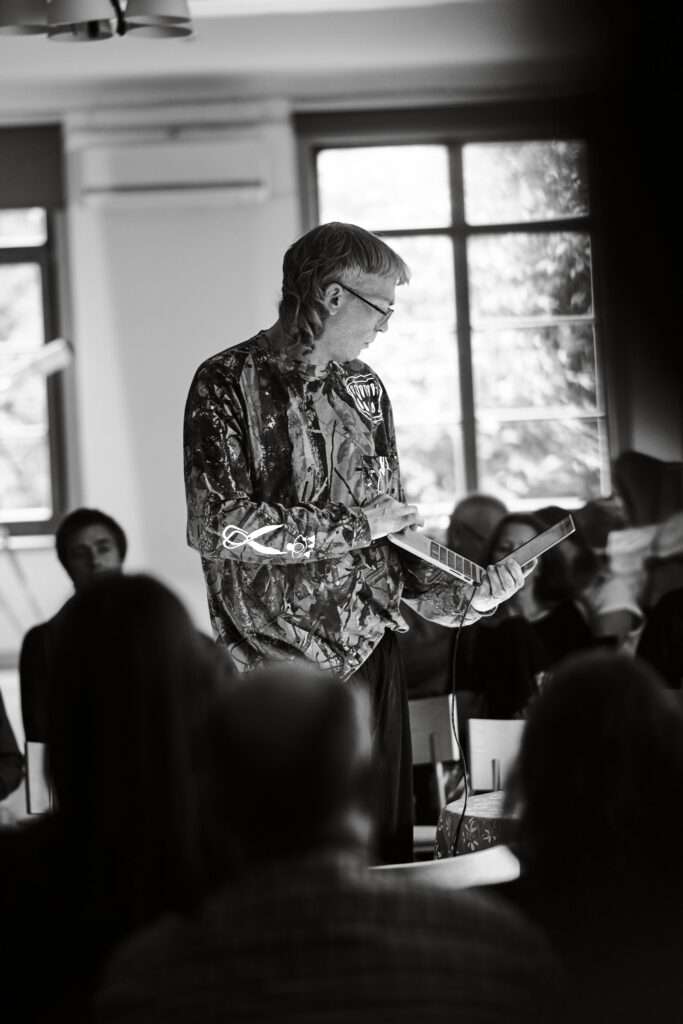
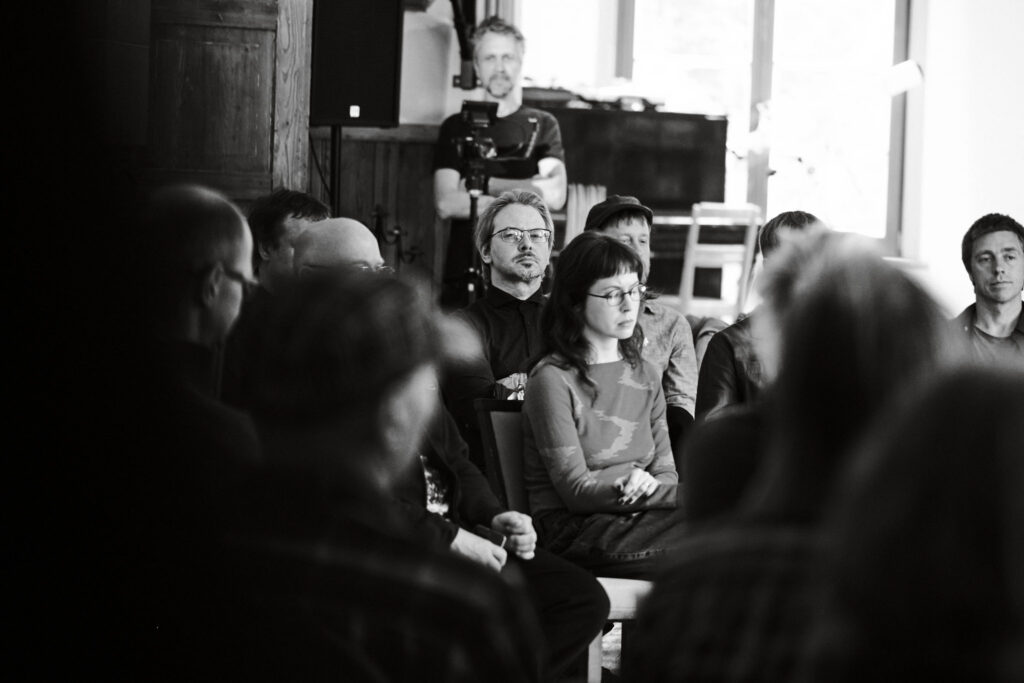
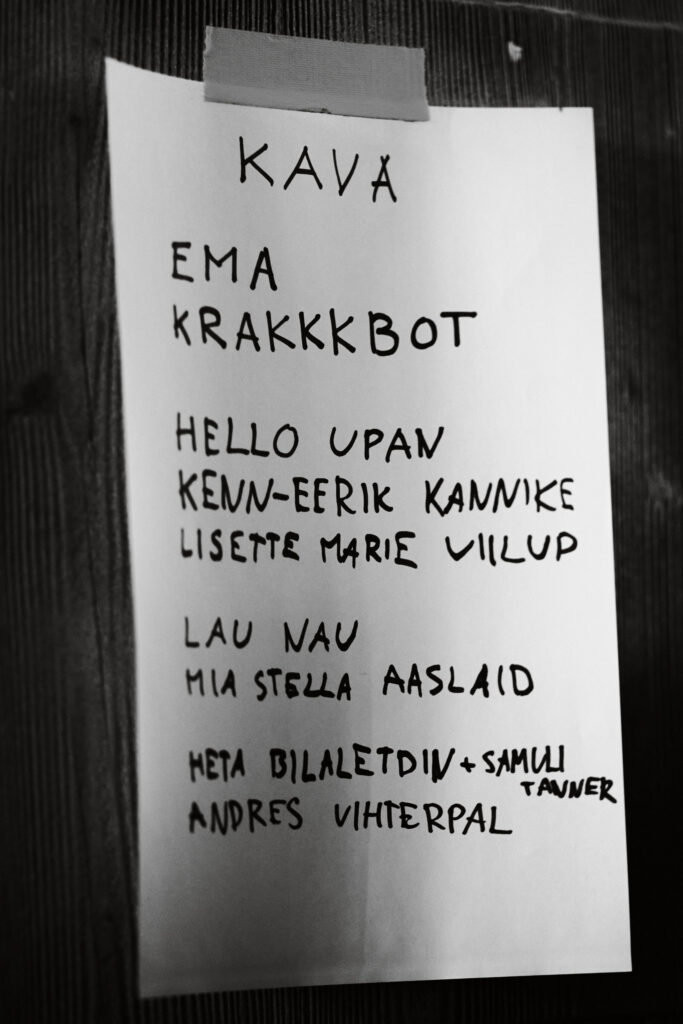
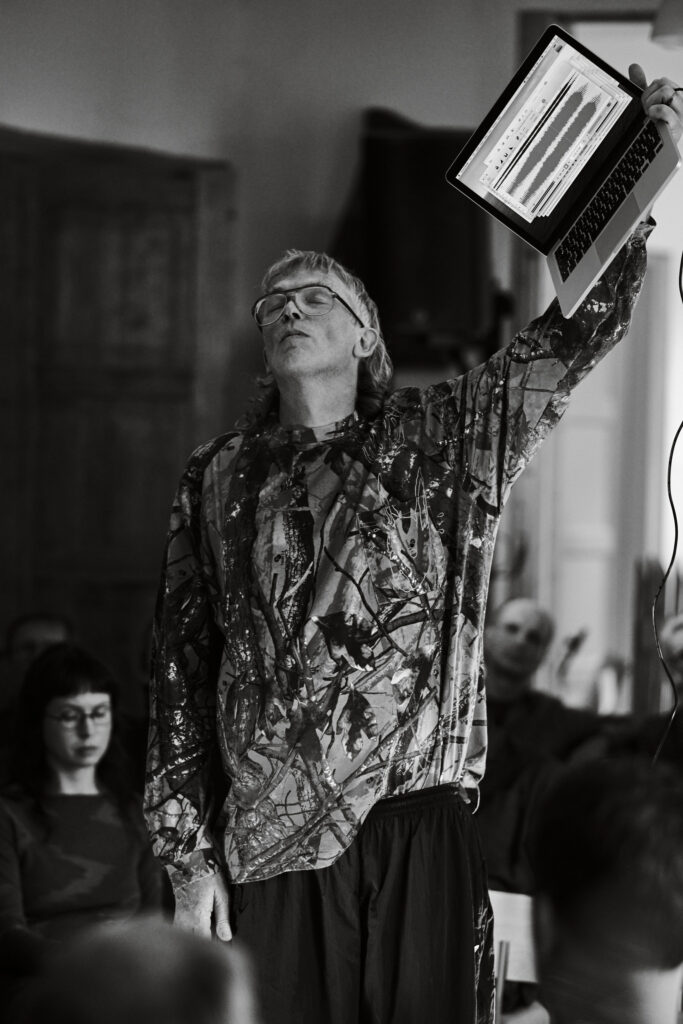
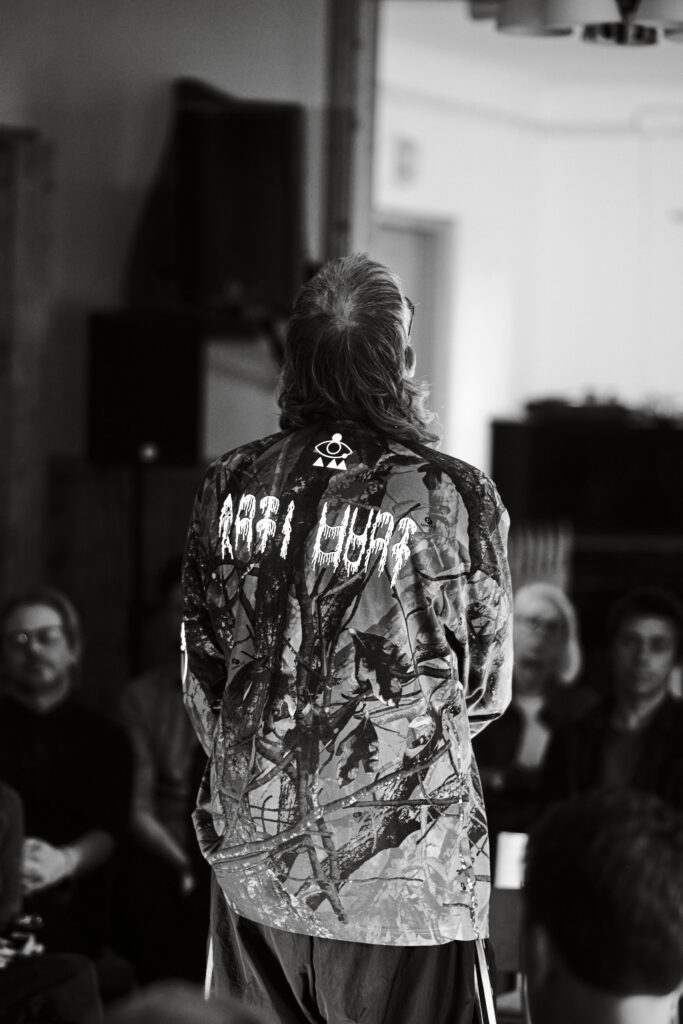
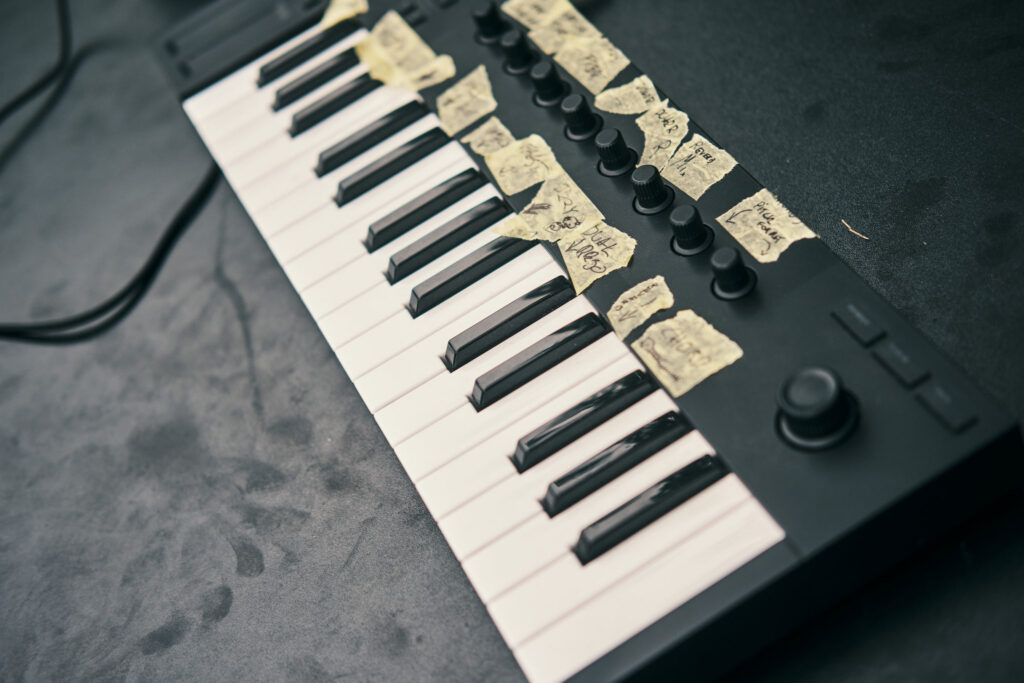
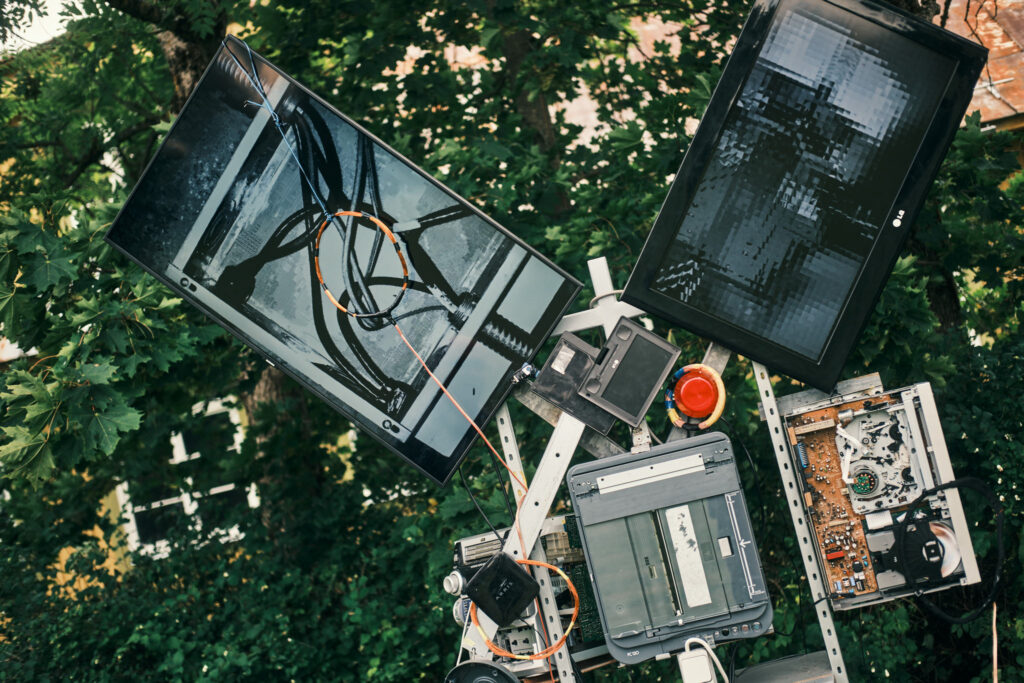
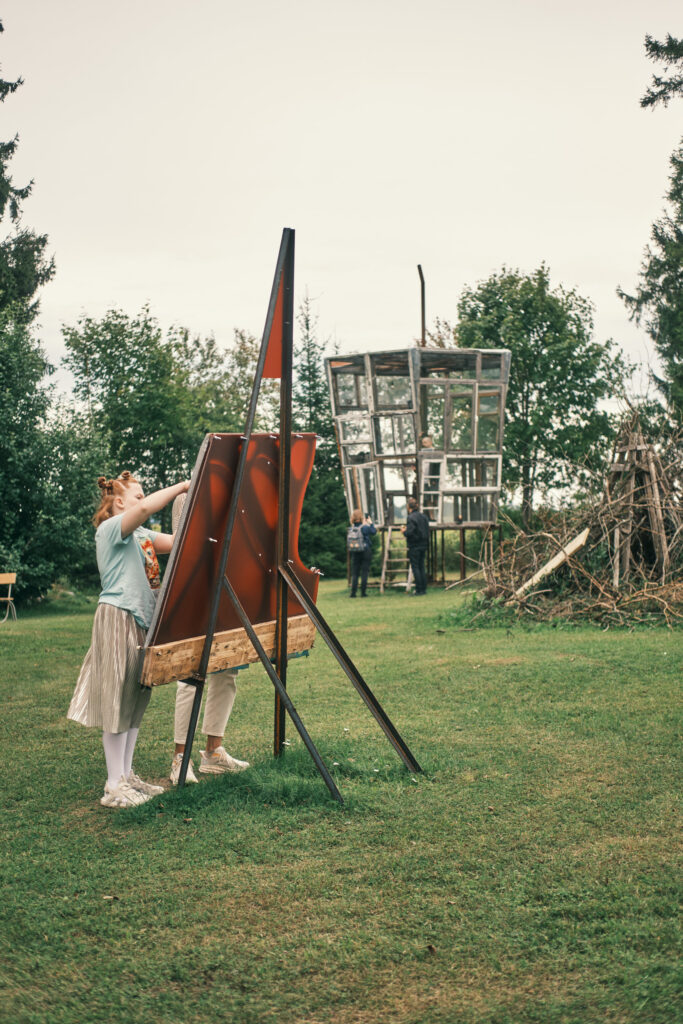
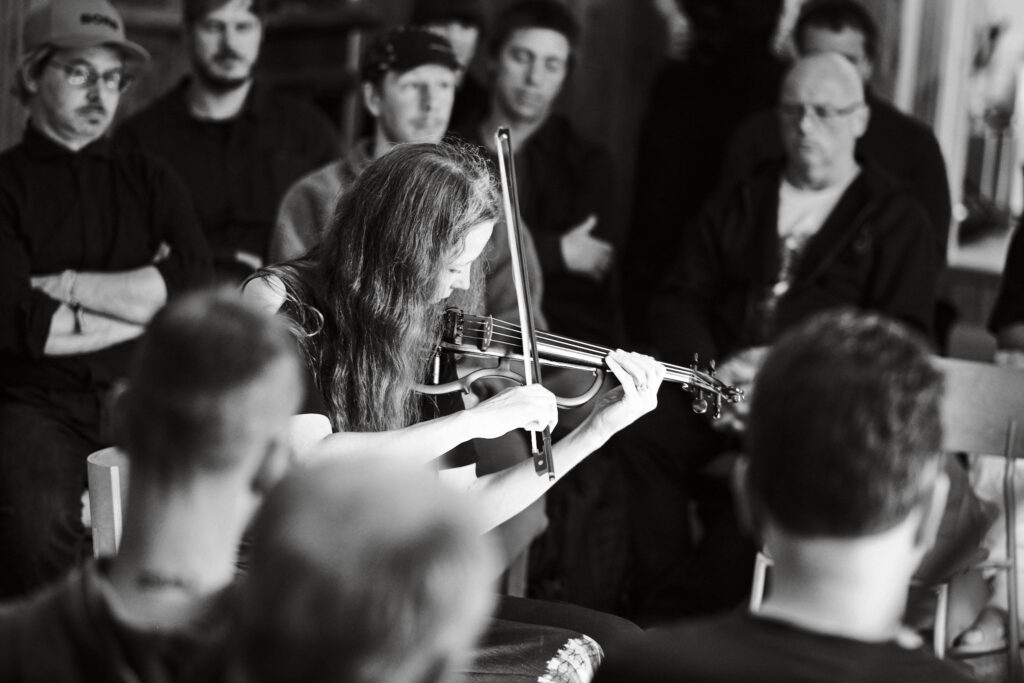
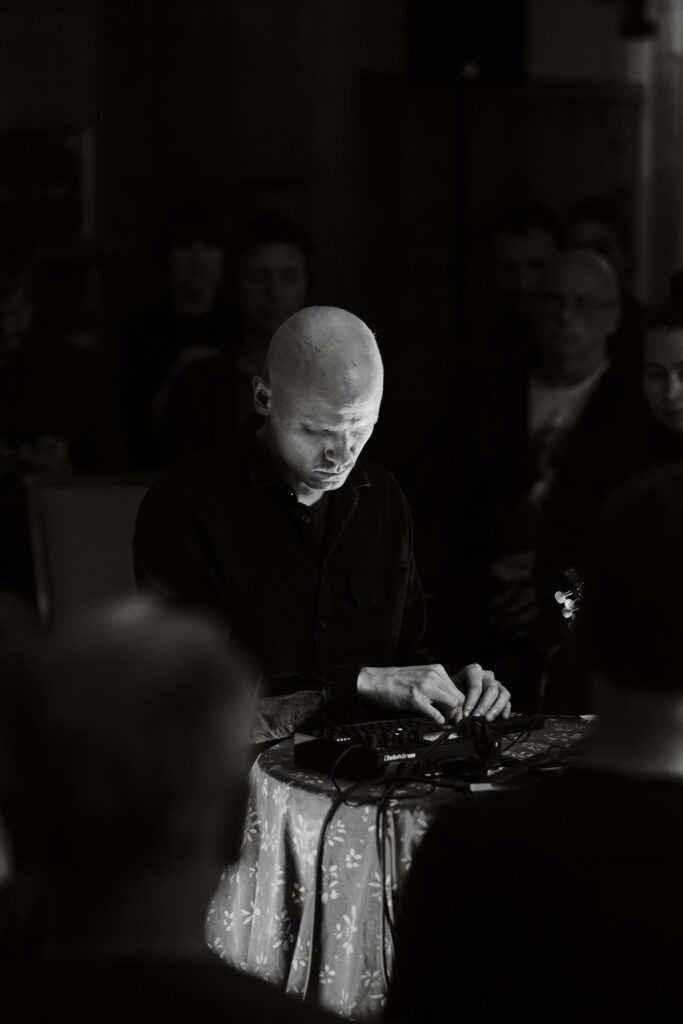
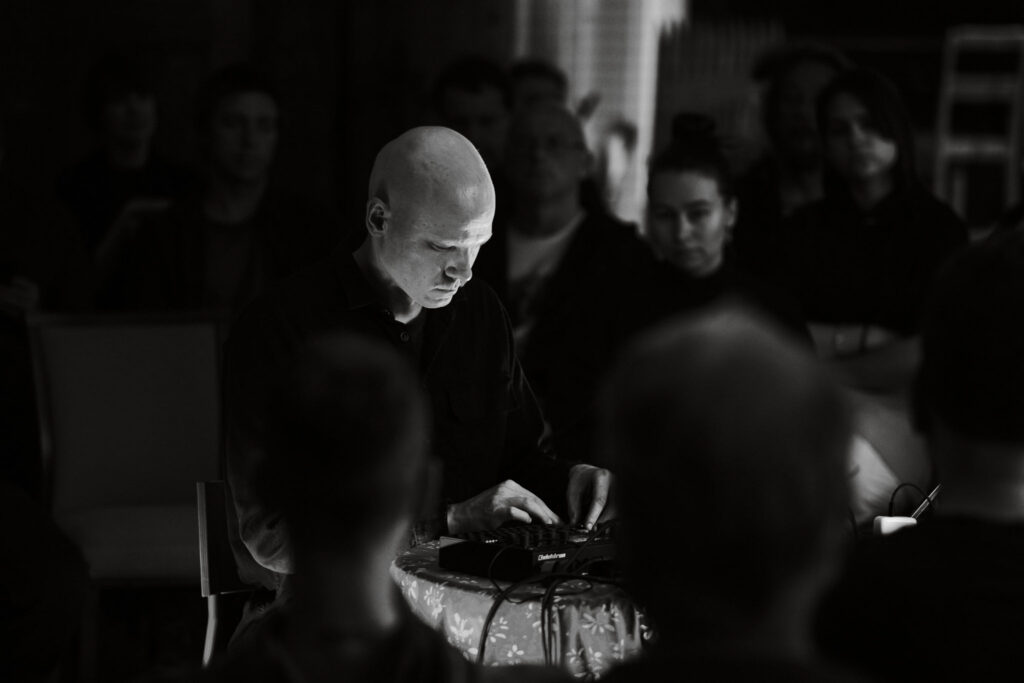
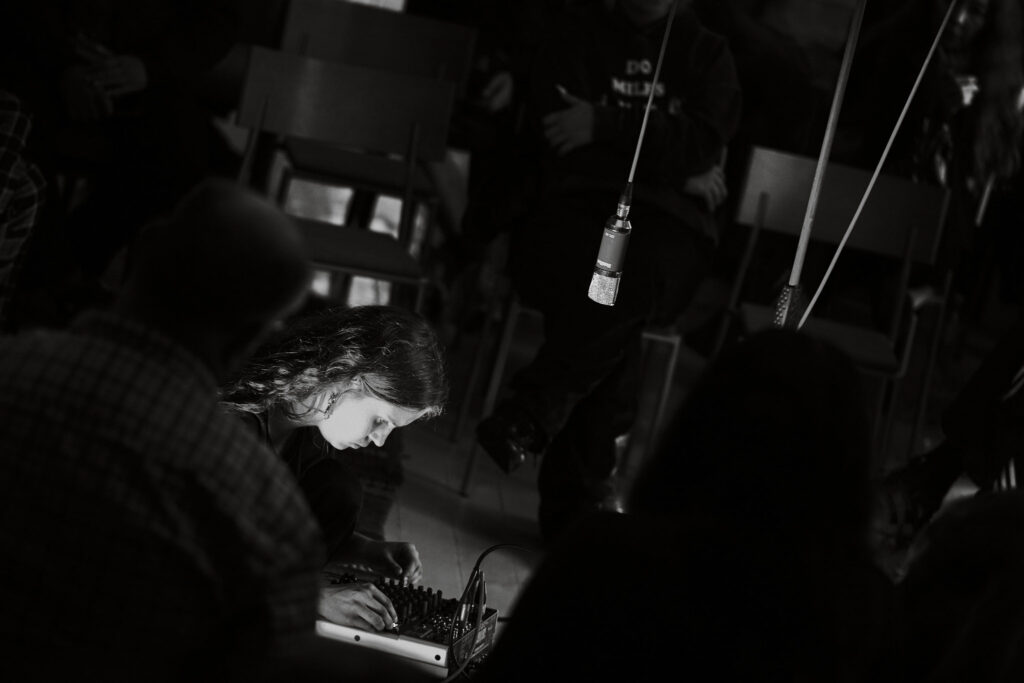
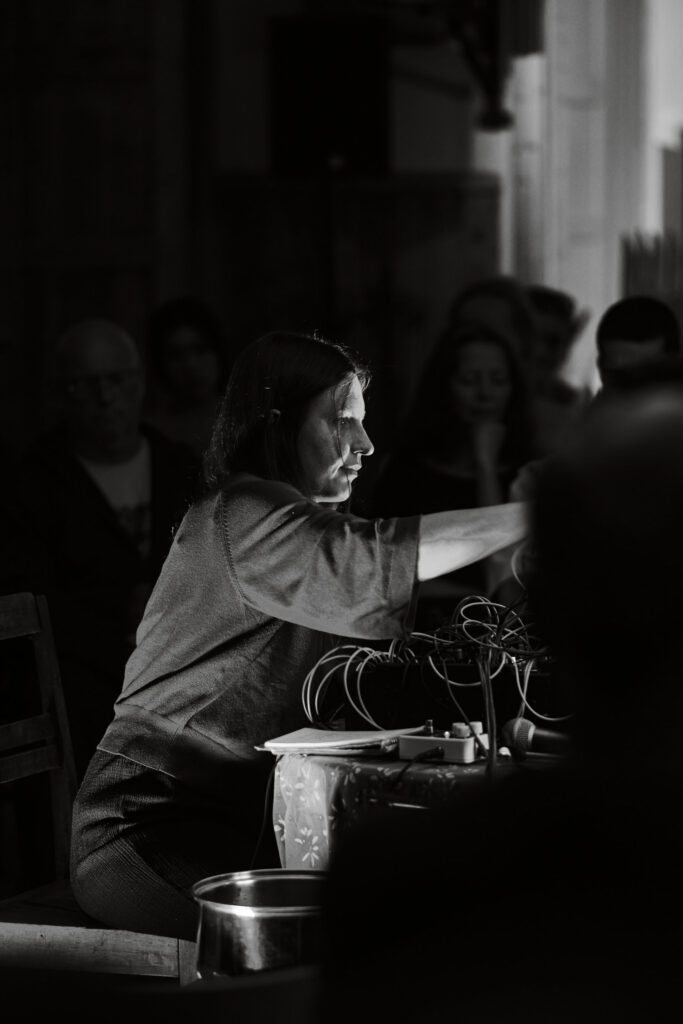
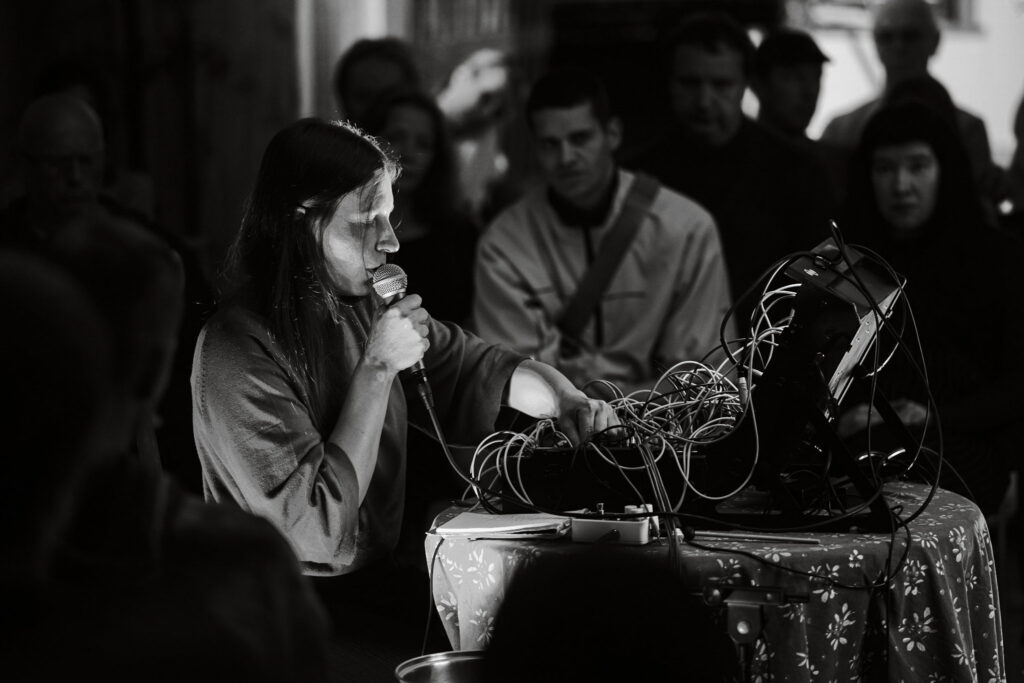
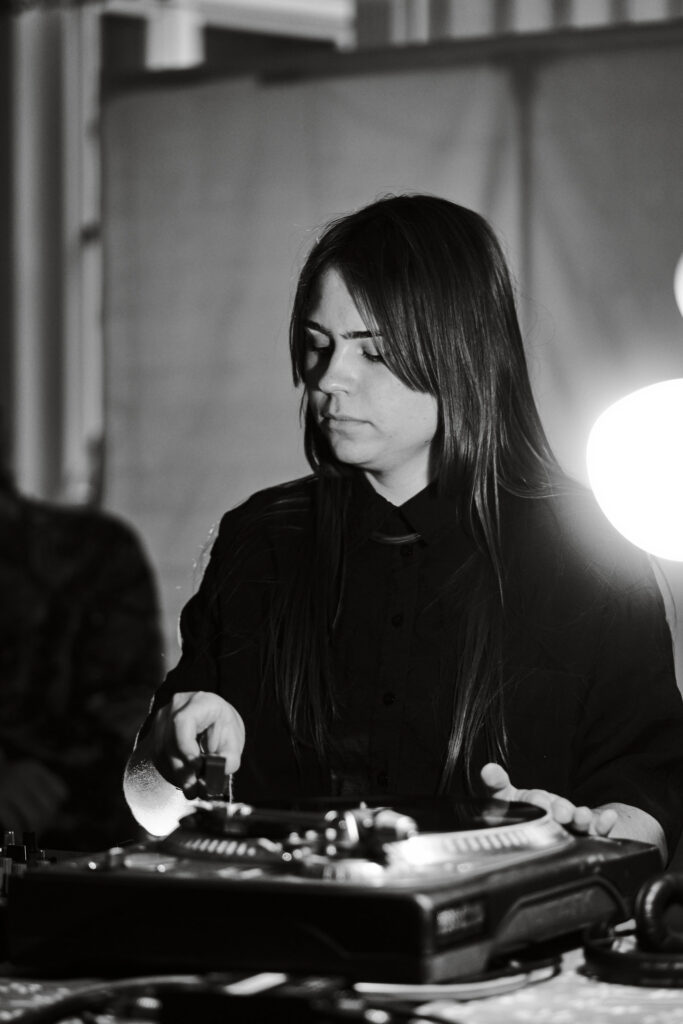
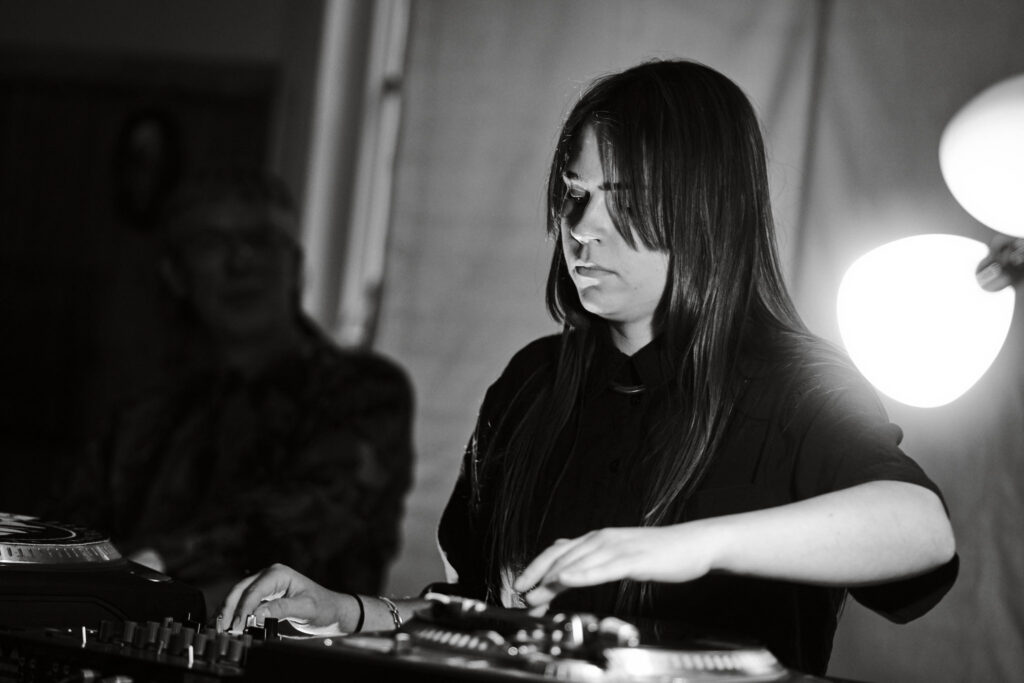
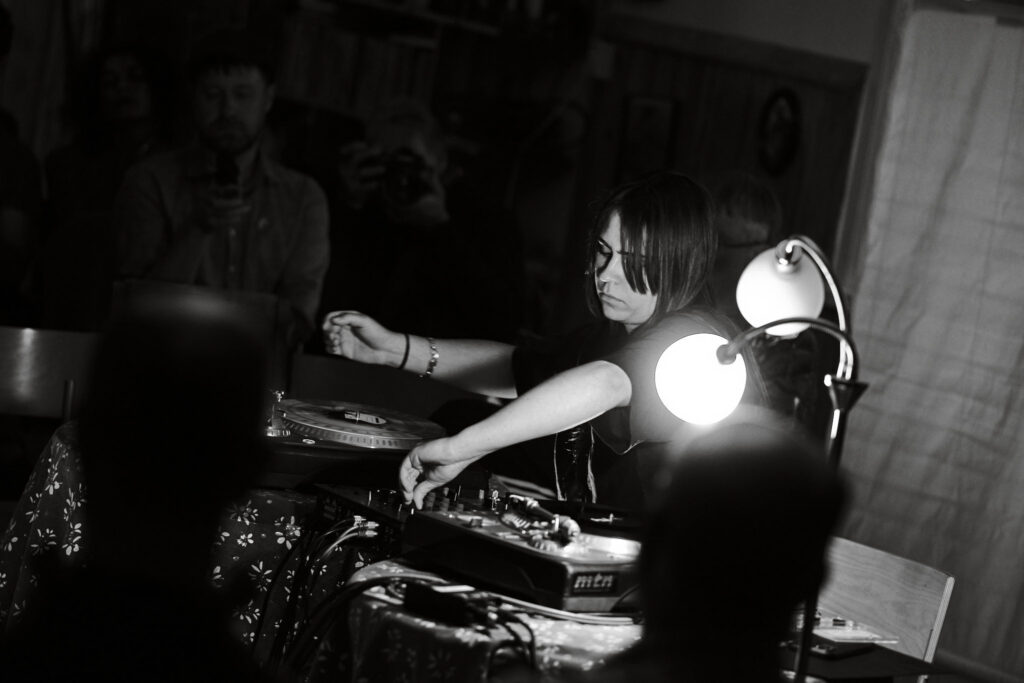
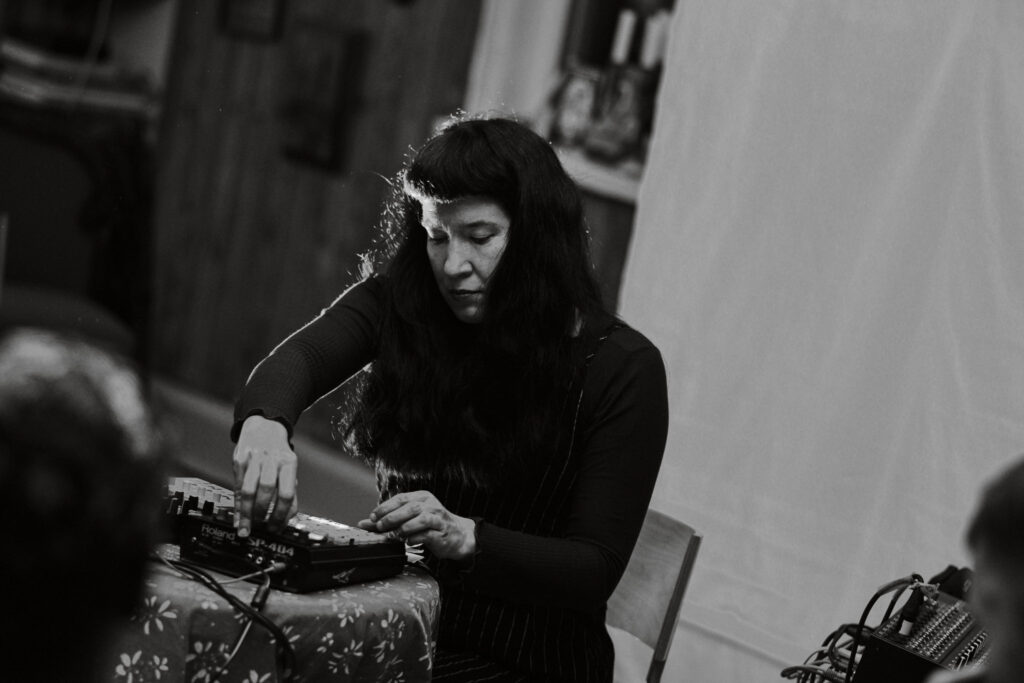
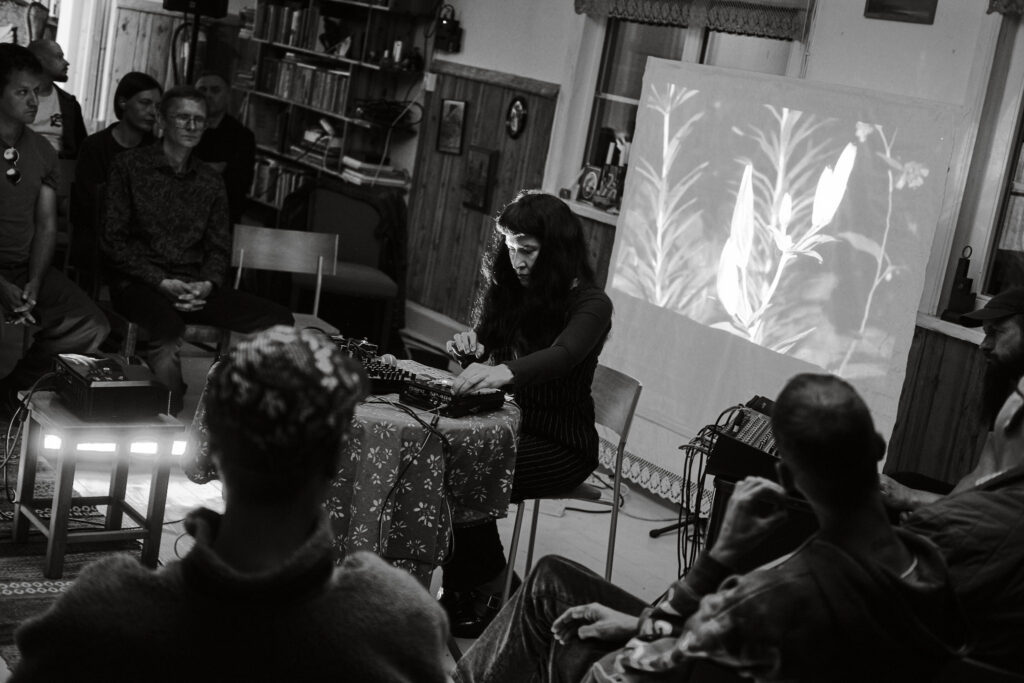
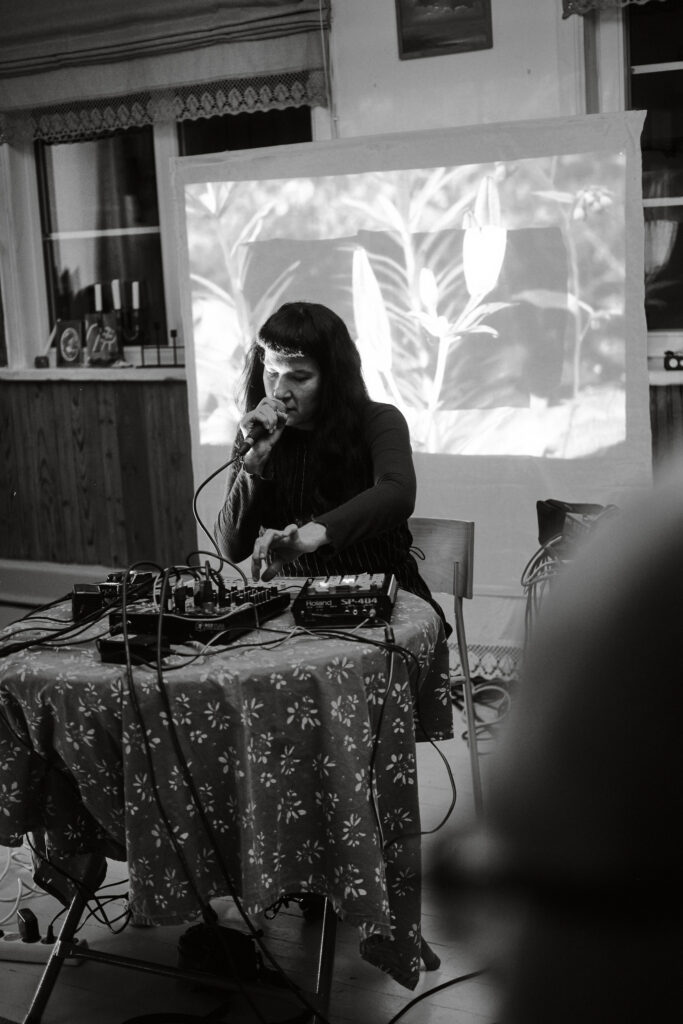
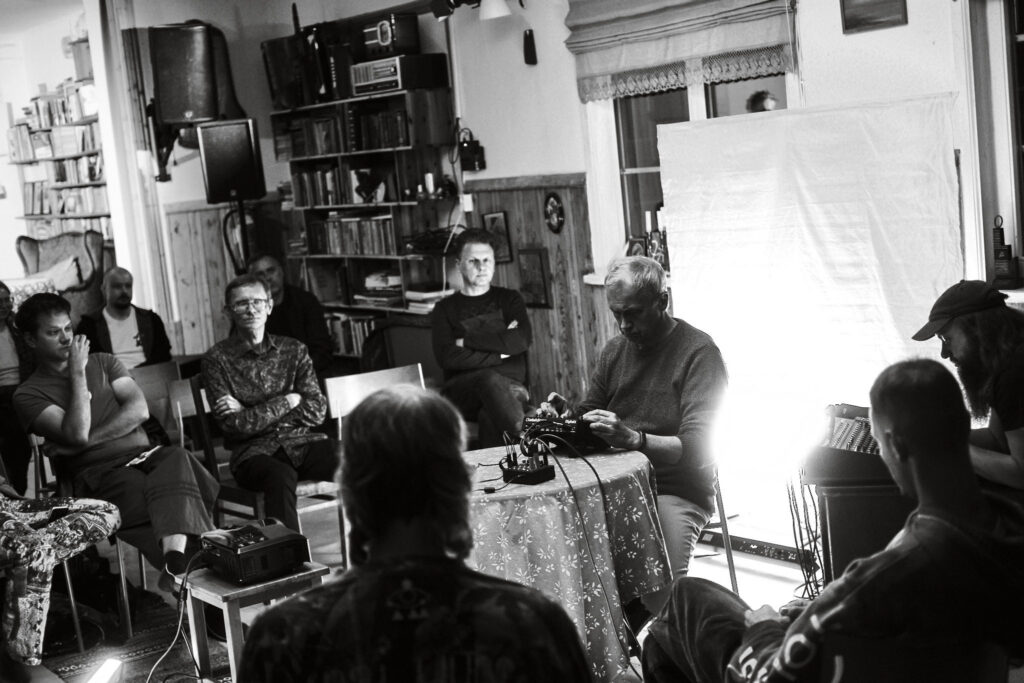
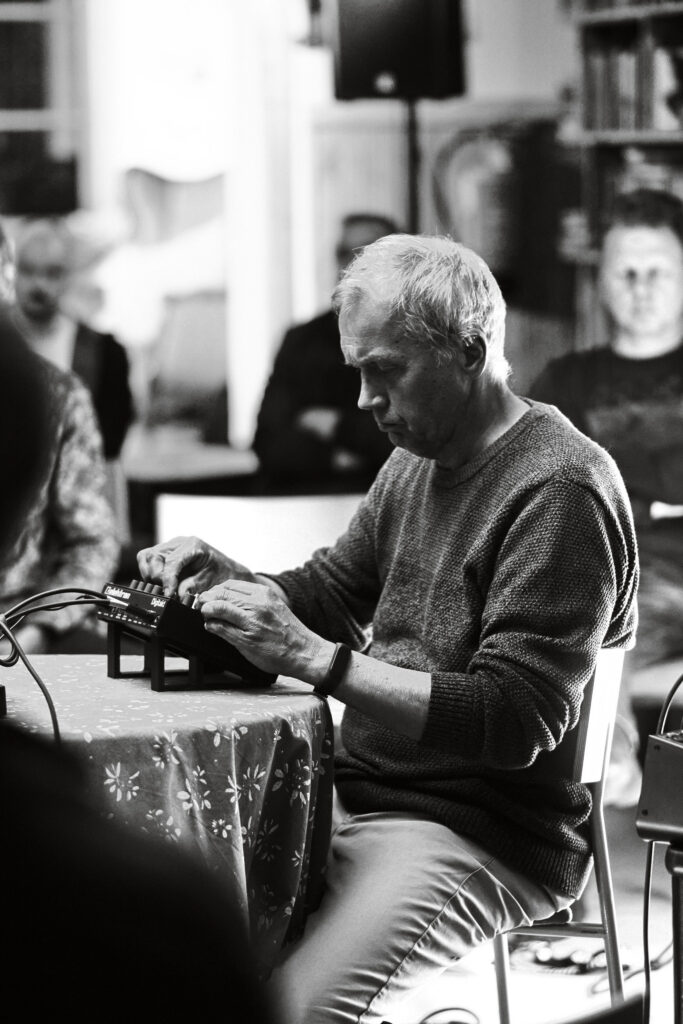
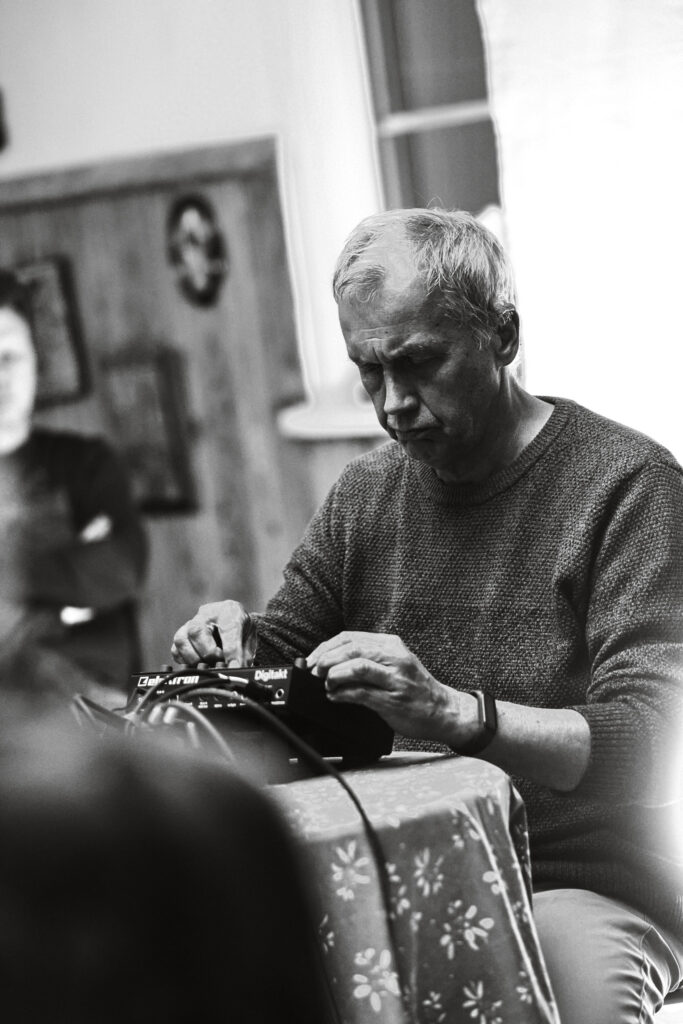
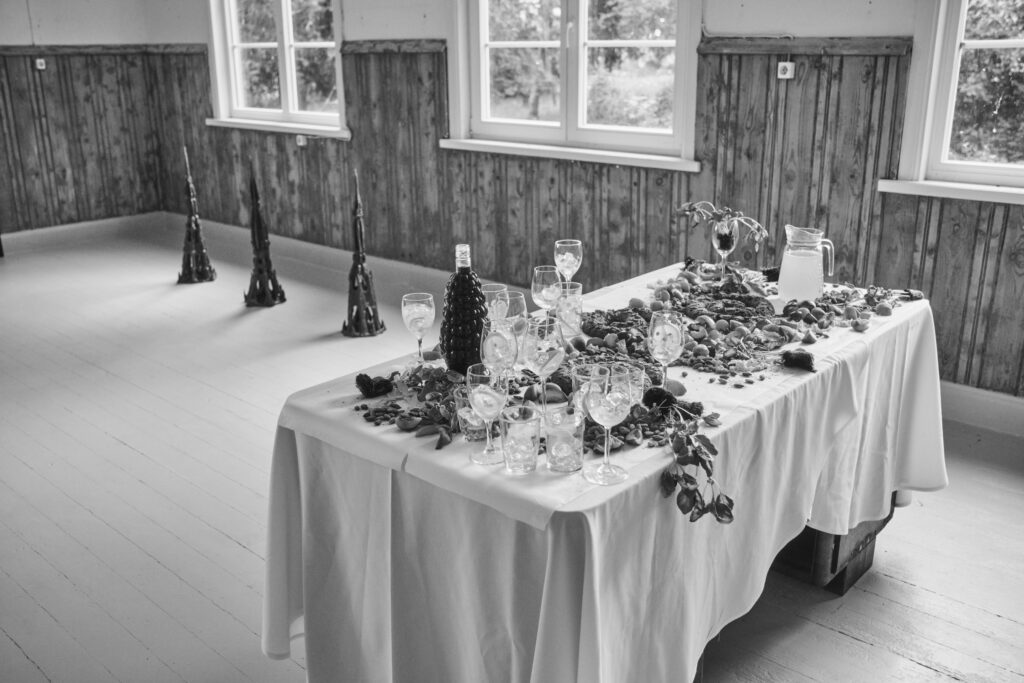
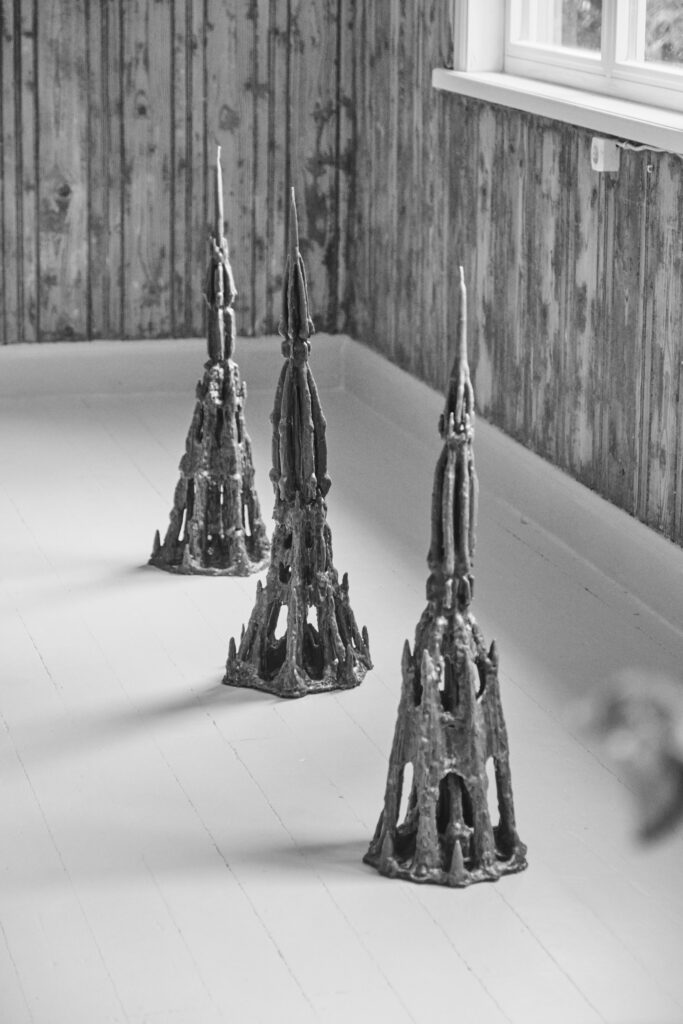
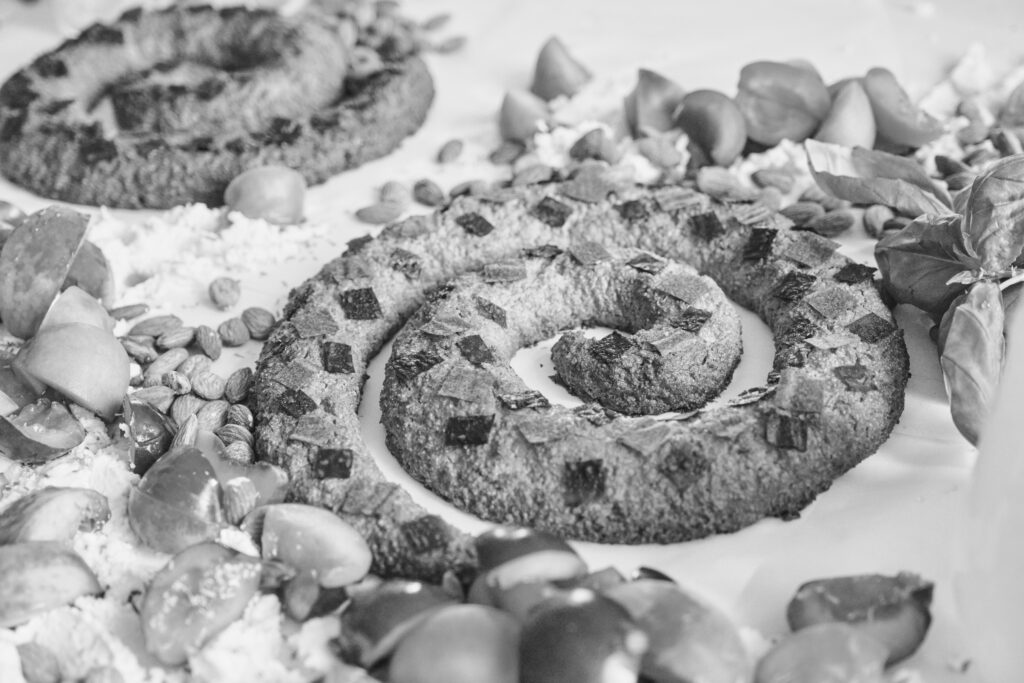
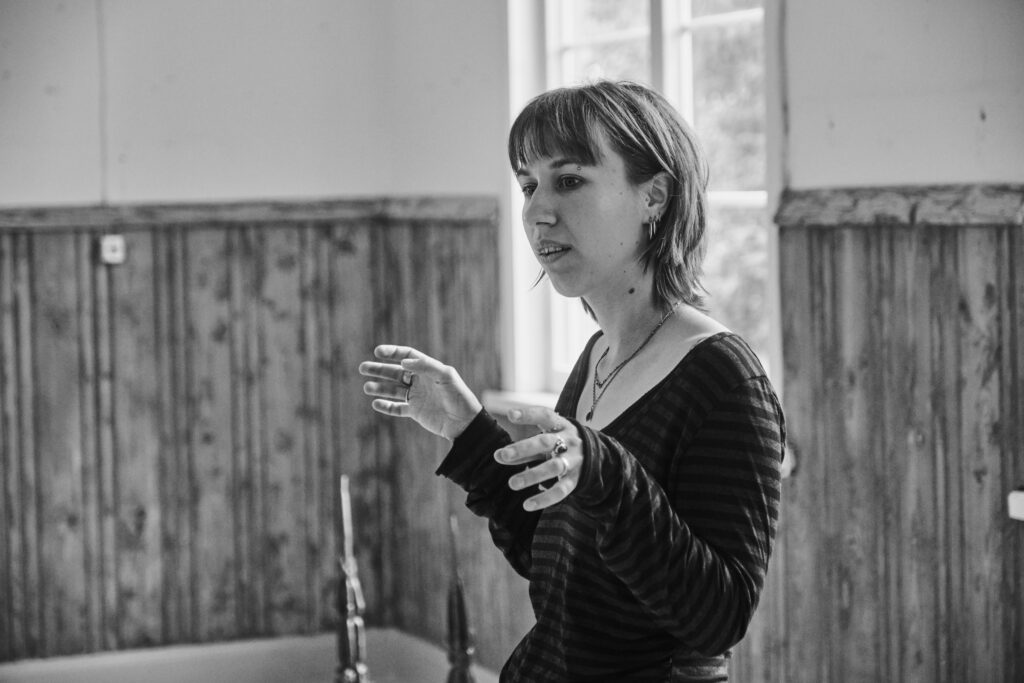
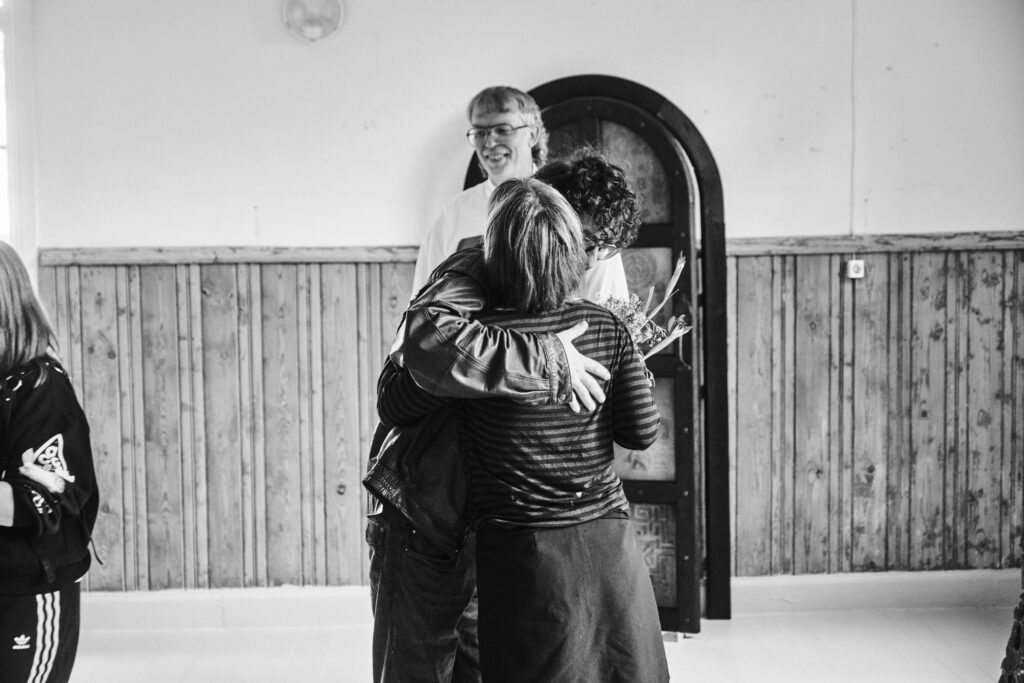
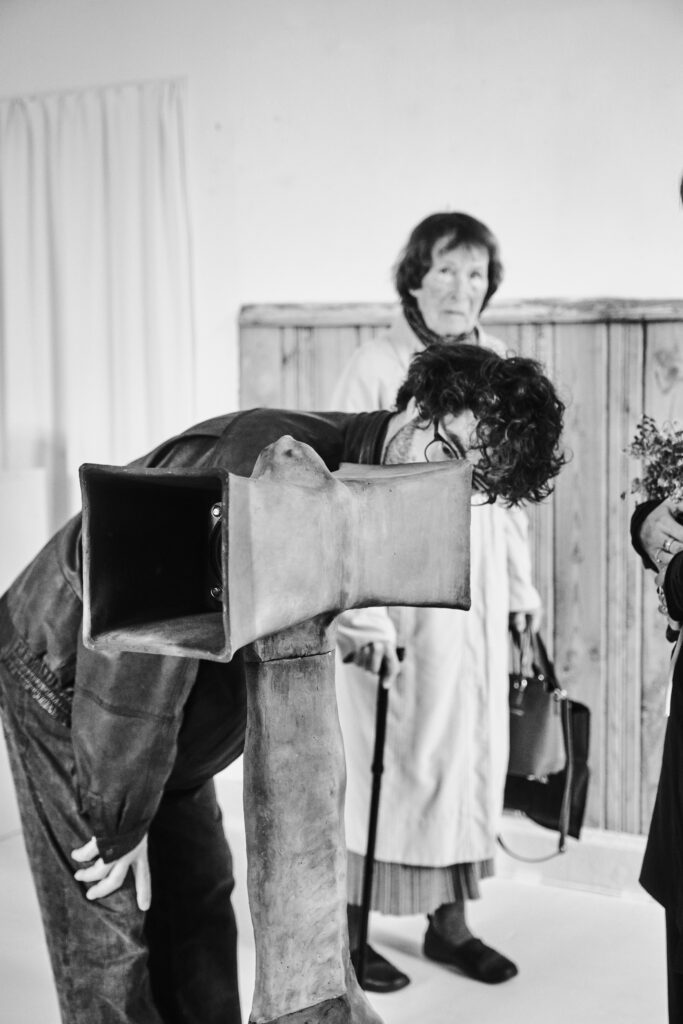
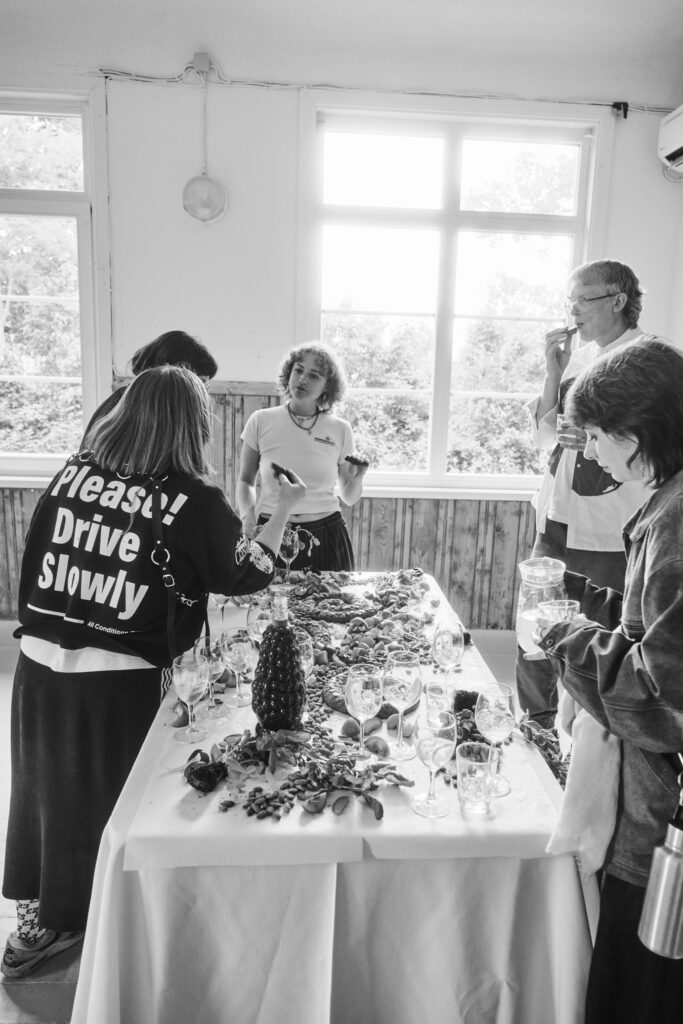
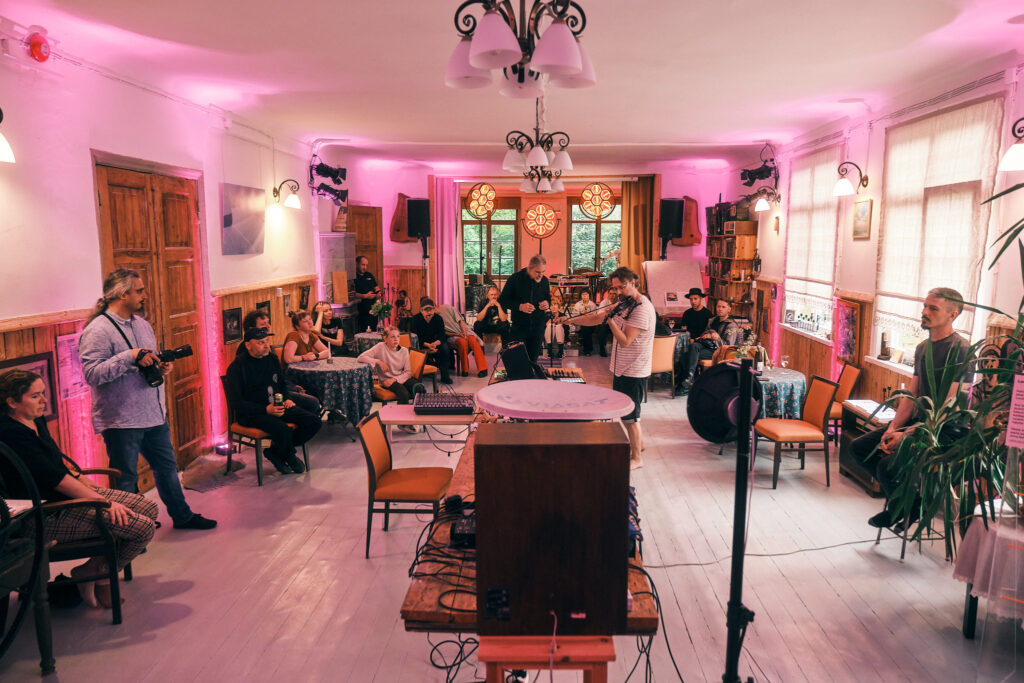
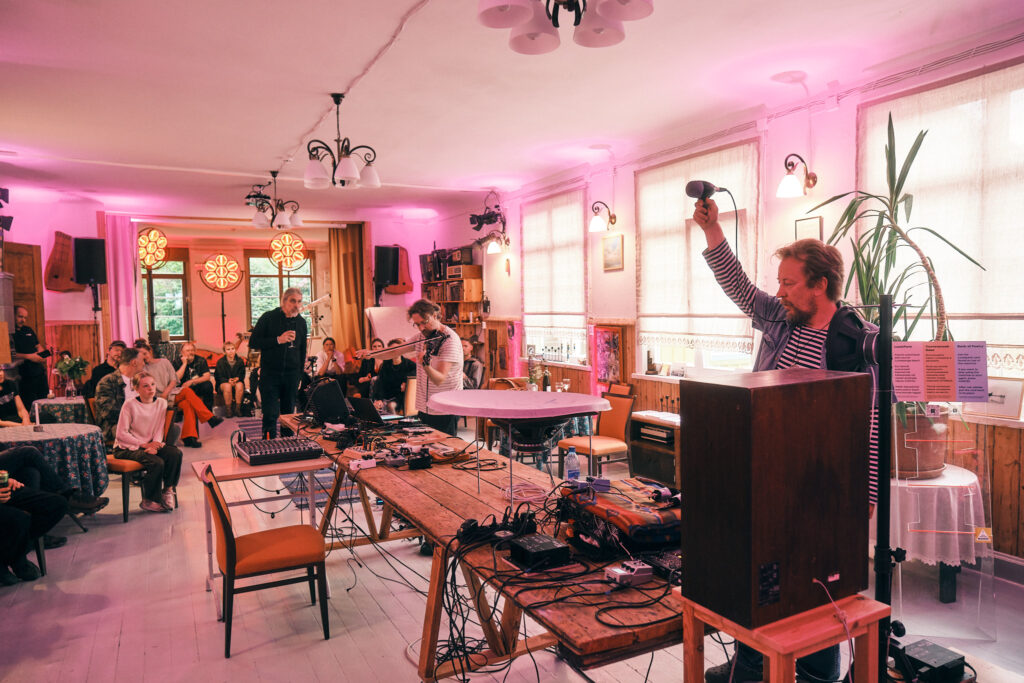
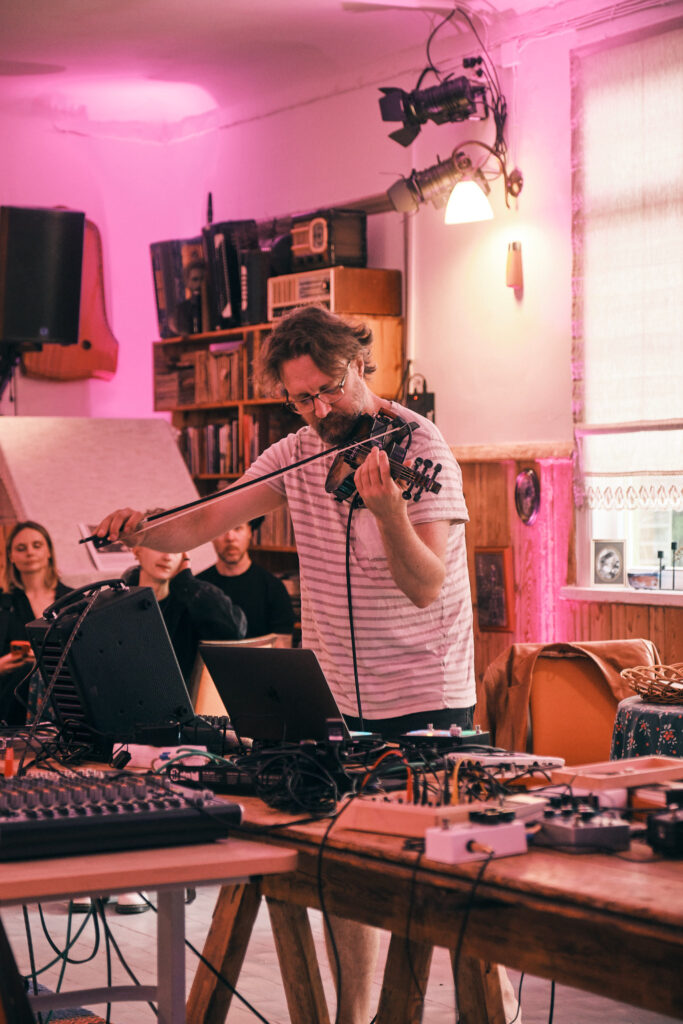
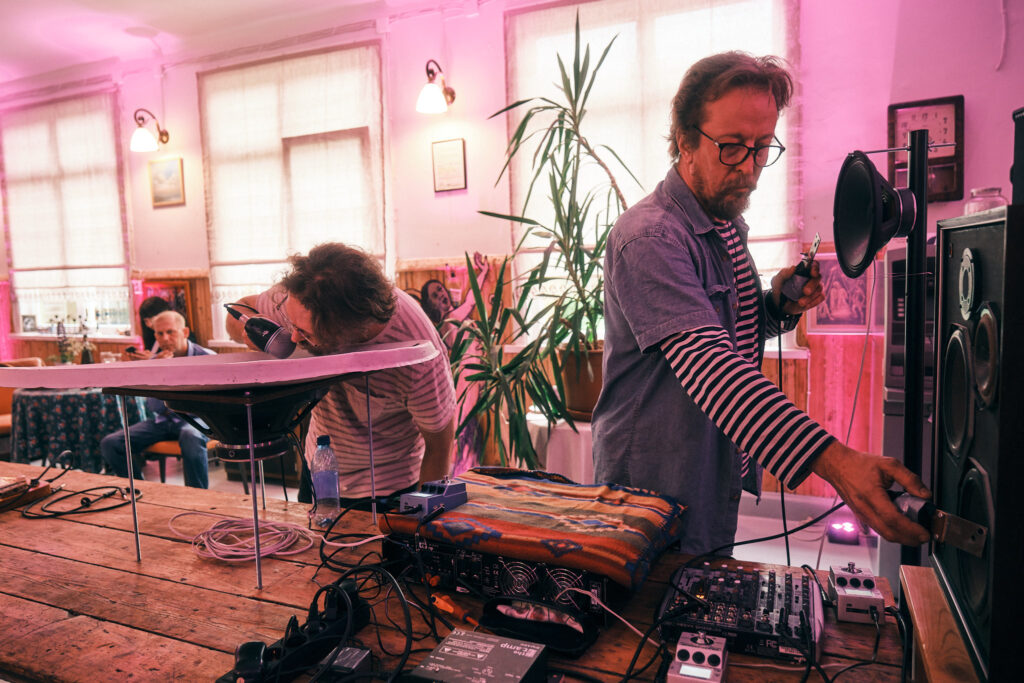
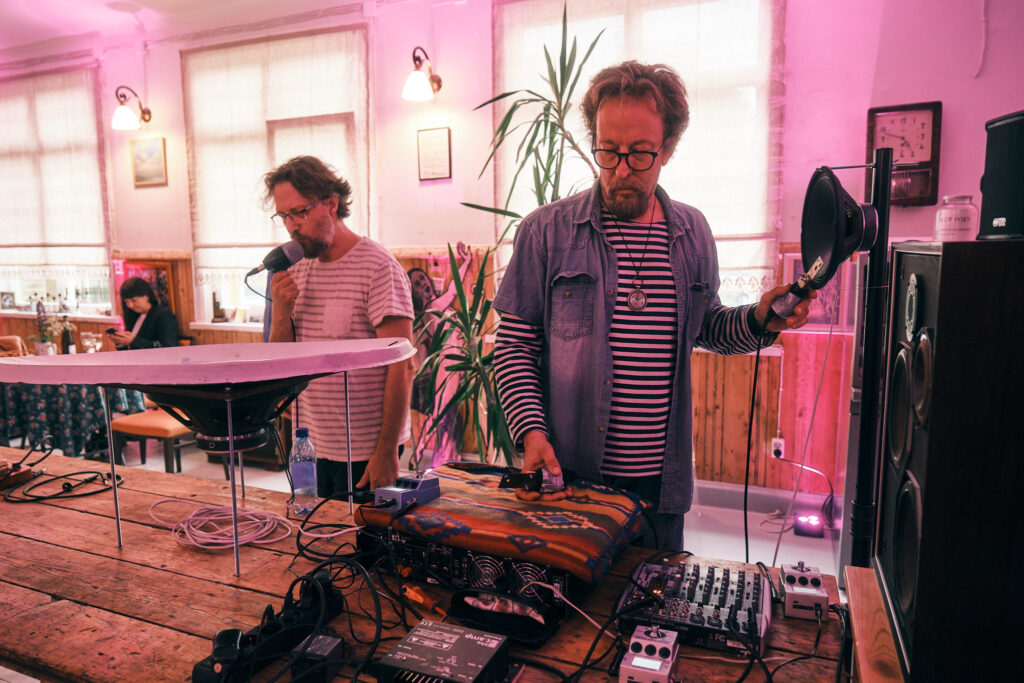
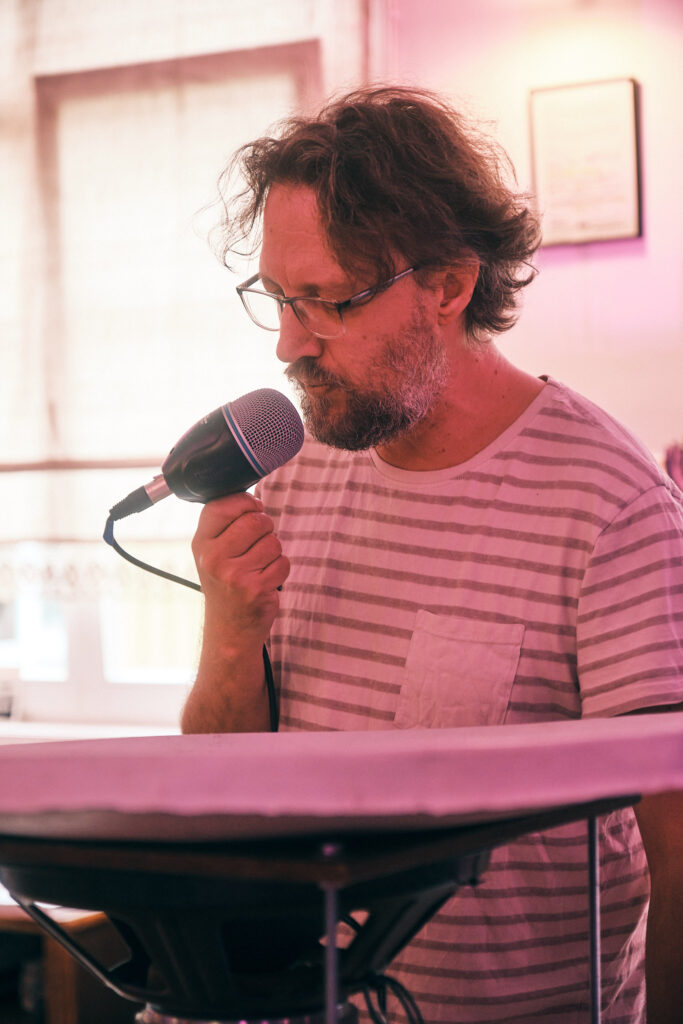
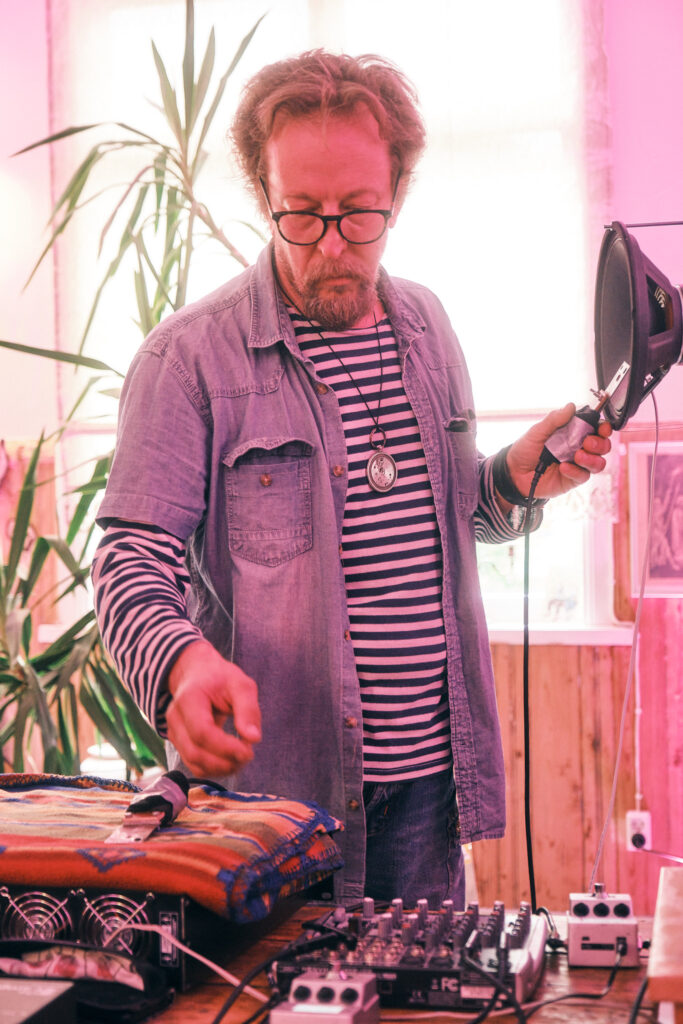
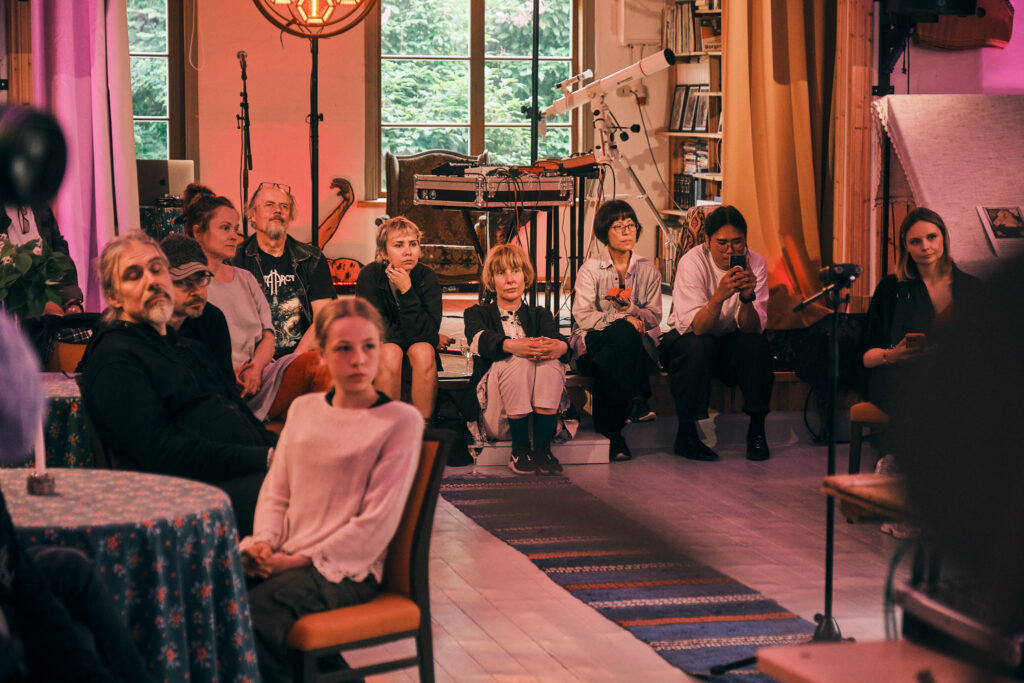
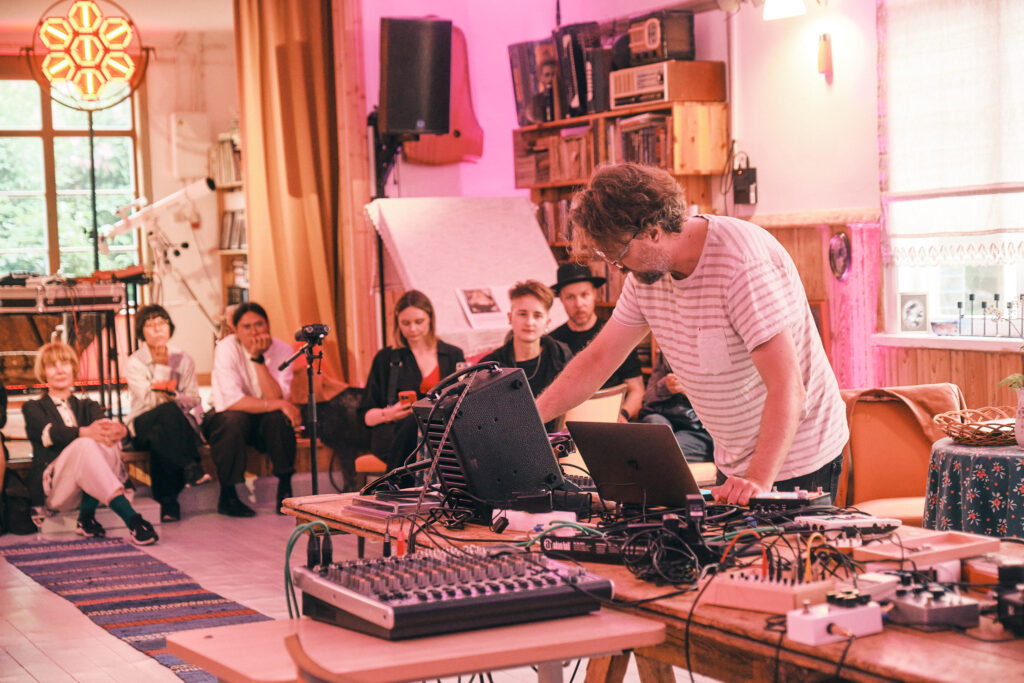
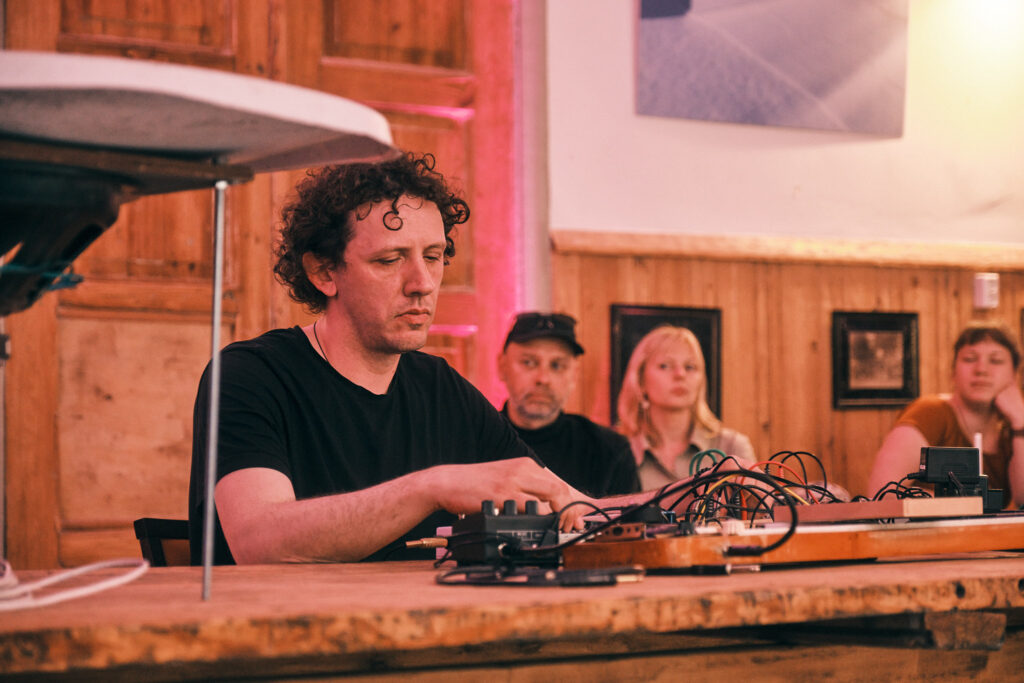
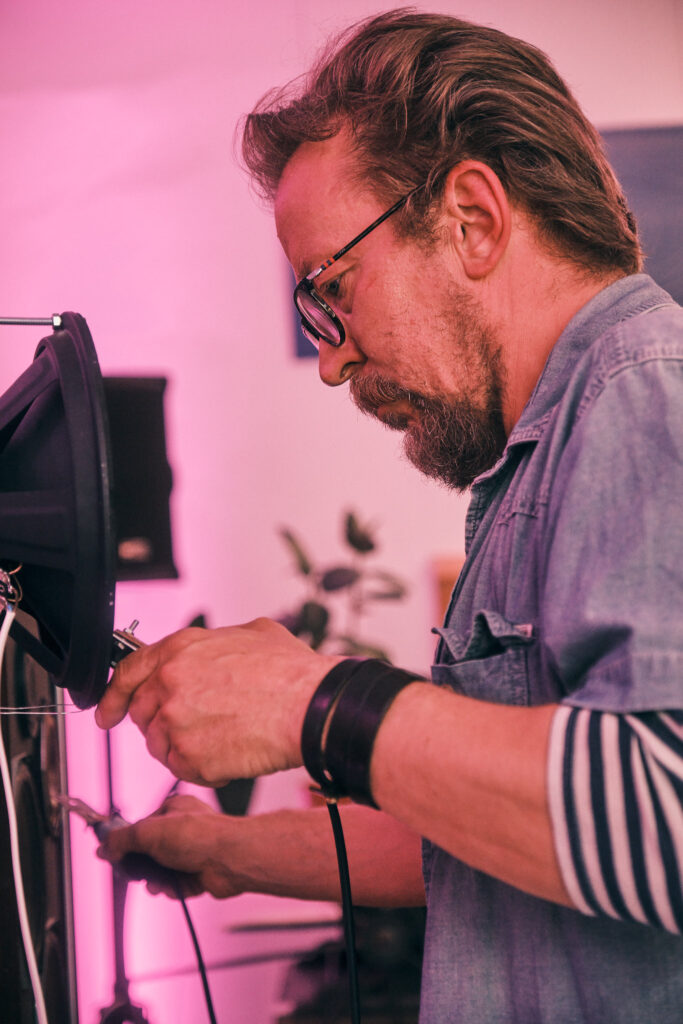
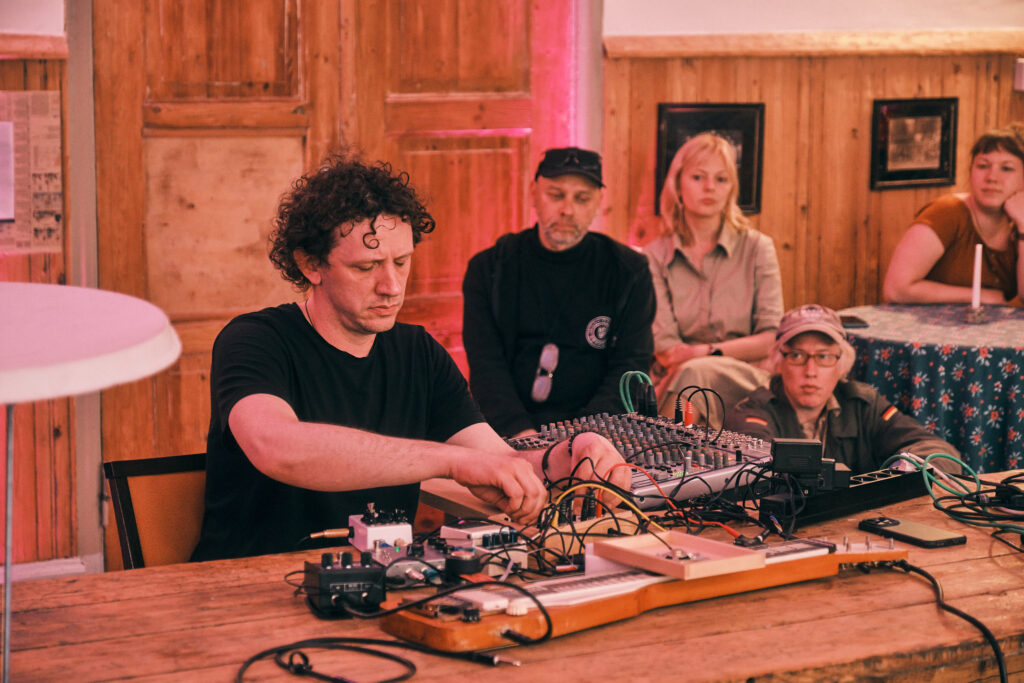
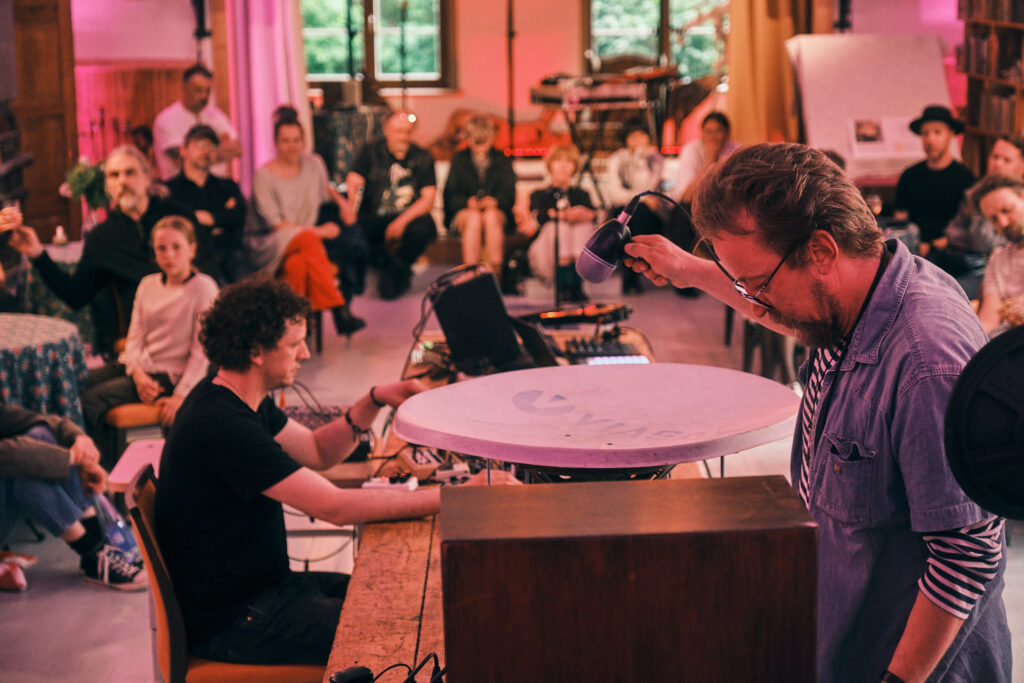
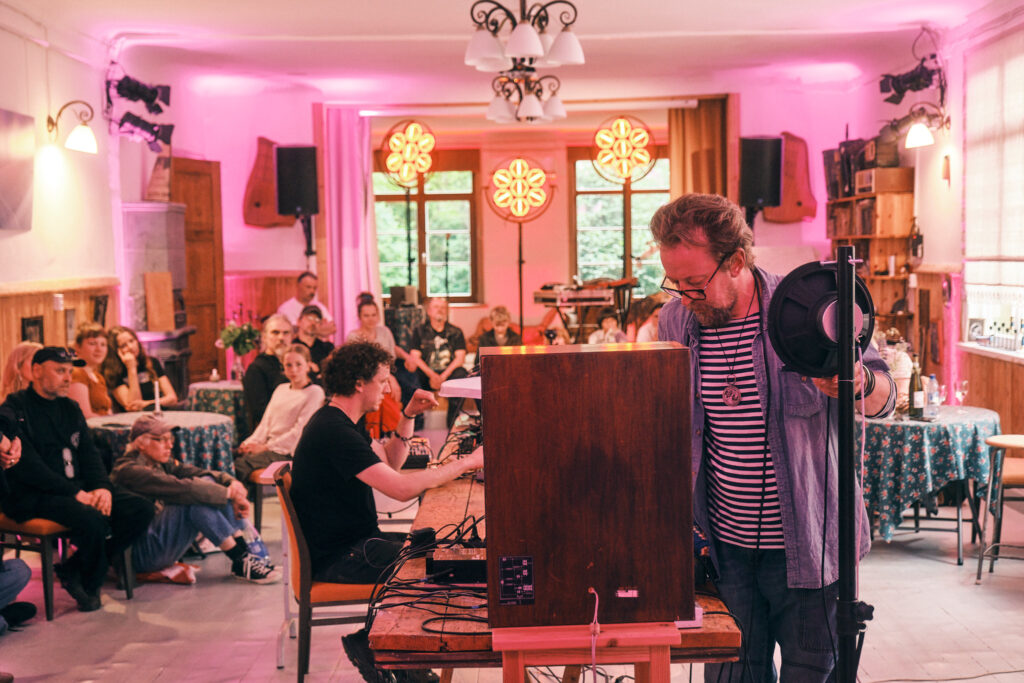
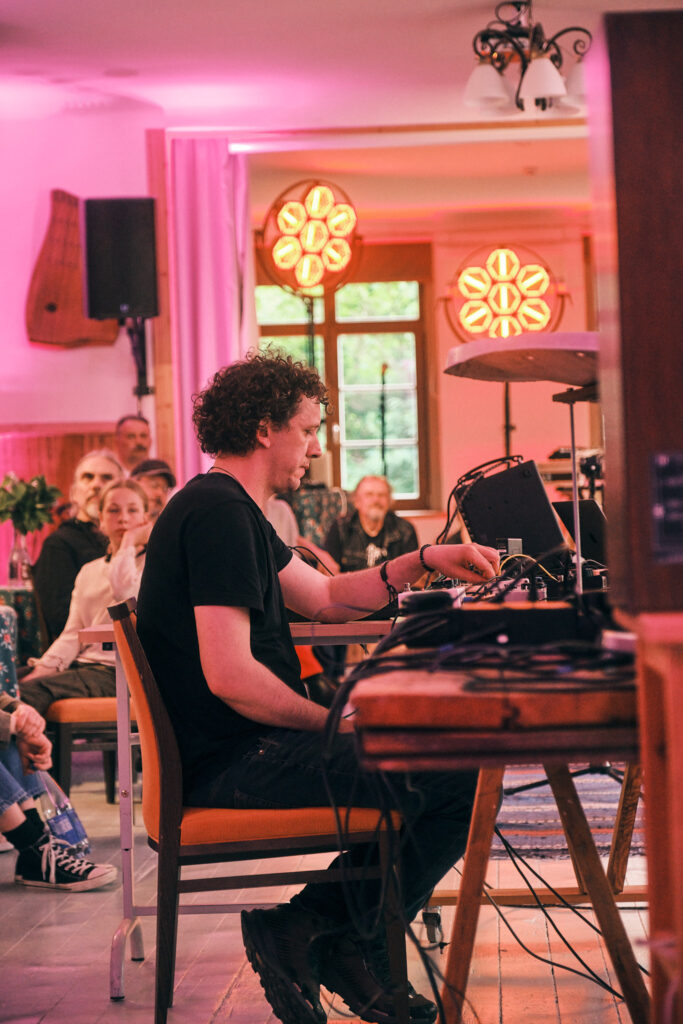
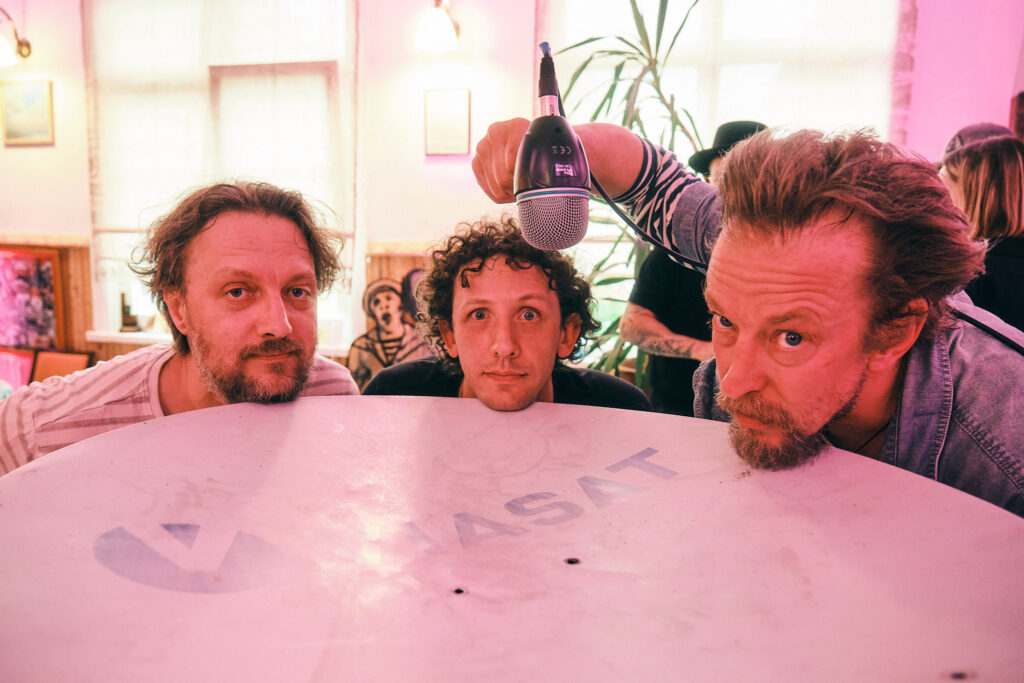
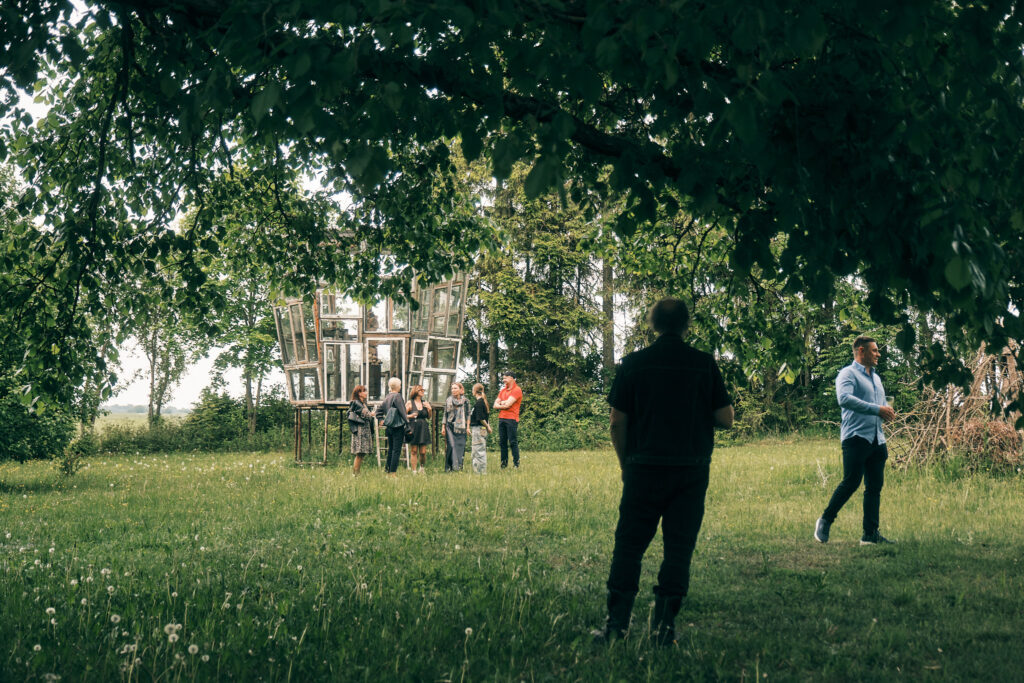
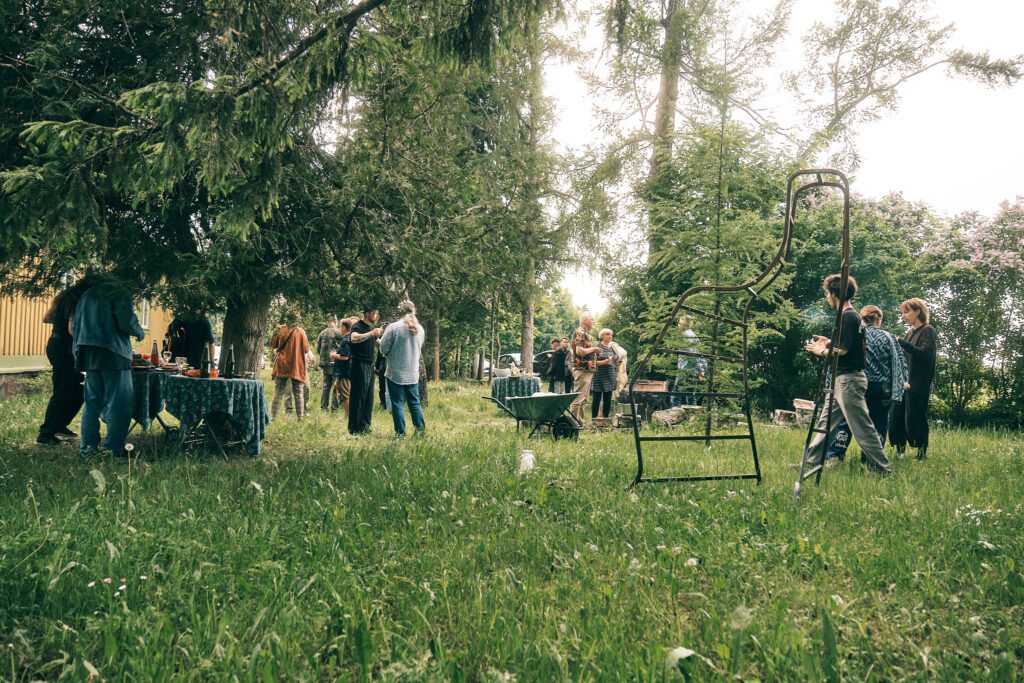
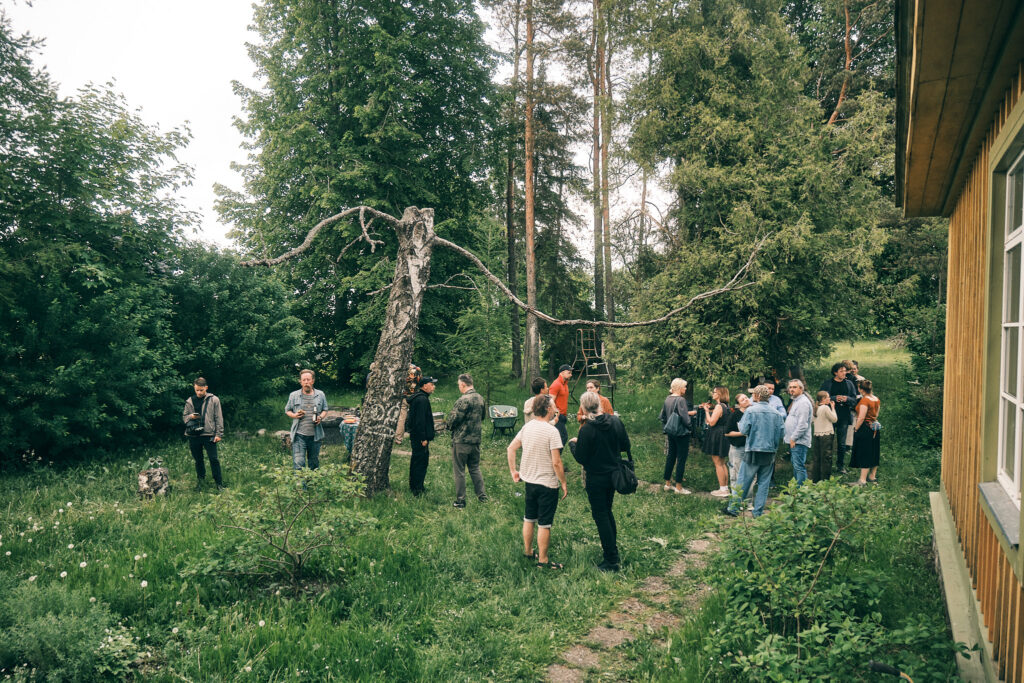
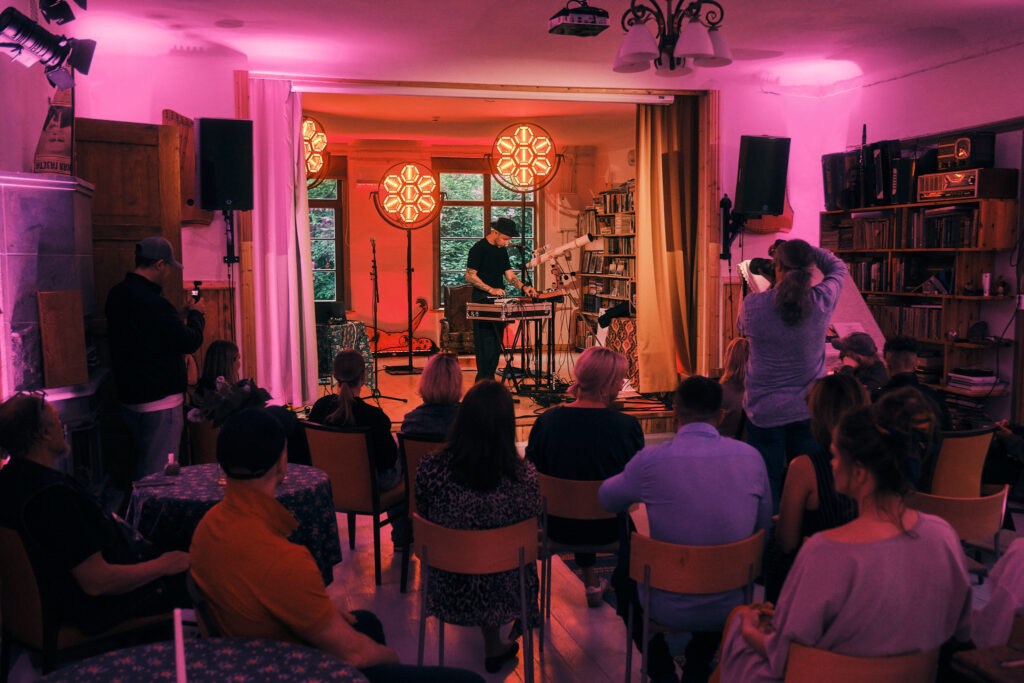
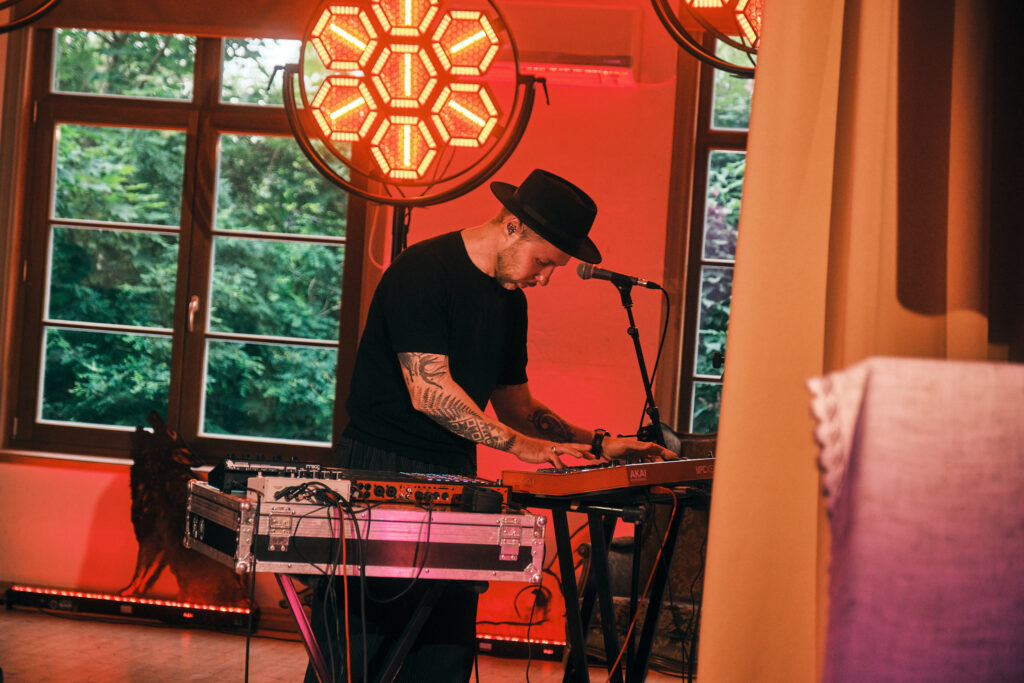
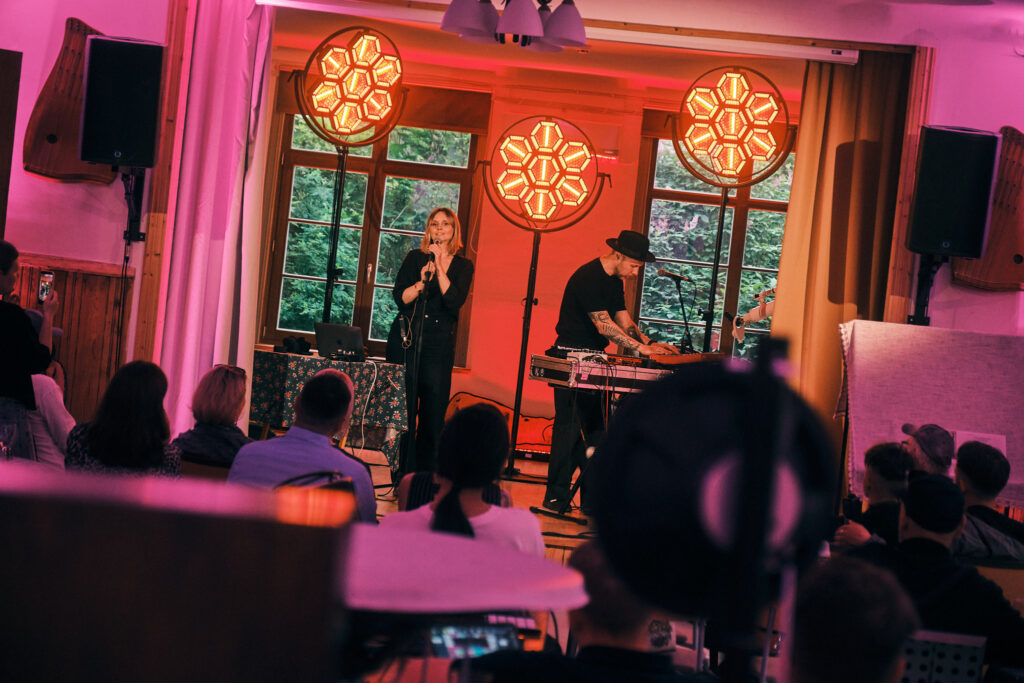
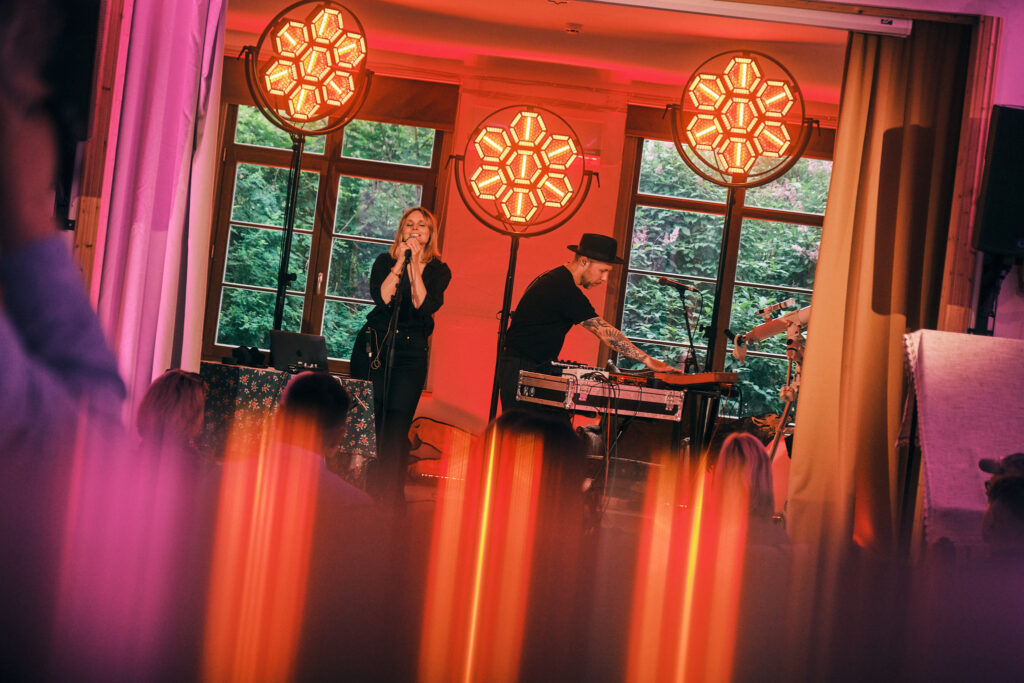
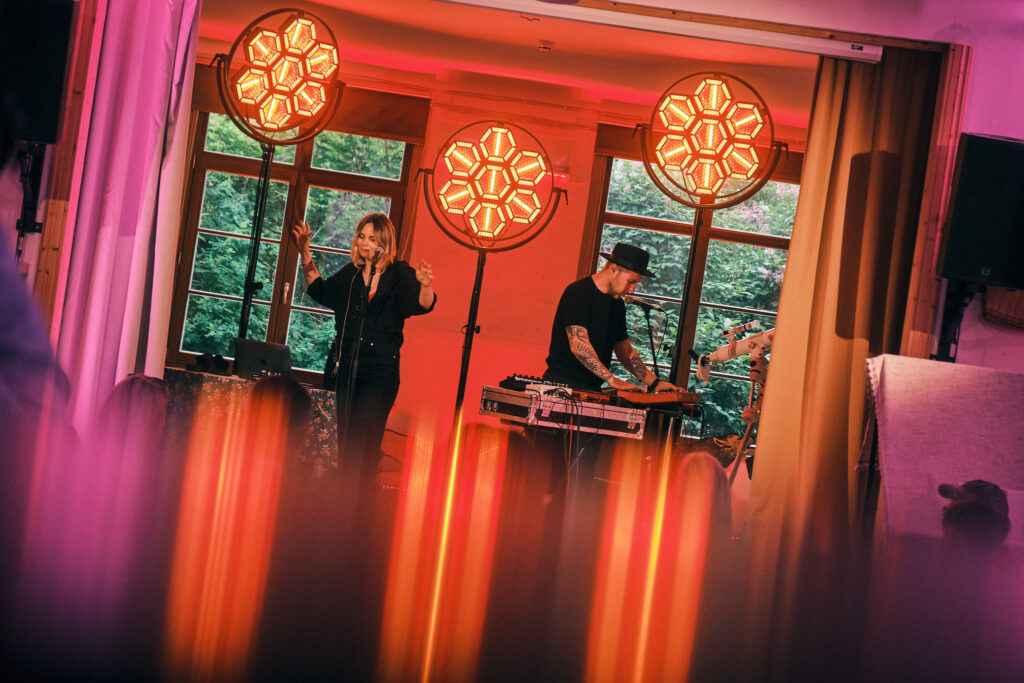
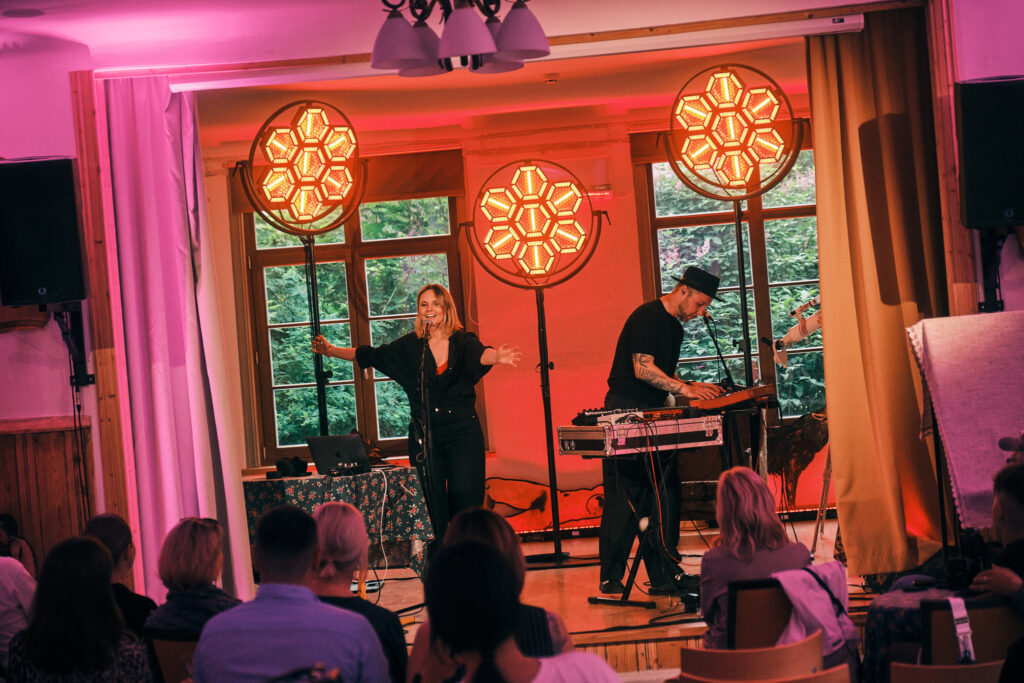
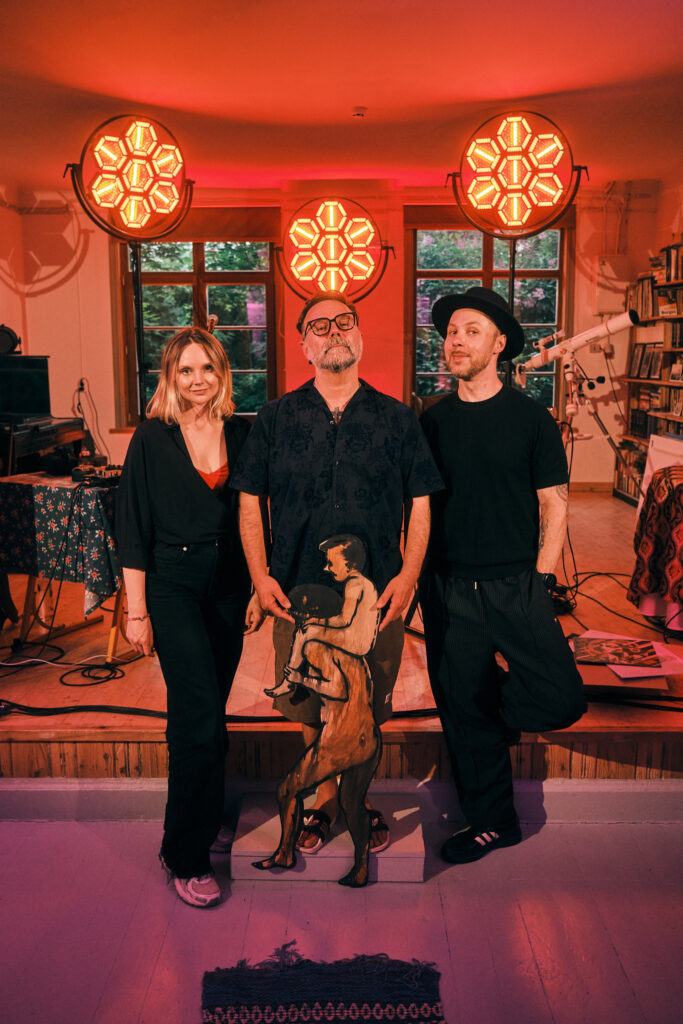
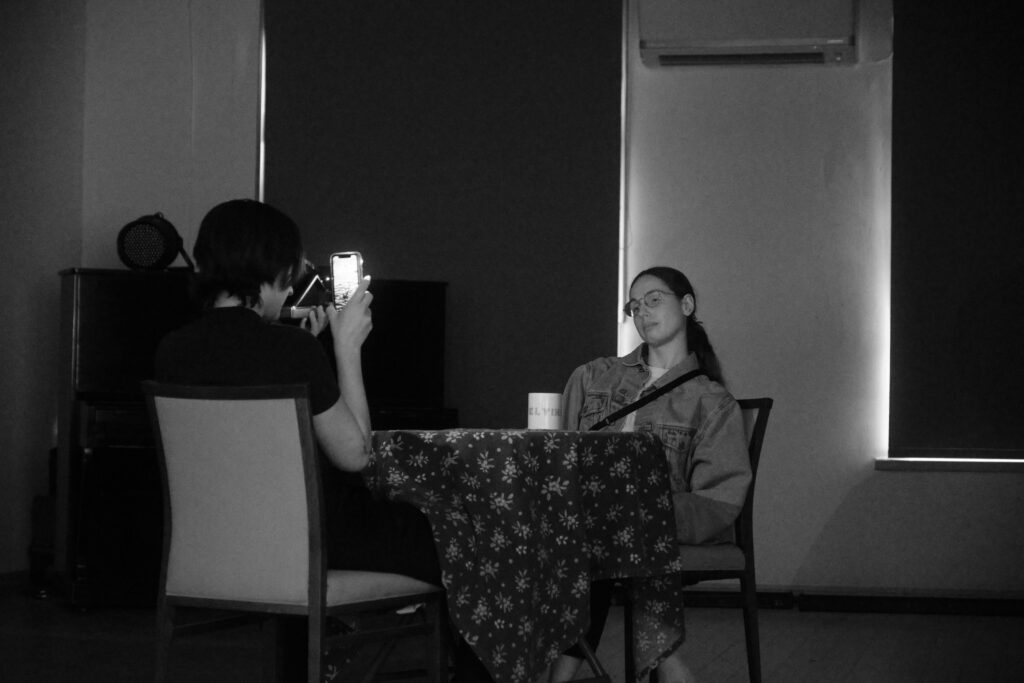
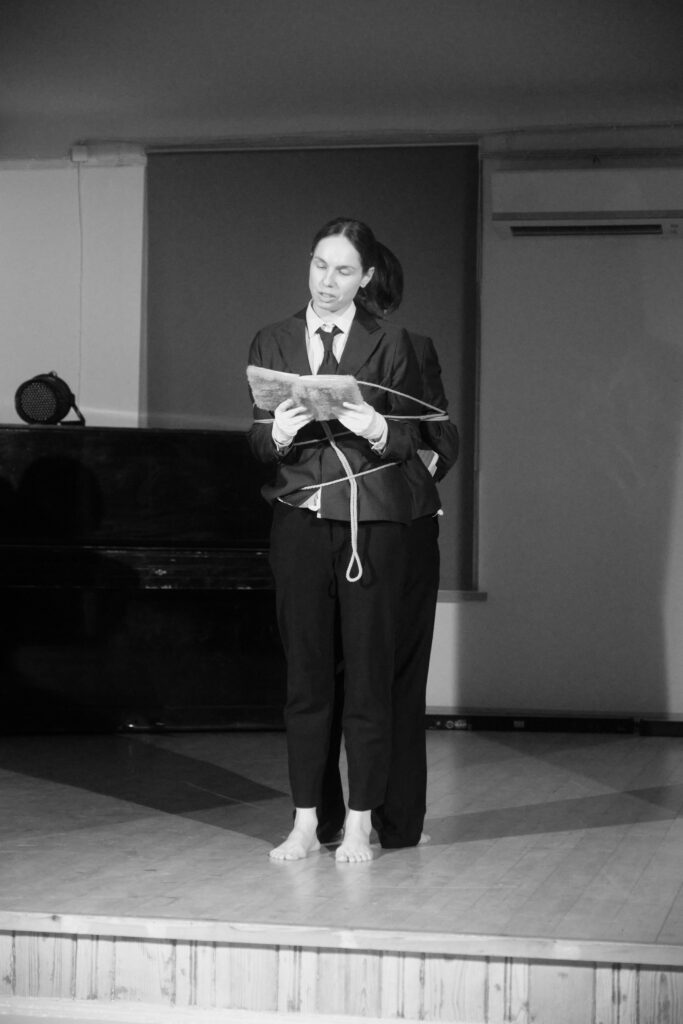
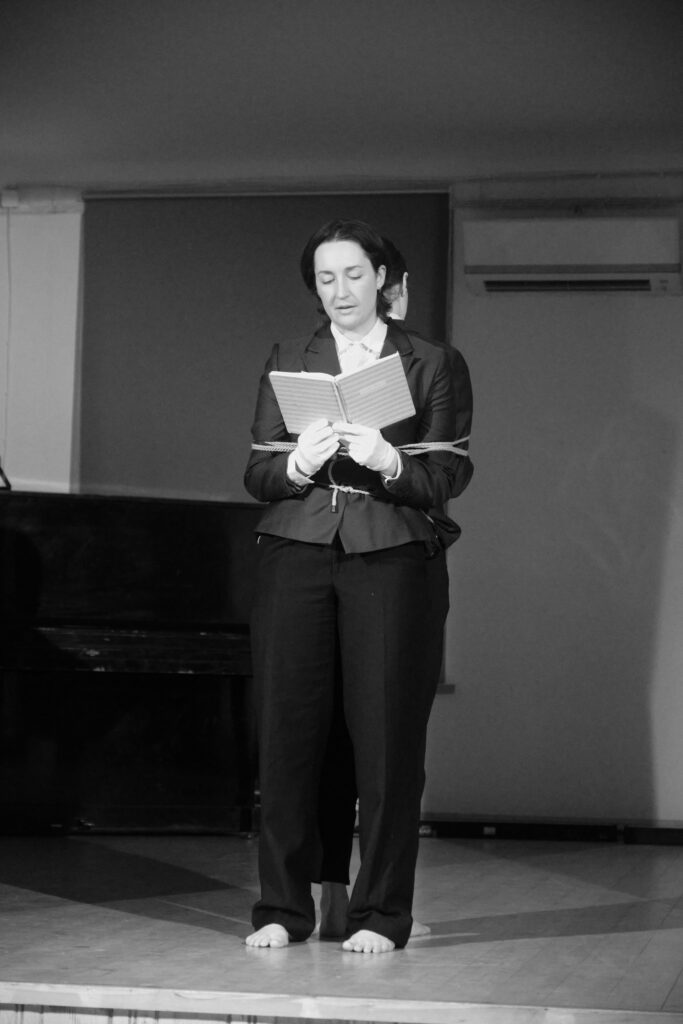
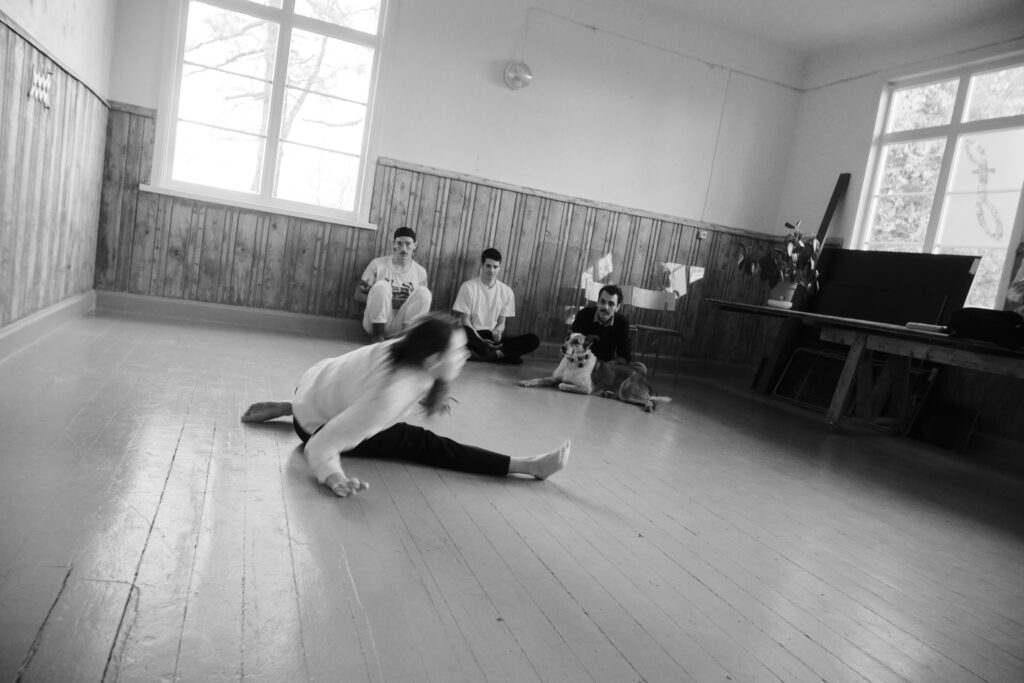
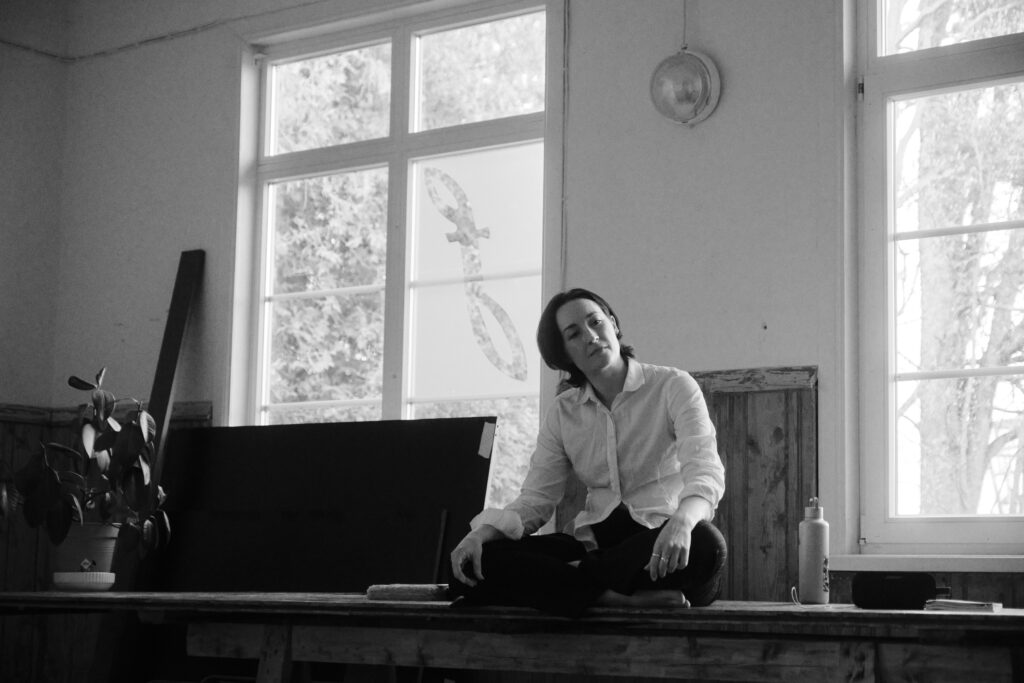
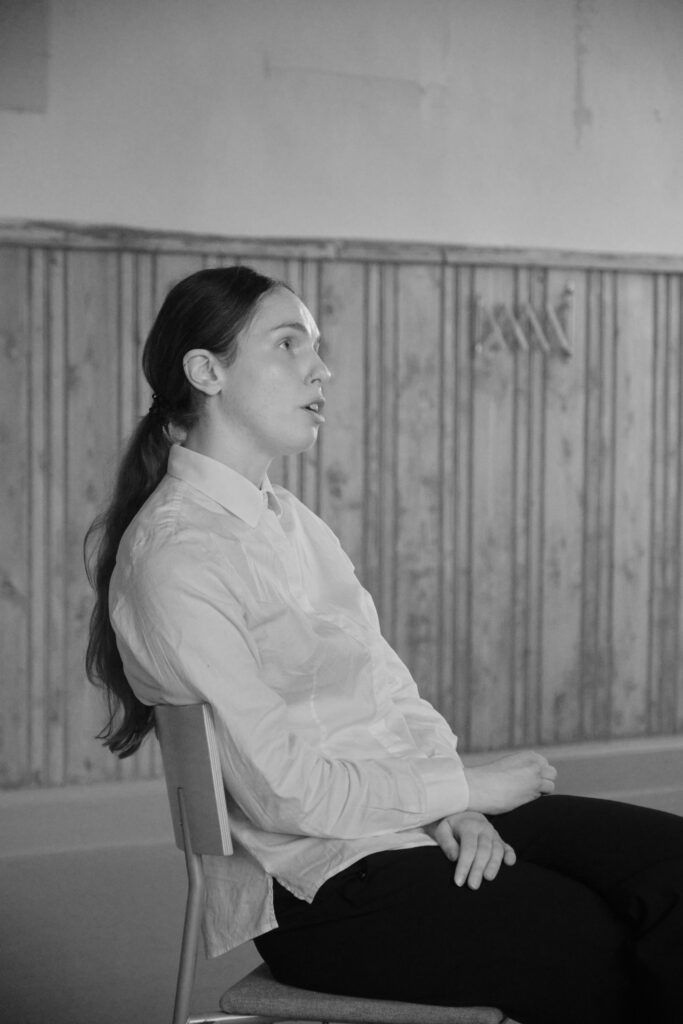
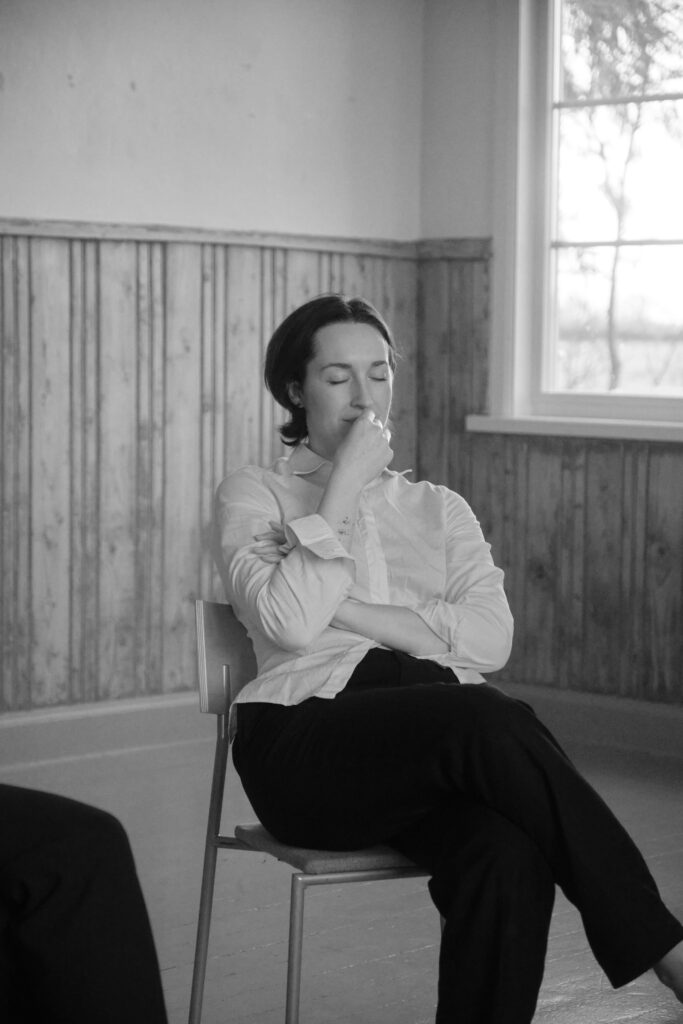
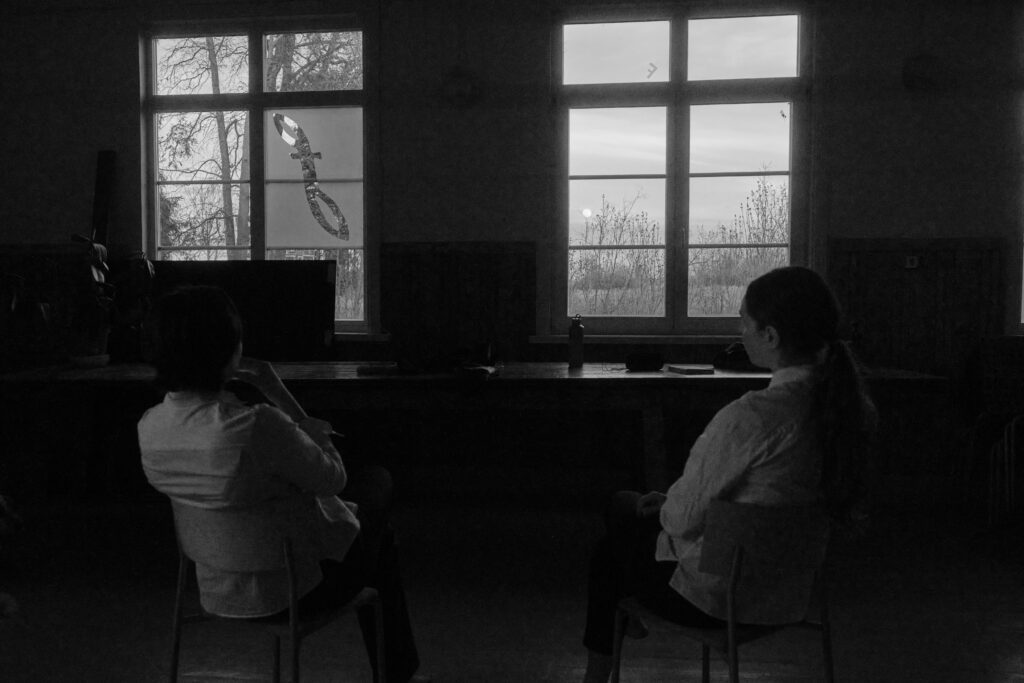
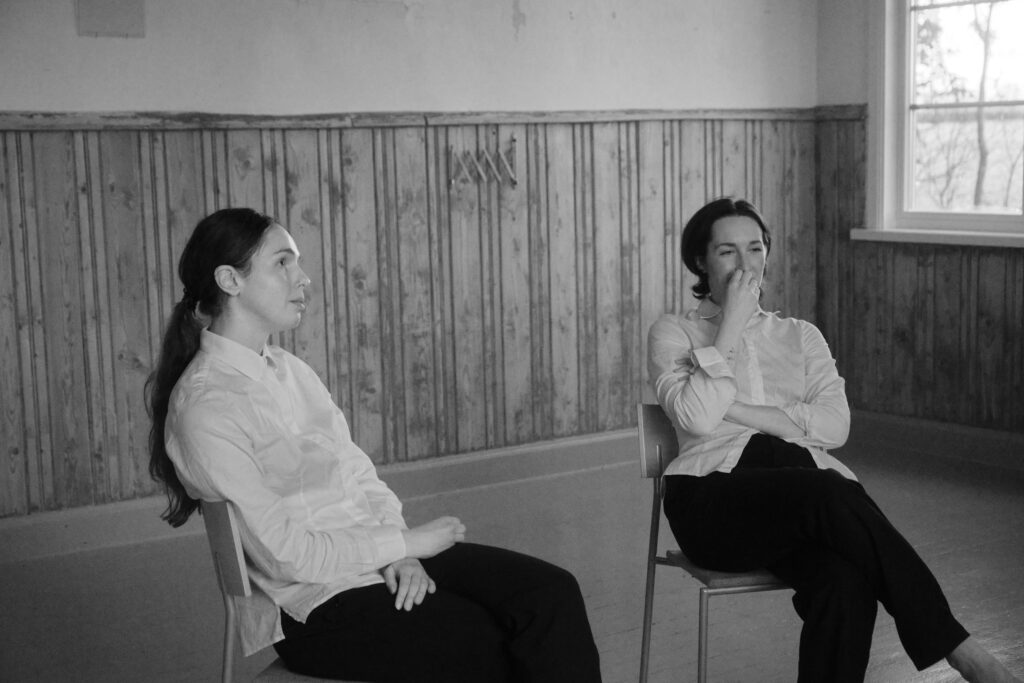
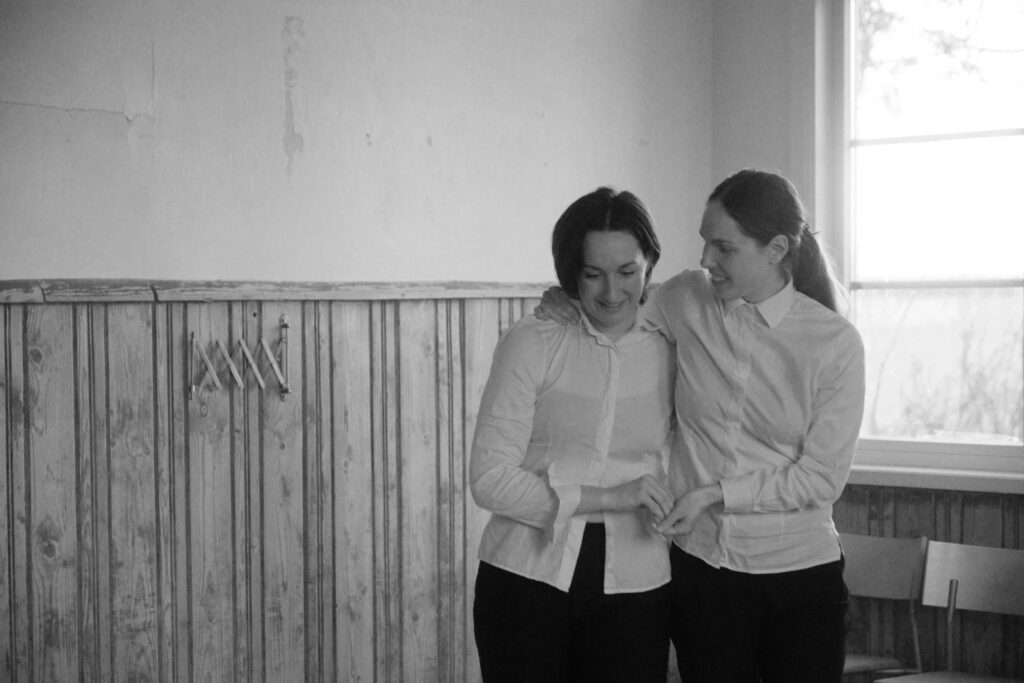
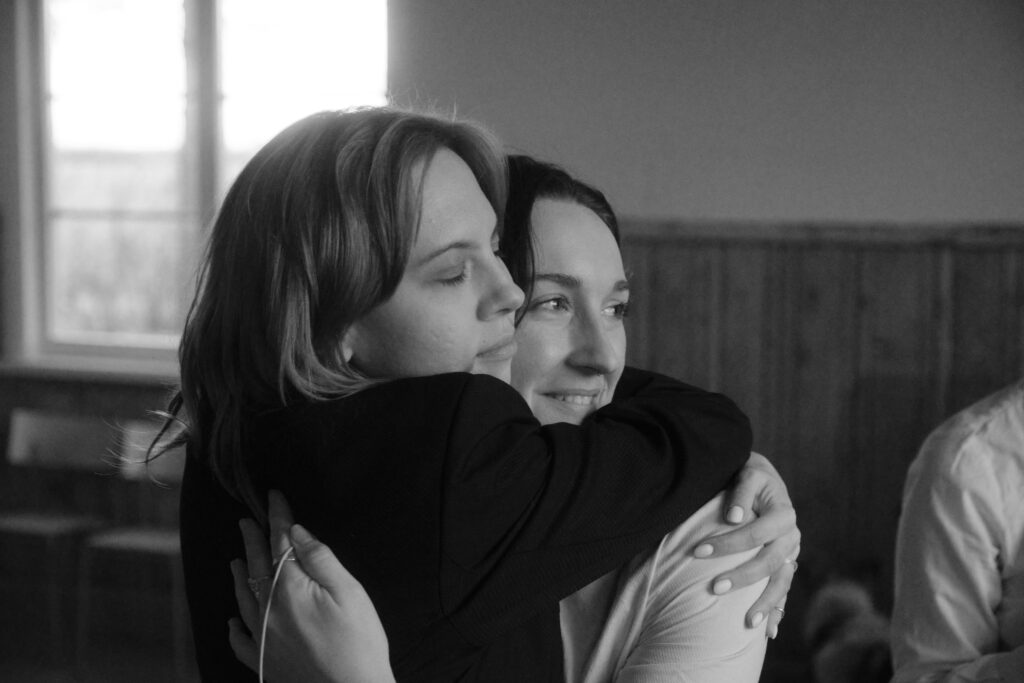
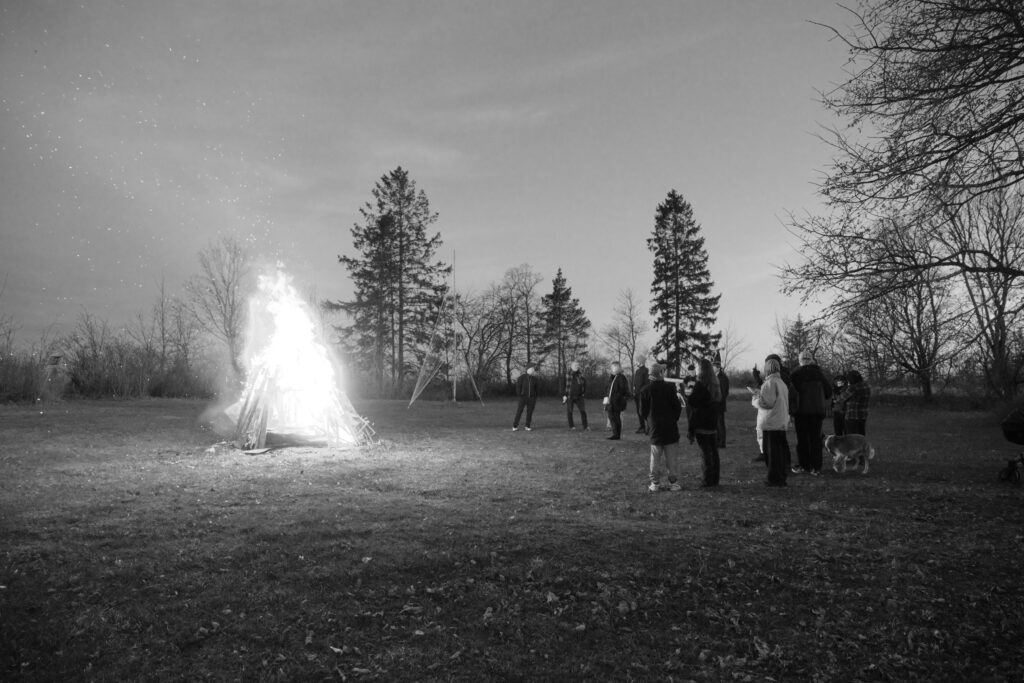
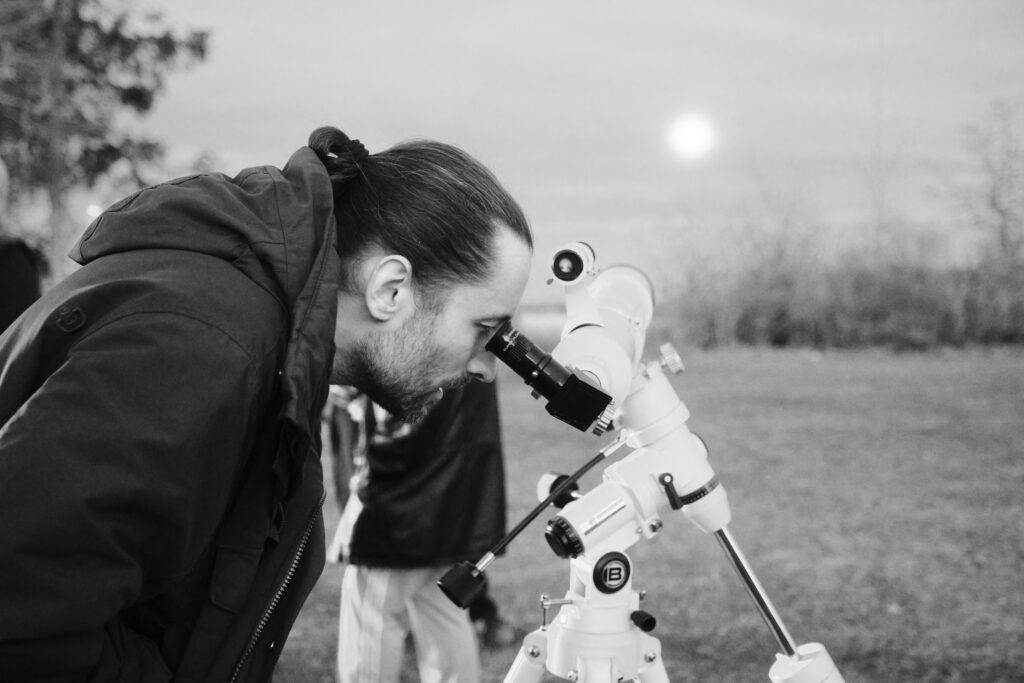
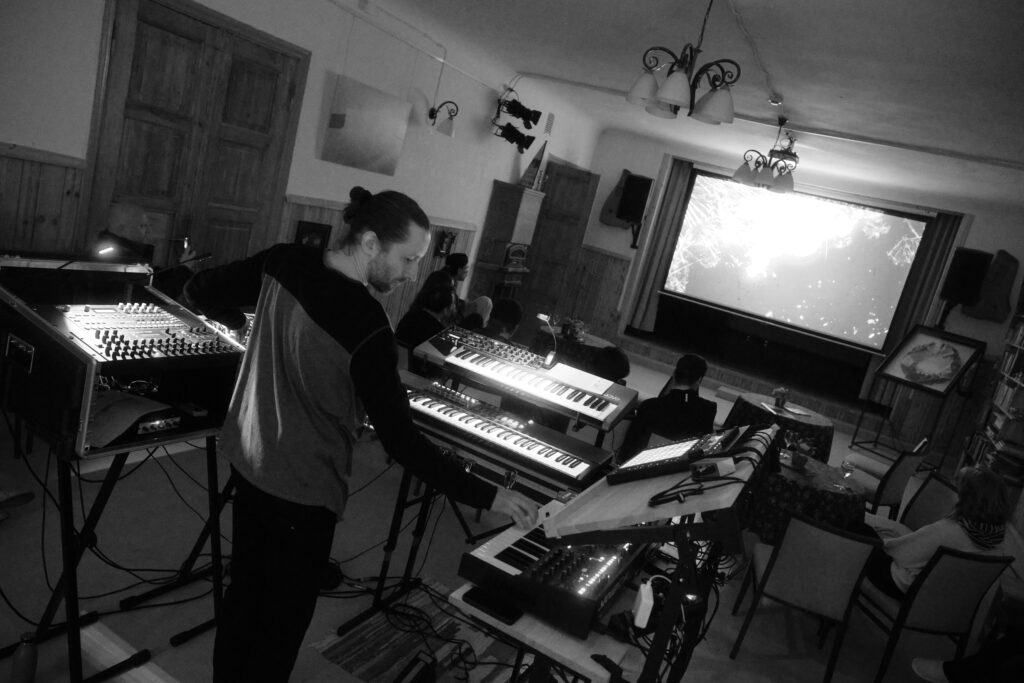
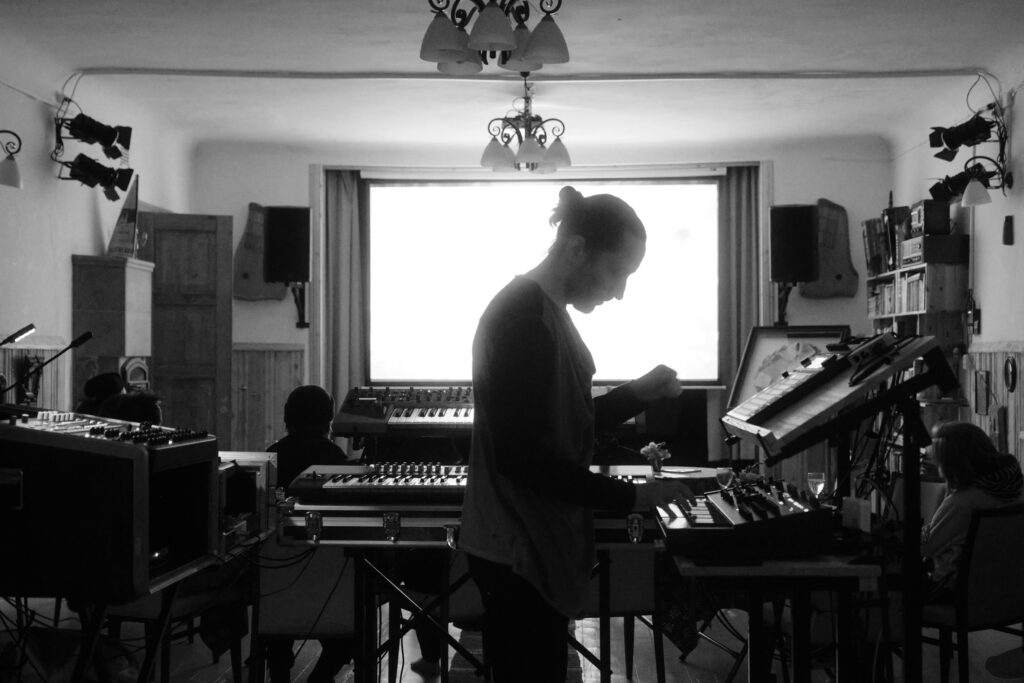
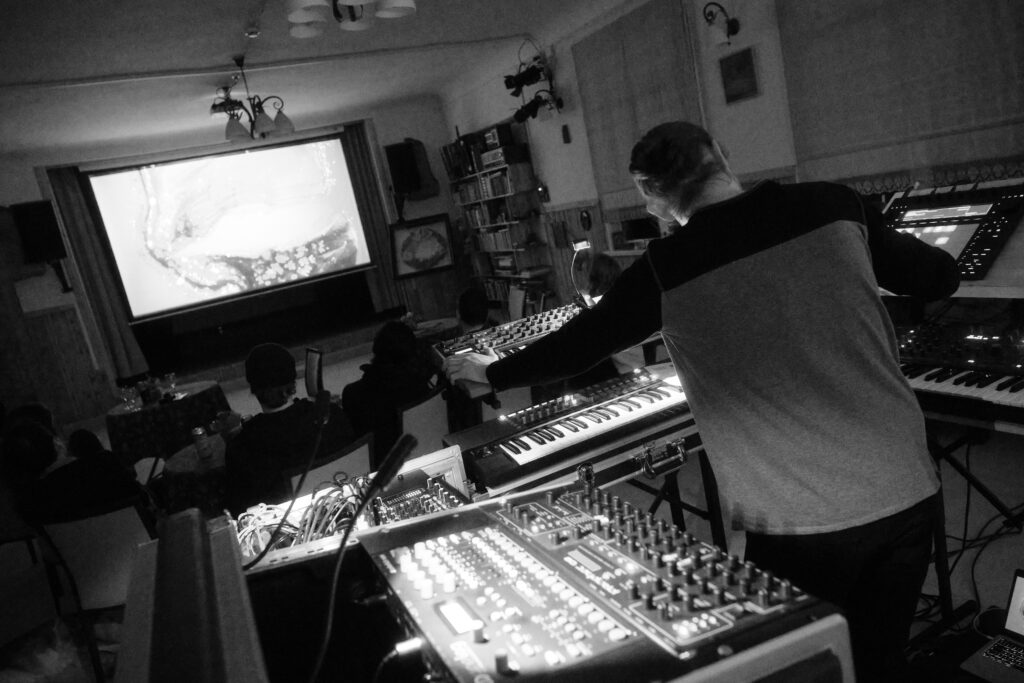
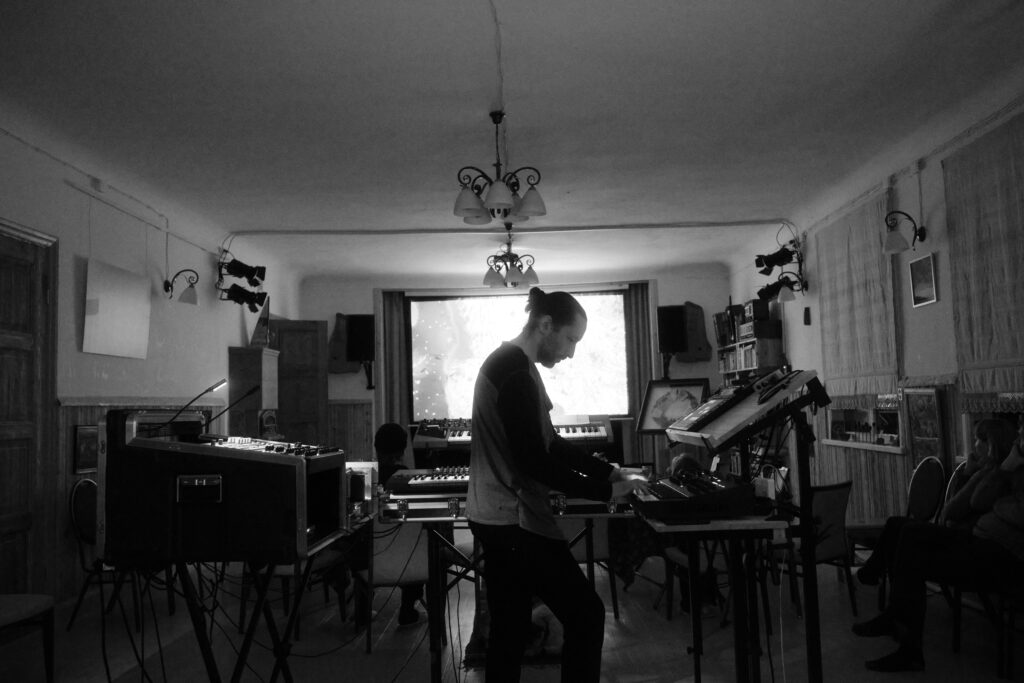
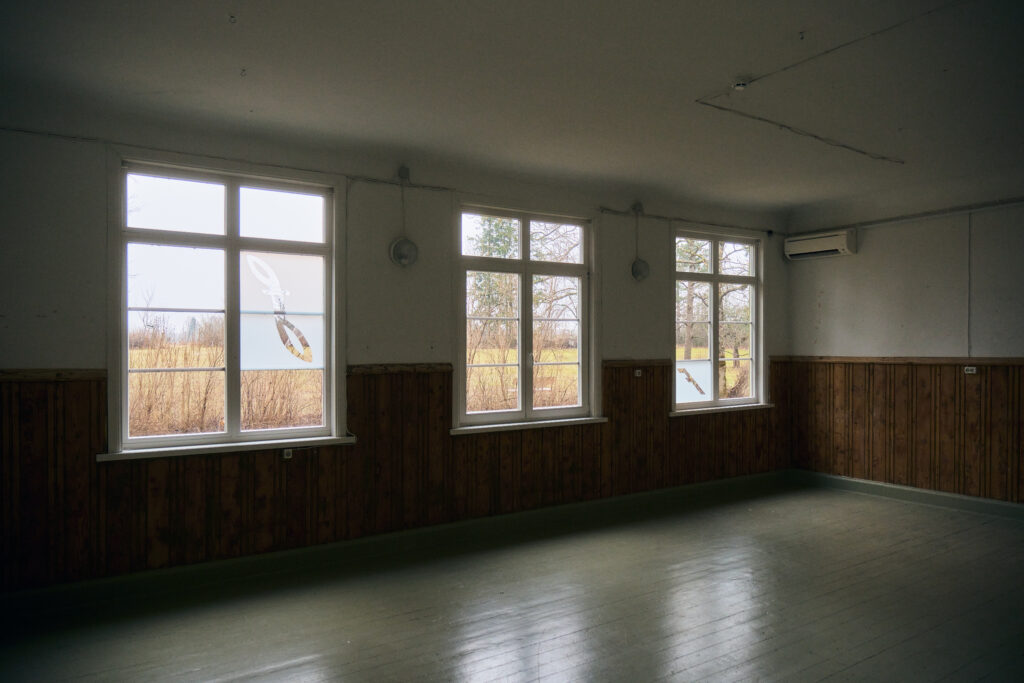
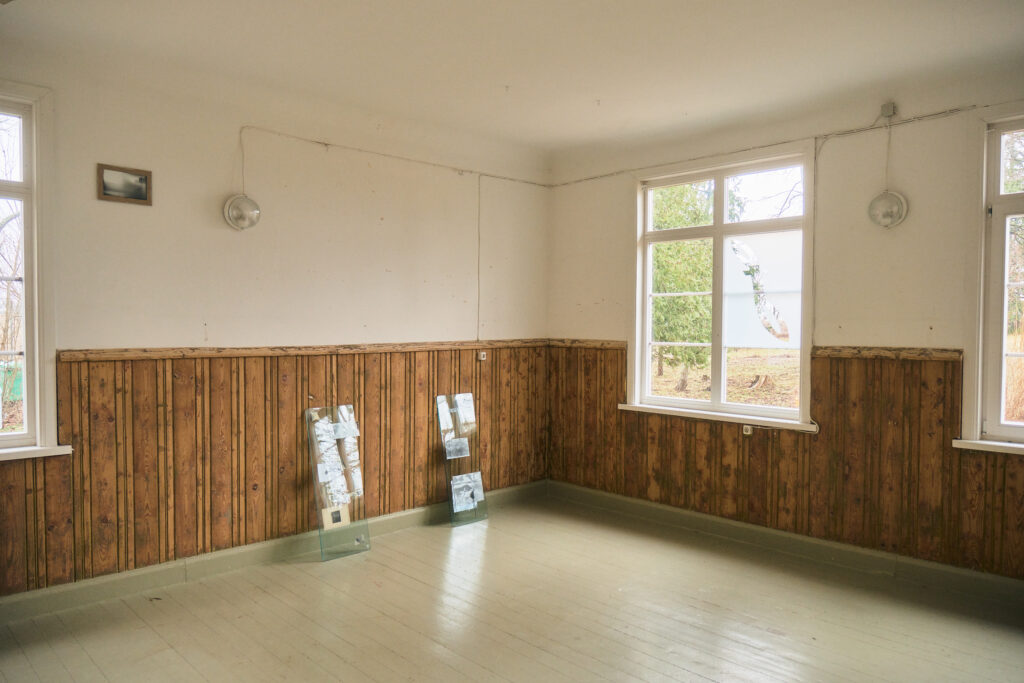
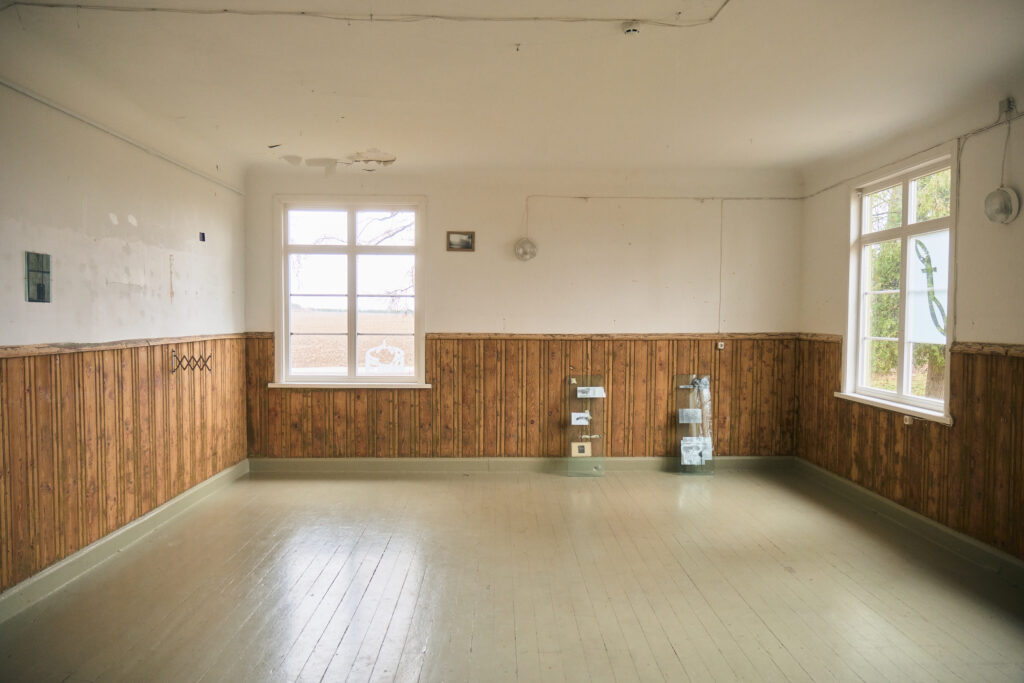
29. augustil 2026 toimus juba kuuendat korda koostöös Eesti Elektroonilise Muusika Seltsiga (EES) suvelõpu mini- festival “Vaskjala Sirakas”.
Esinesid Lau Nau (FI), Heta Bilaletdin (FI), Mia-Stella Aaslaid, Lisette-Marie Viilup, Hello Upan, Andres Vihterpal, Kenn-Eerik Kannike, Baldur Björnsson (ISL) ja Eesti elektroonilise muusika seltsi ansambel (EMA)
Installatsioonid lõid majja ja maja ümber Kail Timusk, Alex Kristjan Lumi, Paul Pank, Johannes Martin Saar, Paula Jürgens, Mia Roosberg, Karl-Joonas Romulus, Madis Martin Kasterpalu ja Raid Saar
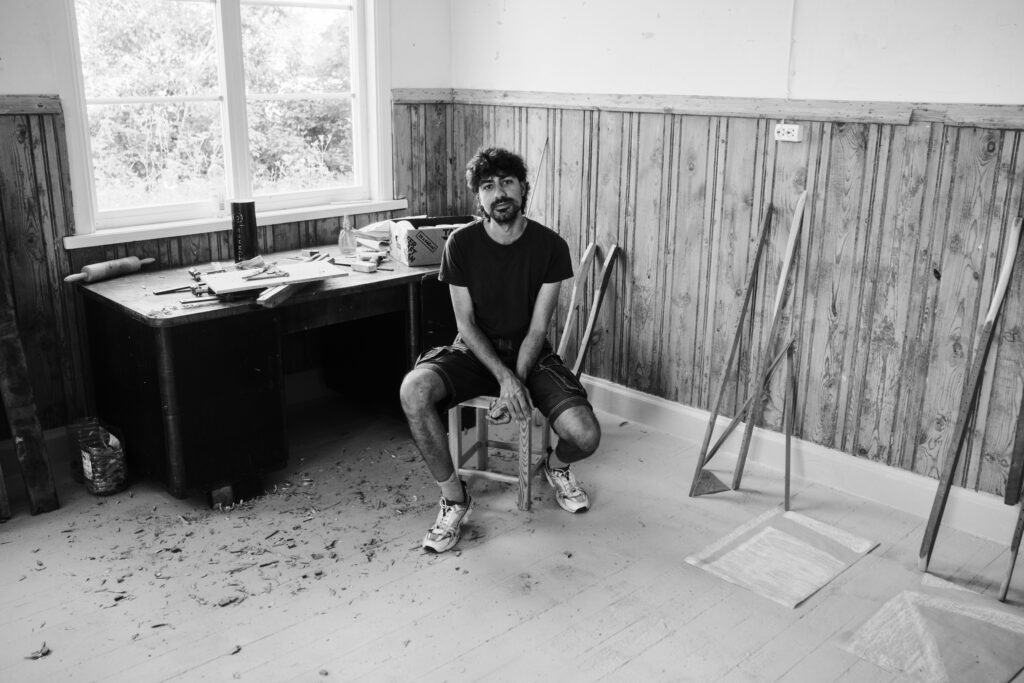
Breogán Xague kasvas üles Galicias, riigita rahva seas Hispaania loodeosas, millel on oma ajalooliselt marginaliseeritud keel. Kunstiõpingud viisid ta Madridist Stockholmi ning sellele on järgnenud viis aastat Galicia ja Rootsi vahel.
Kust sa pärit oled ja kuidas sa kunstini jõudsid?
Olen pärit Galiciast, riigita rahvusest Hispaanias, otse Portugali kohal. Minu kunst on otseselt seotud selle olukorraga: teadlikkusega sellest, et räägin allasurutud keelt, ning valikust, mille tegin täiskasvanuna, õppides selle uuesti ära. Rääkisin igapäevaselt hispaania keelt kuni kolisin Rootsi ja otsustasin sealt hakata perega galeegi keeles suhtlema. Mu vanemad rääkisid omavahel galeegi keelt, aga minuga ja mu õega hispaania keelt, nii et see muutus pidanuks tunduma loomulikum, kui see tegelikult tundus.
Kuidas sai Rootsi selle loo osaks?
Kolisin 17-aastaselt Madridi bakalaureuseõpinguteks, seejärel veetsin viimase aasta Erasmuse vahetusõpilasena Stockholmis. See aasta oli nii viljakas, et jäin sinna ka magistriõppesse, hiljem tulid vahetused ja näitused Portugalis ja Galicias. Kokku on mul Rootsiga olnud viieaastane suhe, millest neli aastat elasin seal füüsiliselt. Praegu olen tagasi Galicias, kuid tõenäoliselt lähen Rootsi järgmisel aastal taas uurimisreisile.
Kuidas kujundab see poliitiline olukord su tööd ennast?
Ütleksin, et see on otseselt mõjutatud. Alustasin kunsti tegemist, mõeldes maastikust, osaliselt reaktsioonina sellele, et mõne galeegi kultuuriobjekti puhul oli seda minu meelest väärkasutatud, sümboliseerides kohta viisidel, mis muutusid enese-eksootiliseks või liiga ülevaks. Nii hakkasin otsima teisi viise maast kujutiste loomiseks: mõõtsin ookeanilaineid, ennustasin ilma, keskendudes pigem liikumisele kui kujutisele. See viis mind heli ja keele juurde, vahendajate juurde kogukonna, selle maastiku ja nendevahelise suhtluse vahel.
Mis vormis su töö väljendub?
See sõltub projektist. Ma töötan pigem projektipõhiselt kui ühe kindla meediumiga. Kui peaksin valima, siis installatsioon, aga töötan palju ka video, fotograafia, skulptuuri ja heliga.
Kas sa töötad siin ka Vaskjala maastikuga või ikka veel kodumaastikuga?
Ma ei tunne seda kohta hästi ja kauem siin viibimine seda suurt ei muudaks, seega uurin pigem seda, mida koht sinu sees tekitab, selle asemel, et töötada otse maastikuga. Olen siin tuult jälginud, kuid olen ettevaatlik, et maakunst ei muutuks pinnapealseks, kui tegu pole minu enda maastikuga. Kui midagi, mida ma teen, lõpuks kõlab, siis on see tuule pärast, aga see on midagi muud kui koha enda kujutamine.
Mis sul selle residentuuri jaoks kujunemas on?
Huvi žestide ja objektide vastu, mis võiksid kõlada, ilma et ma neid puudutaksin. Kasutan paberit: tamburiini või nahktrummi kuju, mis näeb välja, nagu see oleks valmis kõlama, aga läheks mängides katki. Mõtlen ka žestile ja edasiandmisele, väikestele õpitud liigutustele, mida peame enesestmõistetavaks (kuidas hoida pilli, sõrmede asend selle puudutamisel, kuidas võtta pliiatsit jne). Nii jõudsin kehataoliste pillideni, mis vihjavad helile, olemata ise mängitavad. Kas see kõlab või mitte? Just see ootus on ruum, kus tahan töötada.
Olen siin leidnud ühisosa ka kunstnik Kail Timuskiga, kelle heliseadmed ja pööning, kus vesi lekib ja tuul liigub, tekitavad omaenda helisid. Võib-olla teeme koos midagi seal, omamoodi maastikutööd, aga siseruumis.
Kus sa oma praktikaga praegu seisad?
Aastaid tundsin end kindlana selles, mida teen: uurisin maastikku ja territooriumi alternatiivseid kujutamisviise. Praegu tunnen end avatumana, valmis selleks, mis iganes järgmisena tuleb. See on osa põhjusest, miks siia kandideerisin: et töötada rohkem kätega ja leida oma tempo ilma kindla programmita.
//////////////////////////////////////////////
Breogán Xague grew up in Galicia, a stateless nation in northwestern Spain with its own historically marginalised language. Fine art studies took him from Madrid to Stockholm, and five years of life since spent between Galicia and Sweden.
Where do you come from, and how did you find your way into art?
I come from Galicia, a stateless nation in Spain, just above Portugal. My art relates directly to that condition: the self-awareness of speaking a subaltern language, and the choice I made as an adult to relearn it. I spoke Spanish in my daily life until I moved to Sweden and, from that distance, decided to speak Galician with my family instead. My parents spoke Galician between themselves but Spanish to me and my sister, so this change should me more natural than it felt.
How did Sweden become part of that story?
I moved to Madrid at seventeen for my degree, then spent my final year in Stockholm on Erasmus. It was so productive I stayed for a master’s, then exchanges and exhibitions in Portugal and Galicia. Five years of relationship with Sweden, four of them living there. I’m back in Galicia now, but I’ll likely return for another research stay.
How does that political condition shape the work itself?
Directly influenced, I’d say, rather than just inspired. I started making art thinking about landscape, partly as a reaction: I felt it had been misused in some Galician cultural objects, symbolising the place in ways that became self-exoticising or too sublime. So I looked for other ways to produce images of the land. Measuring ocean waves, predicting weather; focusing on movement rather than image. That led me to sound and language, mediations between a community, its landscape, and how the two communicate.
What forms does the work take?
It depends on the project. I’m project-based rather than tied to one medium. Installation if I had to pick one, but also video, photography, sculpture, and sound.
Are you working with the landscape here, or still with home?
I don’t know this place well, and staying longer wouldn’t change that much, so I research what a place produces inside you rather than work directly with it. I’ve noticed the wind here, but I’m wary of land art turning superficial when it’s not my landscape. If anything I make ends up sounding, it’ll be because of the wind, but that’s different from representing the place itself.
What’s taking shape for this residency?
An interest in gestures and objects that might make sound, without me touching them. I’m using paper: a tambourine or skin drum shape that looks ready to make sound but would break if played. I’m also thinking about gesture and transmission, small learned movements we take for granted (holding an instrument, the position of the fingers where touching it, grabbing a pencil, etc.). So this led to body-like instruments that suggest sound without being playable. Will it sound, or won’t it? That waiting is the space I want to work in.
I’ve also found synergy with an artist here named Kail Timusk, whose sound set-up and the attic (where is water leaking, wind moving through it) makes its own sounds. We might do something there together, a bit like landscape work, indoors.
Where does that leave your practice right now?
For years I felt sure of what I was doing: researching landscape and alternative representations of territory. Right now I feel more open, ready for whatever’s next. That’s part of why I applied here, to work with my hands more and find my own pace without a fixed programme.
28. juulil avatud uste päeval esitlesid kolm kunstnikku oma loomingut.
Noore Skulptori Preemia võitja Kail Timusk töötas residentuuri jooksul nii installatsiooni kui ka heliteostega. Aianurgast leitud vana lagunenud klaver sai uue hingamise kahe erineva teose näol. Varem oli klaver 2018. aastal Simon Whethami teos, mis oli tuule ning päikese abil mängiv klaver. Kail tõi kohale ka Krati kes läks õunavargile.
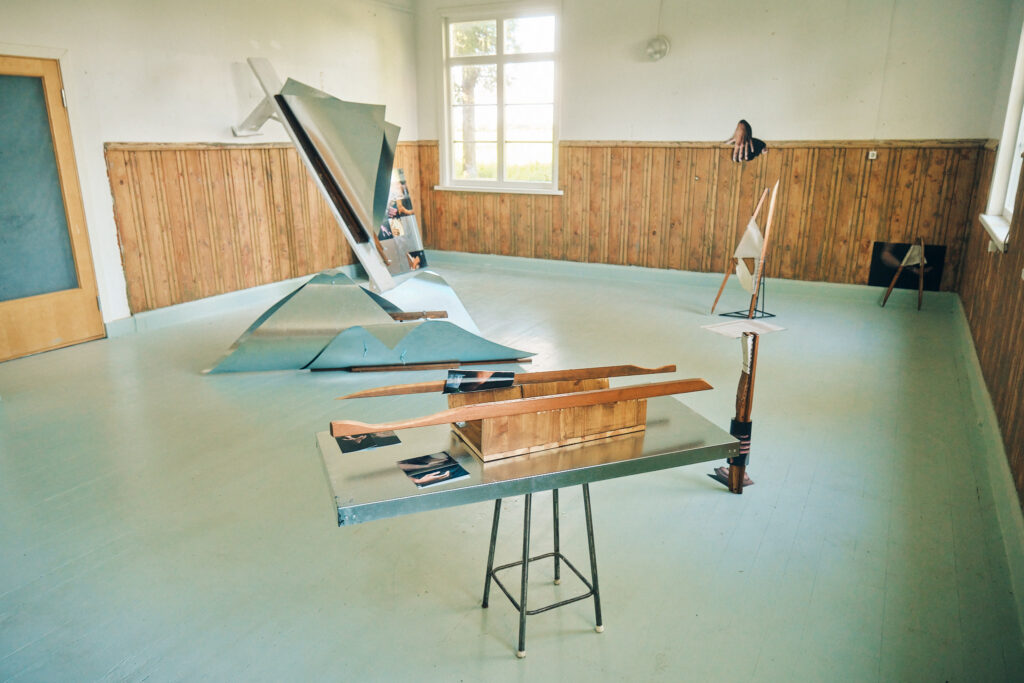
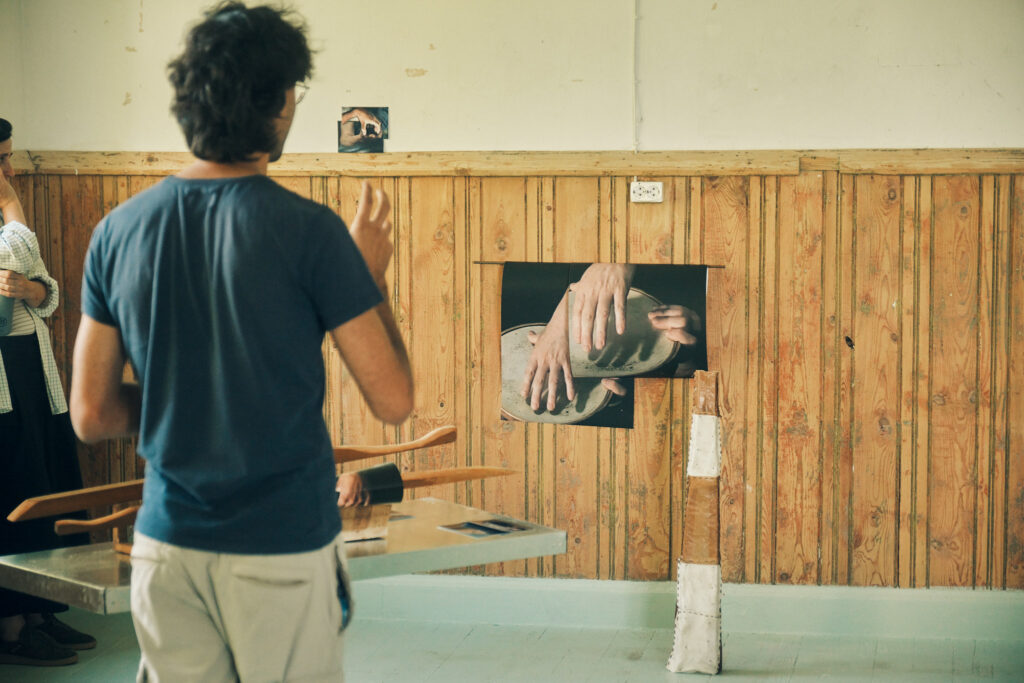
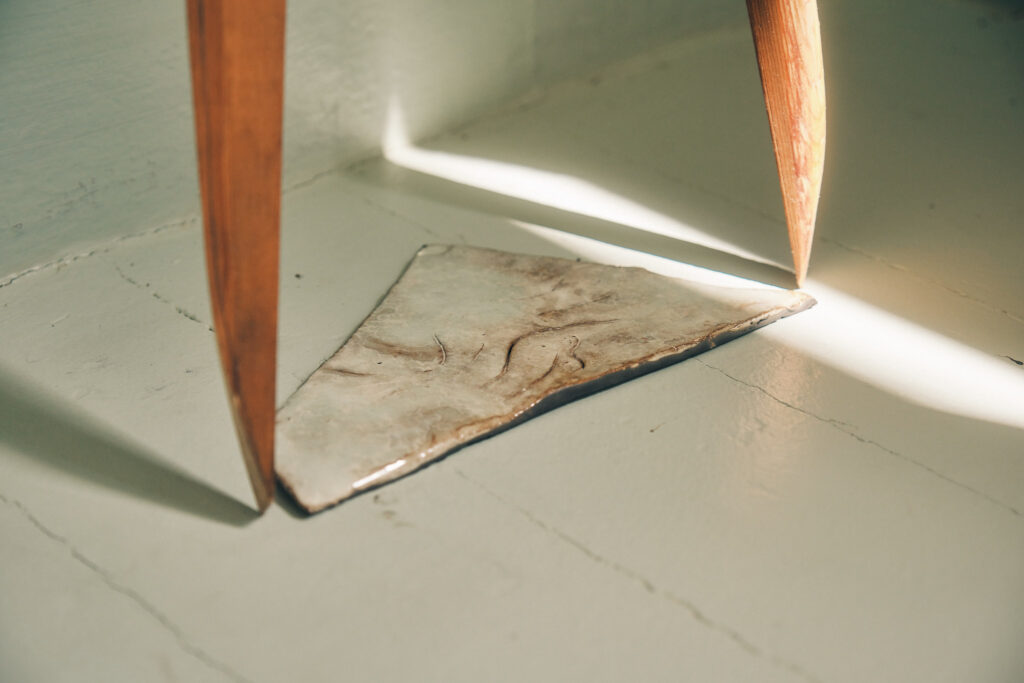
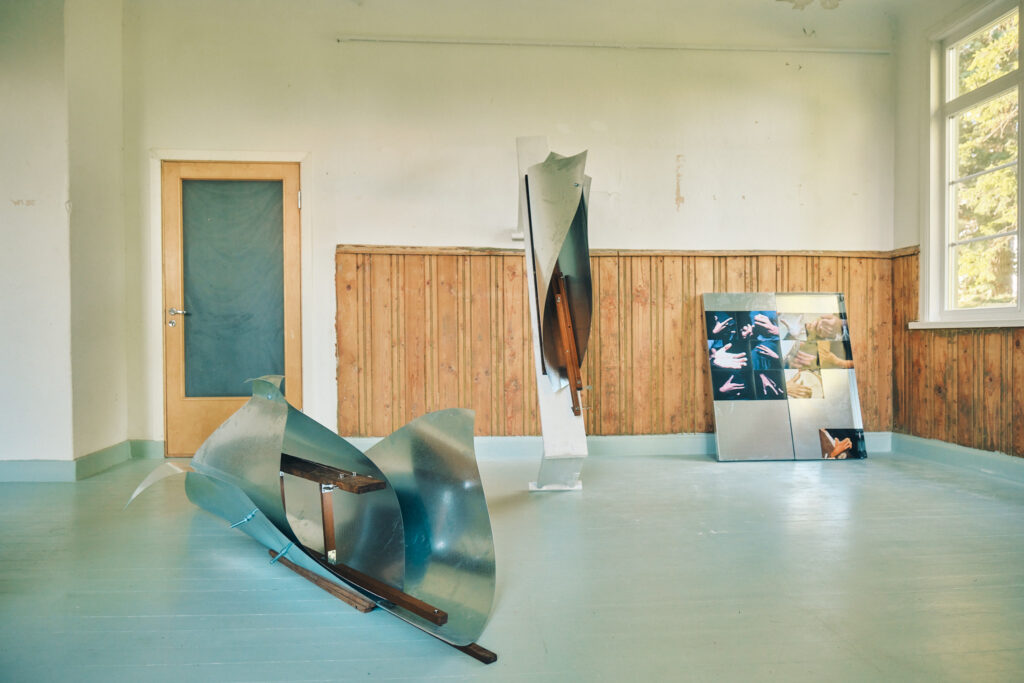
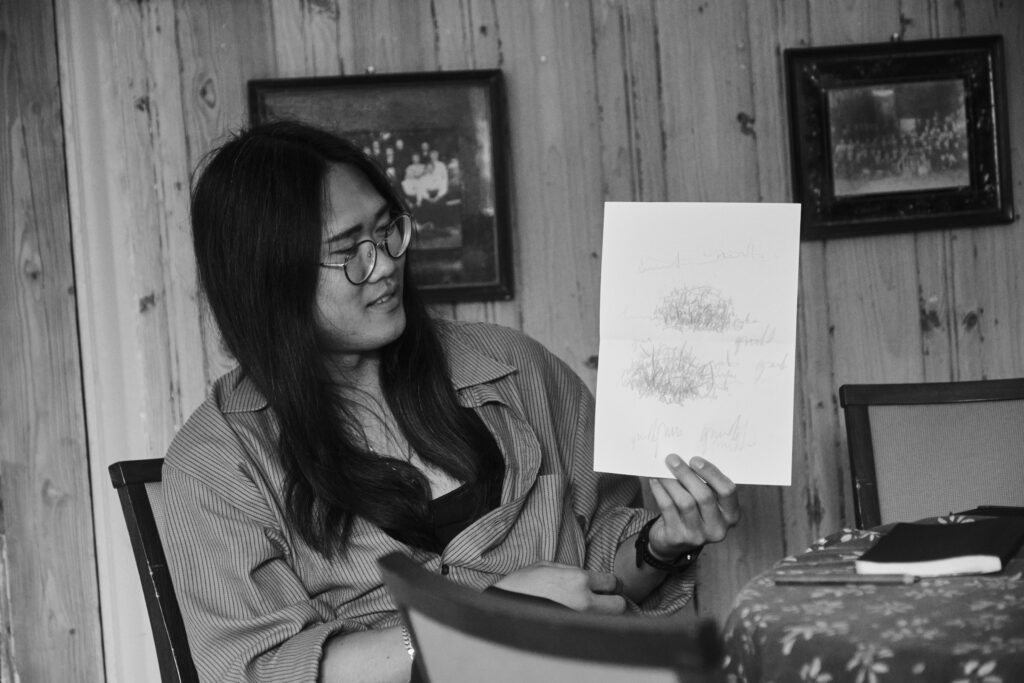
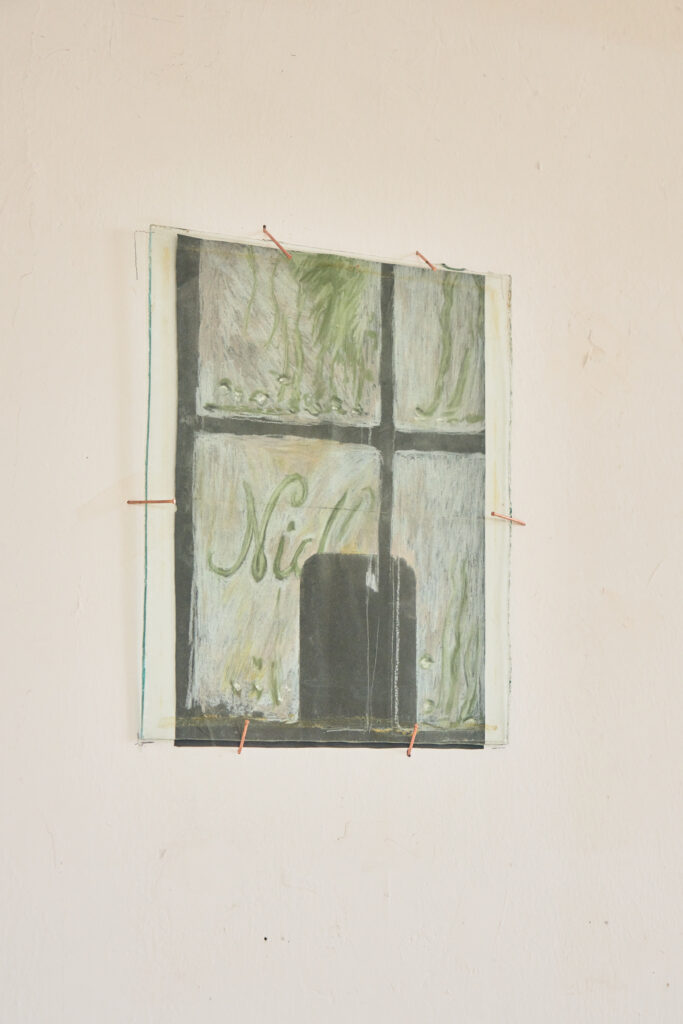
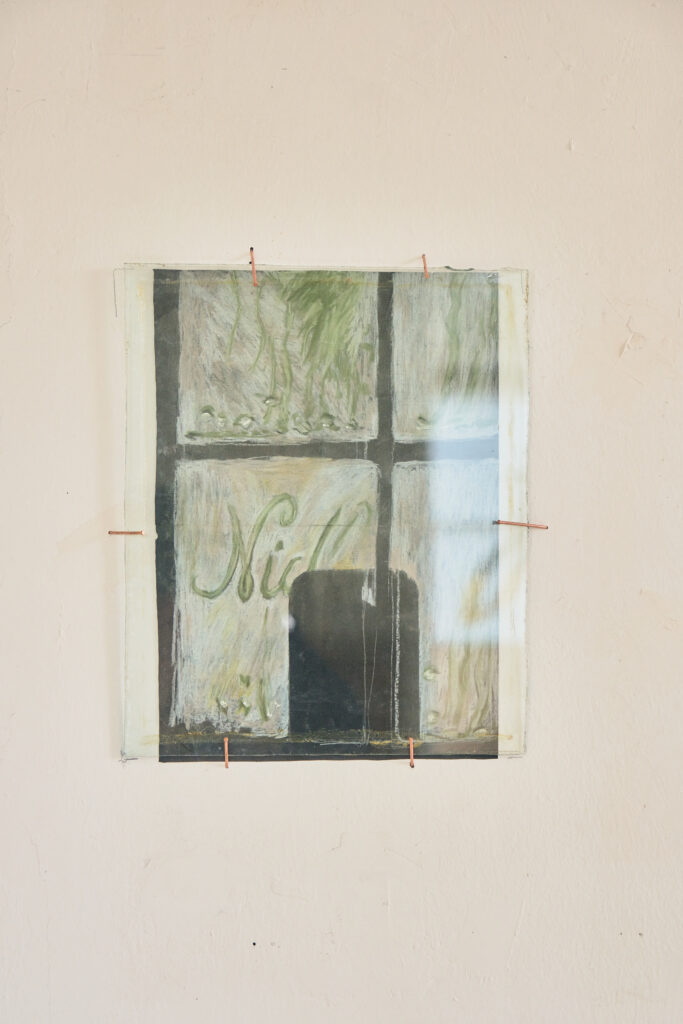
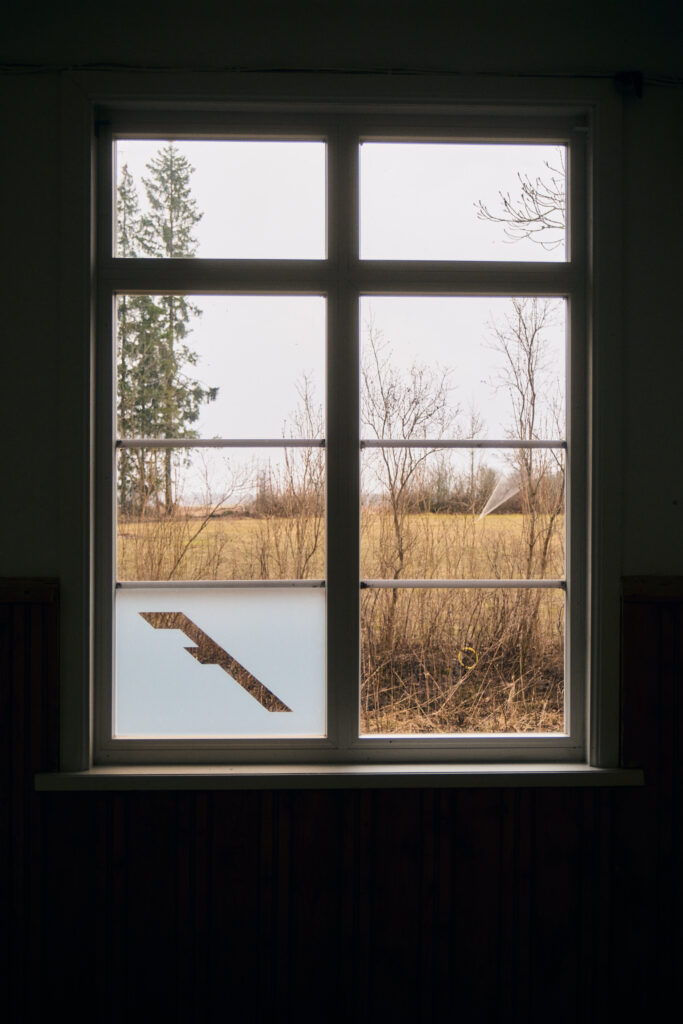
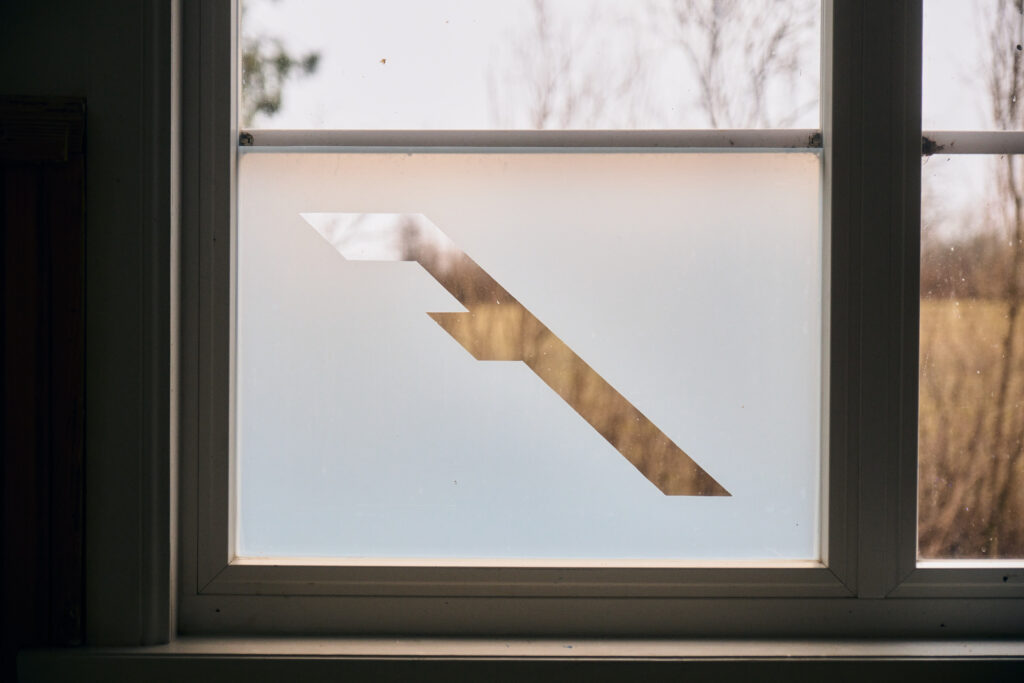
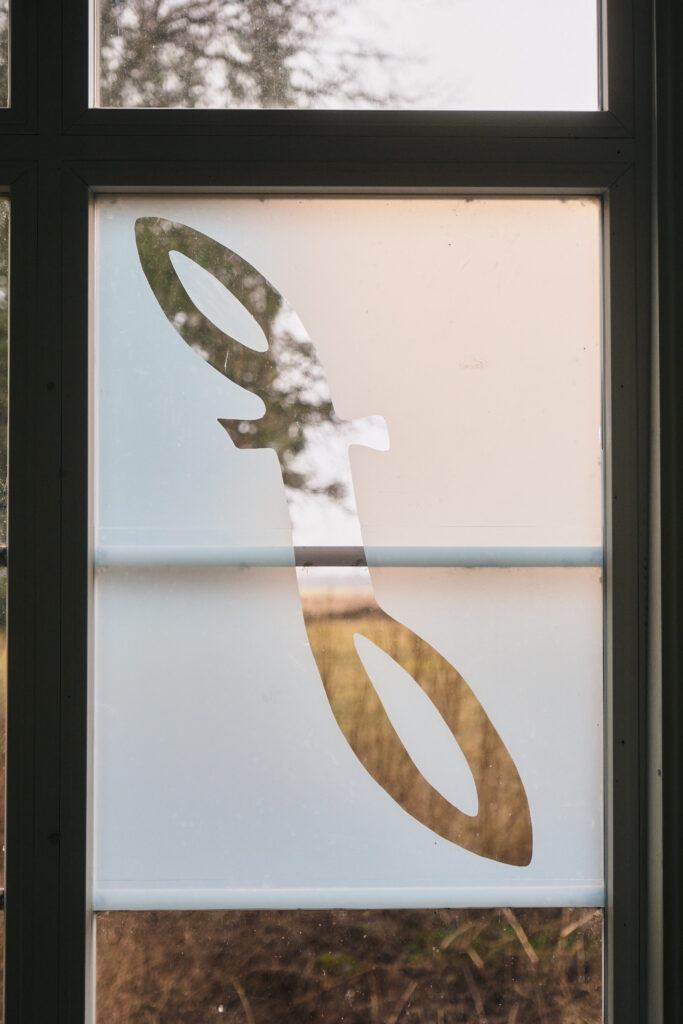
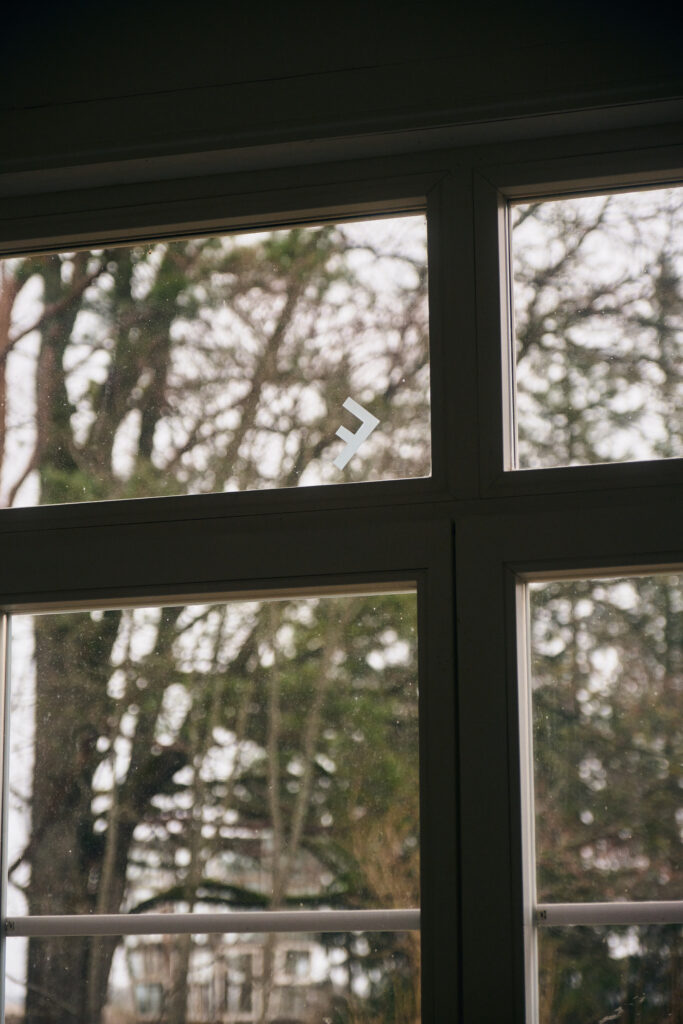
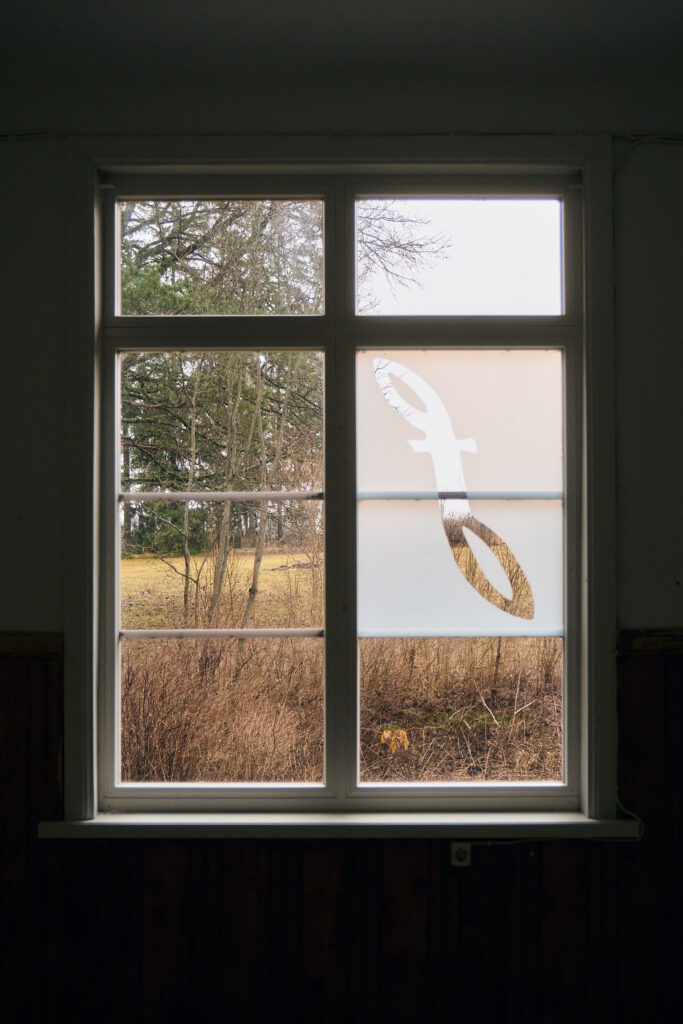
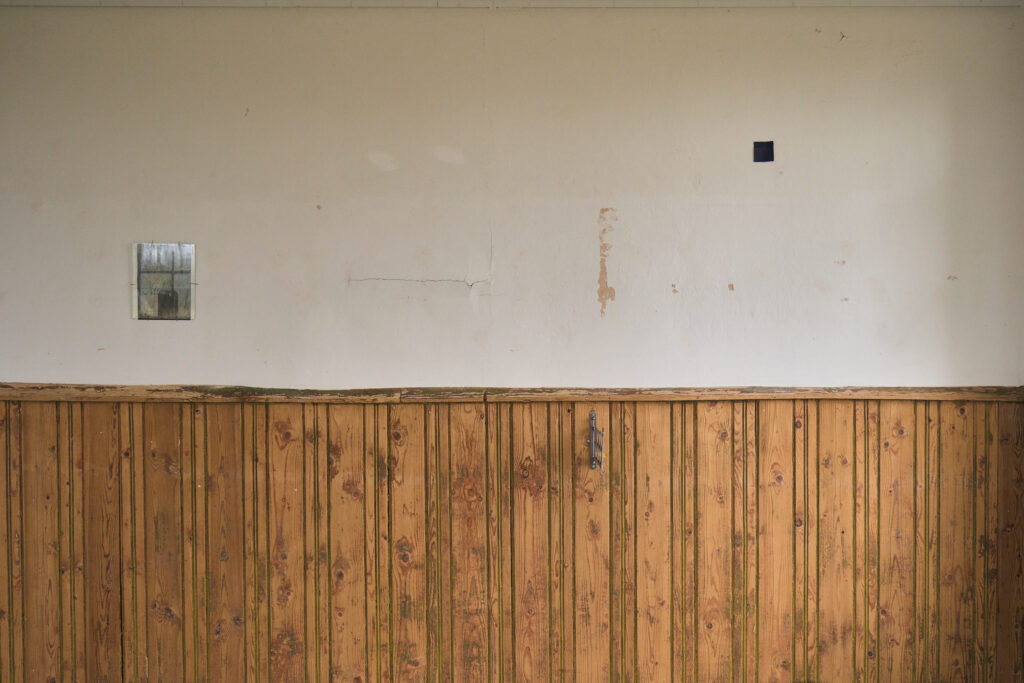
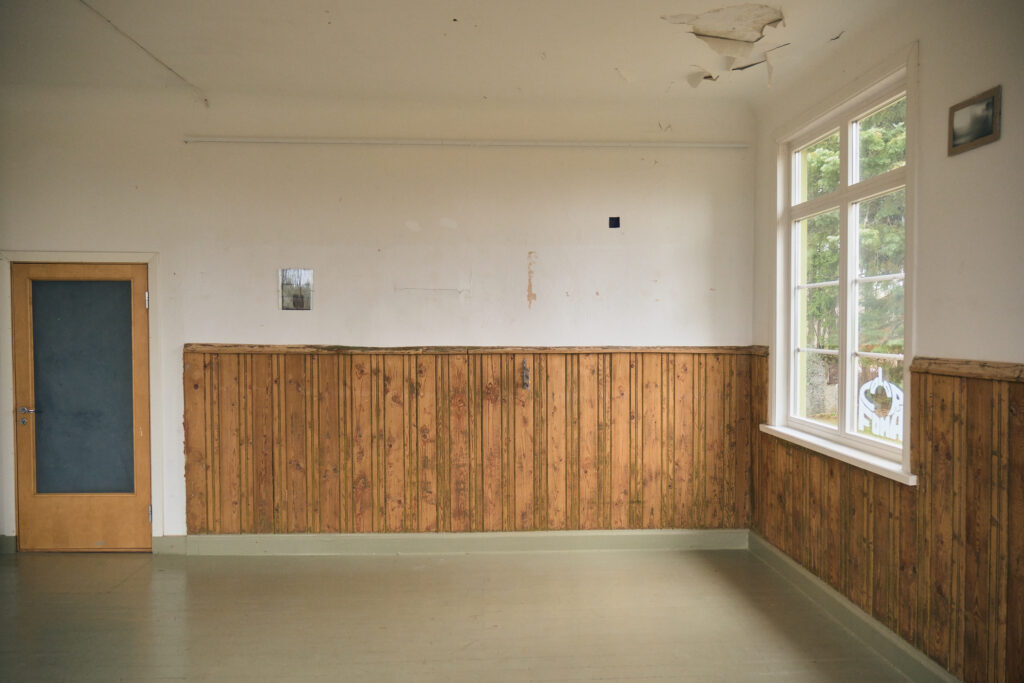
Breogán Xague, pärit Galicia piirkonnast, keskendus keele edasikandumisele ja kuidas keel muutub kui seda marginaliseeritakse. Tema looming täitis stuudioruumi erinevate piltide ja installatsioonidega. Tulevikus jääb mõni tema teos ka meie maakunsti keskkonda täiustama.
Alis Mäesalu võttis kasutusele vana majavundamendi meie hoovis ning ehitas selle peale vaid paari päeva jooksul endise meremuuseumi põrandalaudadest loomingulise katkestustega terrassi.
Ootame kõiki teostega tutvuma!
/////////////////////////////
On July 28th, at the Open Doors Day, three artists presented their work.
Young Sculptor Award winner Kail Timusk worked on installation and sound art during the residency. An old, decaying piano found in a corner of the garden was given a new life. The piano had previously been part of a 2018 work by Simon Whetham, a piano played by wind and sun. Kail also brought along a Kratt that had gone apple-stealing.
Breogán Xague, from the Galicia region, focused on the transmission of language and how language changes when it is marginalized. His work filled the studio space with various images and installations. In the future, some of his pieces will remain to enrich our land art environment.
Alis Mäesalu took over an old house foundation in our yard and, over the course of just a few days, built on top of it a terrace with creative interruptions, made from floorboards salvaged from a former maritime museum building.
Kail Timusk (2000) on Eesti skulptor ja installatsioonikunstnik, kelle looming liigub skulptuuri, heli, installatsiooni ja performance’i piirimail. Teda huvitavad mälu, ruumi ning une ja ärkveloleku vahelised seisundid. 2026. aastal lõpetas ta Eesti Kunstiakadeemia skulptuuri ja installatsiooni eriala ning pälvis Noore Skulptori Preemia. Ta on osalenud näitustel ja kunstiresidentuurides nii Eeuroopas kui ka Kanadas.
Kail Timusk pälvis 2026. aasta Noore Skulptori peapreemia. Vaskjala Loomeresidentuur on võõrustanud Noore Skulptori Preemianäituse laureaate alates 2021. aastast.
Kuidas algas Su loominguline teekond?
Algul läksin Pallasesse fotograafiat õppima, suurte ootustega, aga esimese semestri jooksul sain aru, et see ei ole päris see keskkond, kus tahaksin edasi õppida. Tundsin, et soovin midagi avatumat katsetada ja ka arusaam kaasaegsest kunstist oli seal minu jaoks teistsugune, kui olin oodanud.
Miks valisid algul just fotograafia?
See tundus loogiline, sest olin väiksest peale palju pildistanud ja mu vanemad on samuti fotograafiaga seotud. Esimese aasta jooksul Pallases sain aga aru, et tehnika on mul juba käes ning õppeainete fookus ei läinud päris kokku sellega, mida ise õppimiselt otsisin. Tundsin, et soovin rohkem katsetada ja liikuda vabamalt erinevate meediumite vahel.
Kuidas jõudsid Tartust Tallinnasse EKA-sse?
Elasin ise Tartus ja päris paljud tuttavad õppisid EKA-s, nii et läksin lõpuks ka ise sinna katsetele. Esimesel korral ei saanud sisse, Pallasesse aga võeti mind vastu maksimaalsete punktidega. Hiljem läksin uuesti EKA katsetele ja mõtlesin, kas minna foto- või skulptuuriosakonda.
Miks valisid lõpuks skulptuuri kasuks?
Olin kuulnud, et skulptuuriosakonnas on palju vabadust, materjali ette ei anta ja saab rakendada mis tahes oskusi, olgu see foto, video või midagi muud. See tundus palju avaram kui foto õppimine eraldi meediumina.
Milliste materjalidega Sa tegeled?
Võtsin eesmärgiks katsetada võimalikult paljude erinevate asjadega, mitte kohe kindlat suunda valida. Üritan mitte olla kinni ühes meediumis. Teen performance’it, fotot, videot, skulptuuri ja installatsioone, ainult maalimiseni pole jõudnud. Esimene suurem töö oli kolme jalaga monstrum, mille kõhus oli kinoprojektor, mis projitseeris pidevalt üle ruumi pilti, ja peas olid peeglikillud, mis peegeldasid valgust laiali.
Sul on ka pikem kogemus Noore Skulptori Preemianäitusega.
Olen osalenud mitmel aastal. Ühel korral olin residentuuris Islandil Erasmusega ja jäin kõrvale, teisel aastal ei võetud mind vastu, sest ei usutud, et jõuan valmis suure klaastekiga voodi. Esimesel EKA aastal saingi teise koha, vastukaaluks eelnenud aastale, mil tegin Tartus kunstifestivali Aparaaditehases. See oli keeruline kogemus, sest kommunikatsioon oli raske ja noorte kohalike kunstnike motivatsiooni oli keeruline üleval hoida. Asi sai ikkagi tehtud, aga kogu aeg oli tunne, et pean läbi takistuste võitlema.
Räägi Islandi residentuurist lähemalt.
Läksin sinna Erasmuse praktikaga neljaks kuuks, kohaliku kunstnike ühenduse juurde, kus samal ajal olid ka Taavi Suisalu ja teised. Mul oli just siis tekkinud suur huvi Taavi loomingu vastu ning kui ma teda seal tutvumispäeval nägin, oli see mulle suur üllatus, et tema ka seal osaleb. Residentuuris uurisin turismi teemat: turismimaks aitab hooldada kaitsealasid, aga massiturism on just see, mis neid kahjustab, lisaks jää sulamine ja korterite hinnad, mida Airbnb üles kruvib. Käisime ka liustikel ja tegime endale isegi töökojas materjali jääkidest jääkirkad valmis.
Praegu oled uues residentuuris. Mis siin sünnib?
Siin on hea katsetada midagi kergemat, vastukaaluks eelmisele aastale, mil tegin lõputöö ja Noore Skulptori Preemianäituse teose, mis mõlemad puudutasid Eesti okupatsiooni ja Ukraina sõda. Leidsin siit alanurgast vana lagunenud klaveri. See oli 2018. aastal loodud Simon Whethami teos, mis oli tuule ja päikese jõul mängiv klaver. Plaanin teha midagi, mis astuks dialoogi teose algse loojaga. Lammutasin klaveri jäänused laiali ja otsustasin selle uuesti kokku panna. Arvatavasti tuleb vähemalt kaks tööd ja kindlasti ka kontsert.
Kail Timusk (b. 2000) is an Estonian sculptor and installation artist whose work moves between sculpture, sound, installation, and performance. He is drawn to memory, space, and the states between sleep and wakefulness. In 2026 he graduated from the Estonian Academy of Arts with a degree in sculpture and installation and received the Young Sculptor’s Award. He has taken part in exhibitions and art residencies across Europe as well as in Canada.
Kail Timusk won the 2026 Young Sculptor’s Award grand prize. Copper Leg Residency has hosted the Young Sculptor’s Award winners since 2021.
How did your creative journey begin?
At first I went to Pallas to study photography, with high hopes, but during the first semester I realized it wasn’t quite the environment I wanted to keep studying in. I felt I wanted to try something more open, and my sense of what contemporary art meant at Pallas turned out to be different from what I’d expected.
Why did you choose photography at first?
It seemed logical, since I’d been taking photos since I was little and my parents are also involved in photography. But during that first year at Pallas I realized I already had the technical skills, and the coursework didn’t really match what I was looking for from my studies. I felt I wanted to experiment more and move more freely between different mediums.
How did you end up moving from Tartu to the Academy of Arts in Tallinn?
I was living in Tartu, and quite a few people I knew were studying at the Estonian Academy of Arts, so eventually I applied to EKA. I didn’t pass the first time, while Pallas had accepted me with the maximum points. Later I tried to apply to EKA again and was thinking whether to go into photography or sculpture.
Why did you choose sculpture in the end?
I’d heard that the sculpture department had a lot of freedom, that you weren’t handed a set material, and that you could draw on whatever skills you had, whether that was photography, video, or something else. That felt much more open than studying photography as a separate medium.
What materials do you work with?
I set myself the goal of trying out as many different things as possible rather than settling on one direction right away. I try not to get stuck in a single medium. I work with performance, photography, video, sculpture, and installation. The only thing I haven’t gotten to yet is painting. My first larger piece was a three-legged monster with a film projector in its belly that kept projecting an image across the room, and mirror shards in its head that scattered the light around.
You also have a history with the Young Sculptor’s Award exhibition.
I’ve taken part several times. One year I was on a residency in Iceland through Erasmus and had to sit that round out; another year I wasn’t accepted because they didn’t believe I’d finish in time, a huge bed covered with a blanket made of glass. During my first year at EKA I did get second place, which was a nice counterbalance to the year before, when I organised an art festival in Tartu at Aparaaditehas. That was a difficult experience, communication was hard and it was tough to keep the young local artists motivated. It got done in the end, but the whole time it felt like I was fighting my way through obstacles.
Tell me more about the Iceland residency.
I went there for four months on an Erasmus internship, joining a local artists’ collective. Taavi Suisalu and others were there at the same time. I’d just developed a strong interest in Taavi’s work, so it was a real surprise to run into him there on the introduction day. During the residency I looked into the subject of tourism: tourist tax helps maintain protected areas, but mass tourism is exactly what damages them, on top of the glaciers melting and Airbnb driving up apartment prices. We also went out onto the glaciers, and even made our own ice axes in the workshop from scraps of material.
You’re on a new residency now. What’s taking shape here?
It’s good to try something lighter here, as a counterbalance to last year, when I made both my graduation piece and my Young Sculptor’s Award piece, both of which dealt with Estonia’s occupation and the war in Ukraine. Here I found an old, decayed piano from the garden. It was a piece made by Simon Whetham in 2018, a piano played by the wind and the sun. I’m planning to make something that steps into dialogue with the original creator of the piece. I took the remains of the piano apart, and then decided to put it back together again. There will probably be at least two pieces, and definitely a concert too.
Junny Chun Au Yeung on Hong-Kongist pärit kunstnik, kes hetkel elab Inglismaal. Ta õppis 2020-2022 kaasaegset kunsti Eesti Kunstiakadeemias ning uuris oma lõputöös kodu tähendust ja tõrjutuse kogemust. Tema praktika liigub installatsiooni, fotograafia ja video vahel ning on toetunud navigatsioonisümbolitele, düsfunktsionaalsetele objektidele ja dokumentaalsetele meetoditele võõras ruumis orienteerumiseks.
Sa oled siin juba varem olnud. Mis tõi sind tagasi? Tundub, et sellest on saanud traditsioon. Olen igal suvel siia tulnud. Isegi pärast õpingute lõpetamist, isegi pärast Suurbritanniasse elama asumist tõmbab miski mind siia tagasi. Süda kutsub siia tagasi.
Kuidas Sa Eesti üldse avastasid? 2019. aastal protestide ajal Hong-Kongis moodustasime inimkette. Hiljem sain teada, et see protestivorm pärineb Balti ketist. See liigutas mind sügavalt ja hakkasin Eesti vastu huvi tundma. Samal ajal tahtsin magistriõppesse minna välismaale ning sattusin EKA peale. Leidsin nende kaasaegse kunsti programmi ja see tundus mõistlik.
Sinu lõputöö käsitles kodu mõistet. Kuhu see otsing sind viis? Minu EKA lõputöö uuris, mida tähendab kodu siis, kui oled lahkunud oma sünnikohast. Hong-Kongist lahkudes tahtsin mõista, kuhu ma kuulun ja kuidas leida ennast sealt, mis pole minu oma. Kuid pärast aastatepikkust otsimist tunnen, et vastust sellele pole. Otsing ise võib olla lõks. Viimasel ajal mõtlen palju filmile “Backrooms”, sellest kuidas olla lõksus ruumis, mida tegelikkuses ei eksisteeri, pidevalt liikuda ja otsida väljapääsu. Just nii on kodutunne minu jaoks hakanud tunduma.
Kuidas on sinu loominguline praktika sellest mõjutatud? Varem töötasin sümbolite ja navigatsiooniga, düsfunktsionaalsete objektidega, püüdes leida suunda väljapoole. Nüüd tundub, et suund on pöördunud sissepoole. Selle residenuuriga tahan minna sügavamale enda hinge. Joonistan ning töötan fotoskulptuuriga ühest kivist: pildistan objekti mitmest nurgast ja moodustan neist piltidest kolmemõõtmelise kuju. Tulemus on aga moonutus, midagi mis viitab päris objektile olles sellest samas selgelt erinev. Võib-olla tuleb ka video, midagi kehaga tihedamalt seotut. Otsin veel õiget suunda.
Sa kirjeldasid oma keha kui läbikäiku. Mida sa sellega mõtlesid? Nagu lennujaam või bussijaam. Kohad, kuhu inimesed saabuvad mingi eesmärgiga ja lahkuvad siis. Keegi ei jää püsima. Ja praegu tunnen end seestpoolt just nii, et kõik on liikumises, kõik läbib mind. Ehk on kodu seal, kus su süda on. Ehk peitub see teel olemisel endas. Kindlat vastust pole ja enam ma ei oota ka seda.
///////////////////////////////////////////////
Junny Chun Au Yeung is a Hong Kong-born artist currently based in the UK. He studied contemporary art at the Estonian Academy of Arts, graduating in 2022 with a body of work exploring the meaning of home and the experience of displacement. His practice moves between installation, photography, and video, and has drawn on navigation symbols, dysfunctional objects, and documentary methods as ways of orienting himself within unfamiliar spaces.
You’ve been here before. What brought you back? It feels like a tradition now. Coming here every summer. Even after finishing my studies, even after settling in the UK, something keeps pulling me back. My heart keeps lingering here.
How did you find Estonia in the first place? It started in Hong Kong, in 2019, during the protests. We formed a human chain, people hand in hand, a peaceful way of standing together. Later I found out that this form of protest came from the Baltic countries, from the Baltic Way. I found it deeply moving and started looking into Estonia. Around the same time, I was thinking about a master’s degree somewhere abroad, and I came across EKA. They were promoting their contemporary art program, and it made sense. So I came.
Your graduation work was about home. Where did that search lead you? I studied contemporary art at EKA from 2020 to 2022, and my graduation work tried to ask what home means when you left the place where you were born. Being in a foreign country, moving out of Hong Kong, I wanted to understand where I belong and how to find myself somewhere that isn’t mine. But after years of searching, I’ve started to feel that there is no answer. That search itself might be the trap. I’ve been thinking about the film Backrooms lately, about being caught in a space that doesn’t exist in reality, constantly running and looking without exit. That is what the search for home has started to feel like to me.
How has your practice shifted in response to that? Before, I was working with symbols and navigation, with dysfunctional objects, trying to find direction outward. Now I feel the direction has turned inward. This residency I want to go deeper into inner space, inner soul. I’m making drawings, and I’m working on a photographic sculpture of a rock: taking many photographs around the object, almost like photogrammetry, and then printing and assembling them into a three-dimensional form. But the result will be distorted, not realistic, something that refers to the real object while being clearly different from it. There may also be a video piece, something more connected to the body. I’m still looking for directions.
You described your body as a transitional space. What do you mean by that? Like an airport or a bus station. Places where people arrive with a purpose and then leave. Nobody stays. And right now that is how I feel inside, everything is in transit, passing through. Maybe home is wherever your heart is. Maybe it’s within the journey itself. There is no fixed answer, and I’ve stopped expecting one.
Läbi Läve: Cam Peeters ja Ola Lewczyk palverännakust, rituaalidest ja oma tee leidmisest
ENG below
Cam Peeters on muusik ja kirjanik, kelle loomingus seguneb äärmuslik helimoonutus, arhiivisalvestised ja sügavalt isiklik lüürika. Läbi kõige, mida ta loob, jooksevad korduvad teemad: võnkumine, surm, taassünd ja vabaduse otsing.
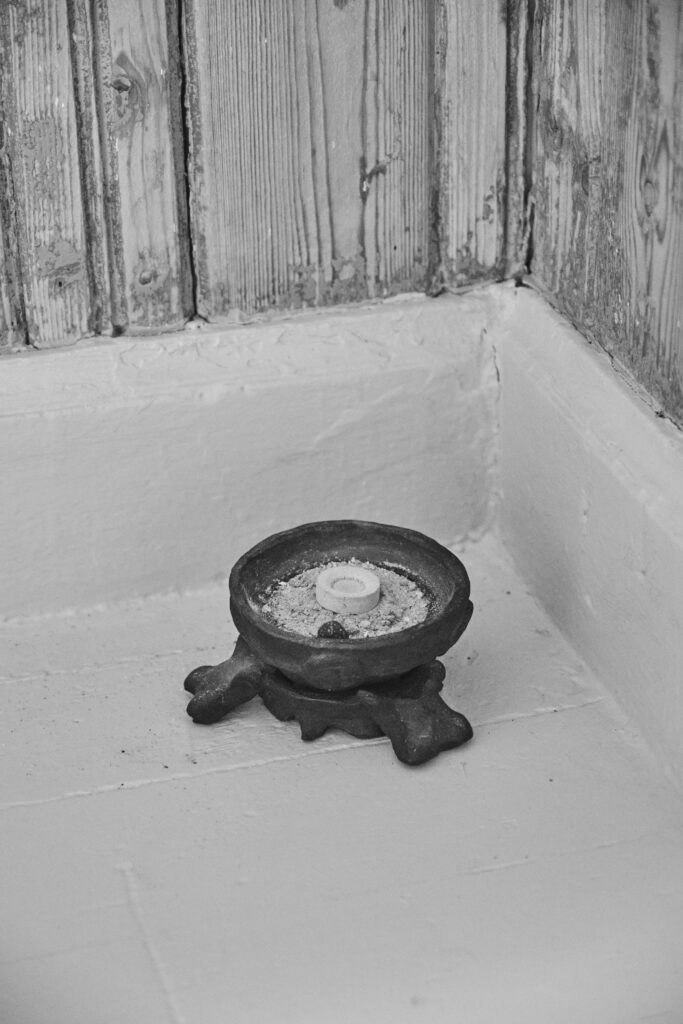
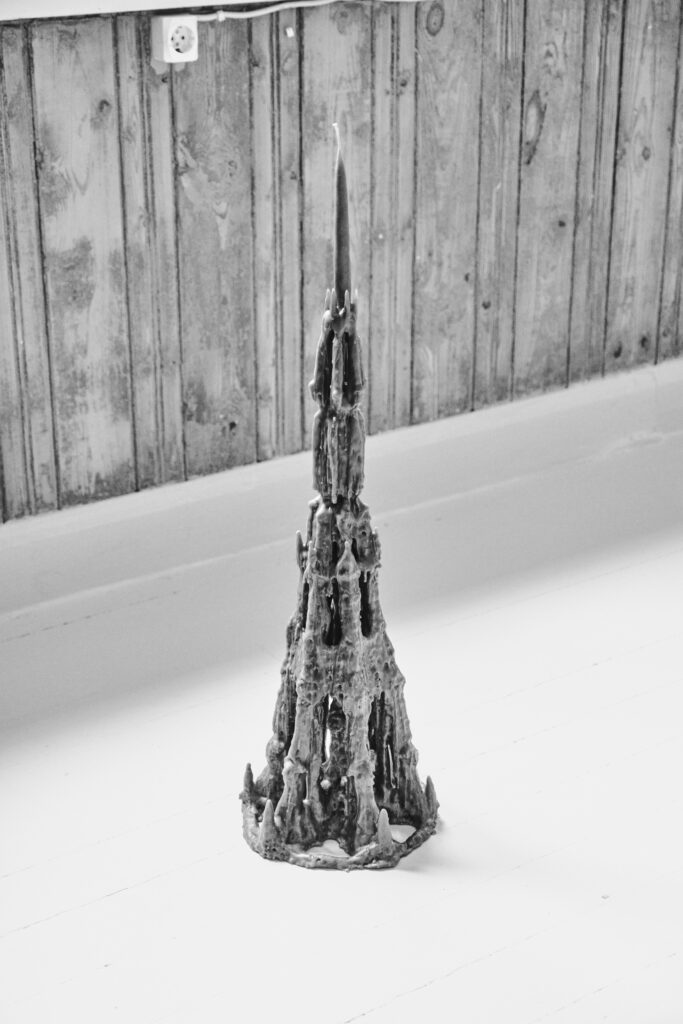
Ola Lewczyk on kunstnik ja loomeinimene, kelle praktika juured peituvad käsitööoskustes, rahvakultuuris ja materjaliuuringutes. Töötades vaha, savi ja teiste looduslike materjalidega, uurib ta seoseid inimese ja kõiksuse vahel. Valguse element, sageli tule või päikese kujul, juhib tema praktikat, ühendades vaikiva mälu, mateeria ja müüdi.
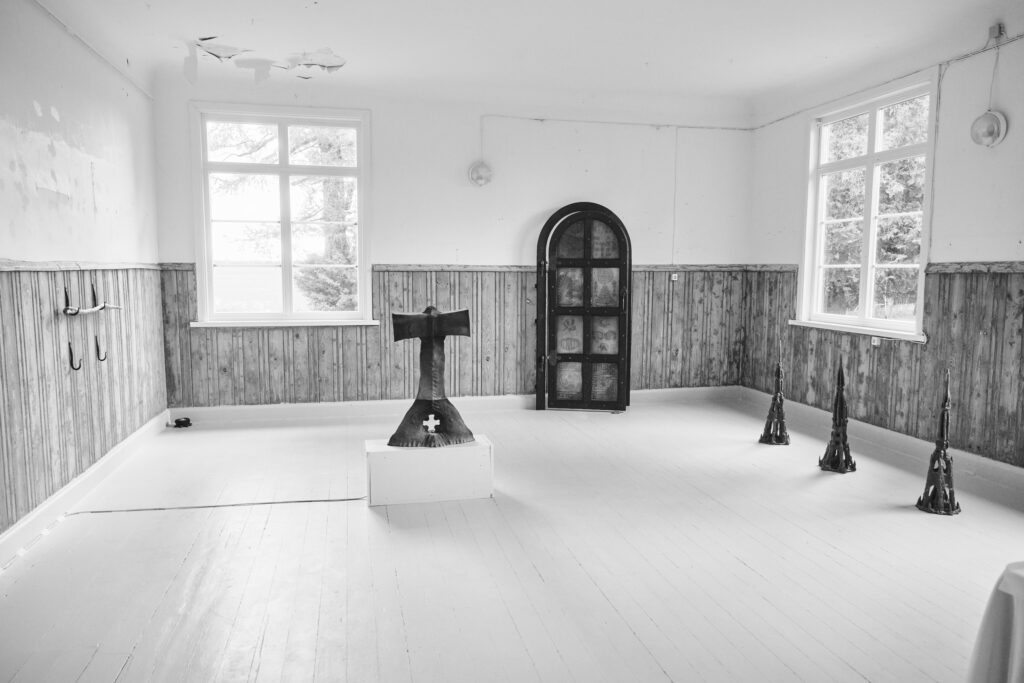
Kaks kunstnikku kohtusid Londonis Goldsmithsi ülikoolis õppides ja on sellest ajast saadik arendanud pikaajalist loomingulist koostööd. 14. juunil esitlevad nad ühist, multisensoorset installatsiooni, mille inspiratsiooniks on 13-päevane palverännak, mille nad läbisid üle Apenniinide mägede Roomani.
Te tegite koos palverännaku eelmisel aastal. Mis teid sinna kutsus?
Me oleme alati koos palju kõndinud, kuid see oli seni meie kõige pikem teekond. Idee oli jõuda Aadria merest Vatikanini Apenniinide kaudu 13 päevaga. Eelmine aasta oli juubeliaasta, mil Vatikani pühad väravad avatakse, ja see toimub ainult korra 25 aasta jooksul. See oli ka väga isiklik küsimus, mis puudutas meie suhet kristlusega, vana-rooma ja paganlike traditsioonidega ning rituaalidega üldisemalt. Selle rakendamine oma elus, rituaalidele, mida me oma elus planeerime, ja palverännaku tempo aeglus, erinevalt tavapärasest mugavast reisimisviisist.
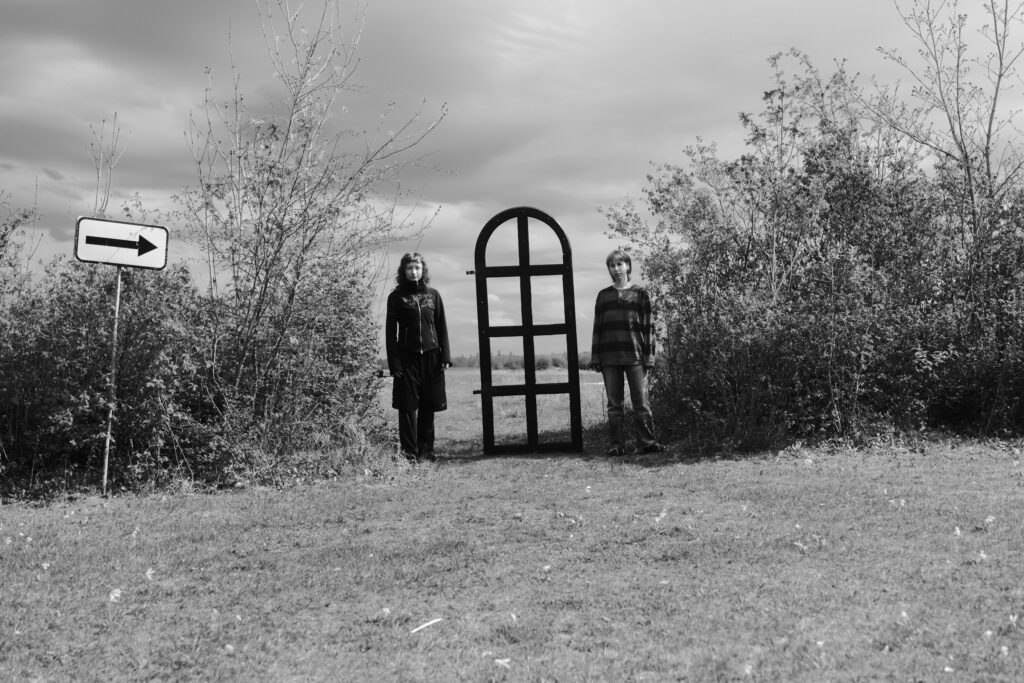
Projekt keskendub sellele, mis kõndimise ajal aina uuesti esile kerkisid: piir looduse ja moodsa maailma vahel või kristluse ja palju vanema rooma maailma vahel. Sealt jõudsime ka ukse ideeni, mis viis meid Januseni, kes on kahe näoga rooma jumalus, kes valvab läbipääsusid, väravaid ning algusi ja lõppe. See sai töö keskmeks.
Kuidas see kogemus teie loomingusse üle kandus?
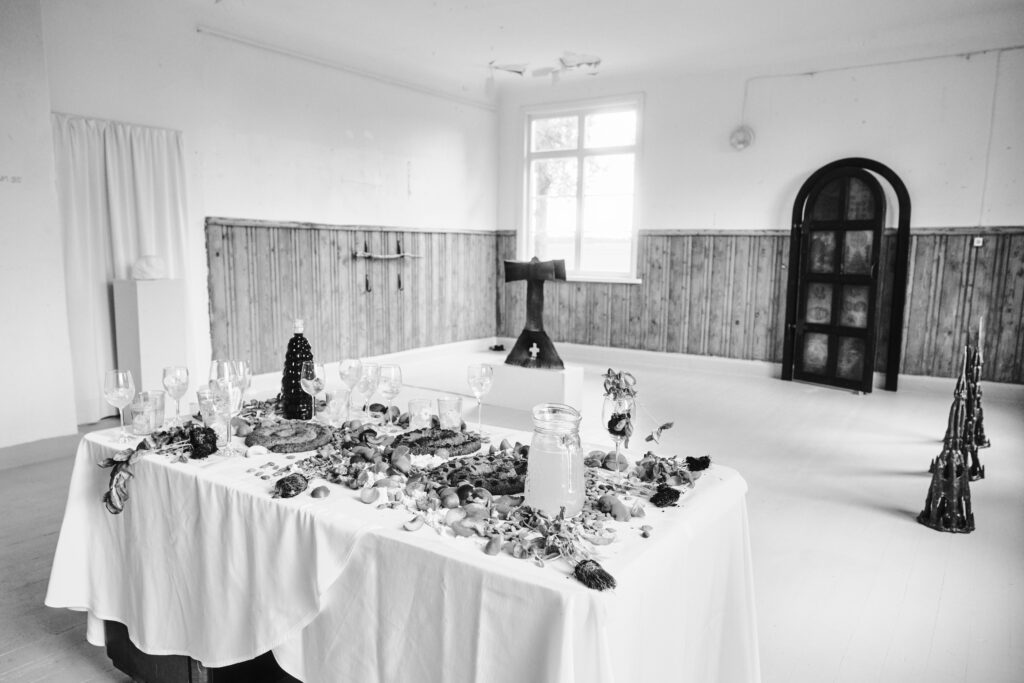
Teel kordusid pidevalt mitmed sümbolid: kellad, ristid, ületamine ise. Inimesed tegid teele kividest hunnikuid, et märkida teed järgmise rändaja jaoks. Need väikesed märgid jäid meid saatma. Tekkis ka lummatus lõhnadest ja sellest, kuidas see mäluga seostub. Teatud lõhnad jäid kindlate hetkedega seotuks. See viis lõpuks viiruki valmistamiseni, mis ühendus ka projekti ülejäänud osaga, kuna viirukit on rituaalsetes ruumides kasutatud tuhandeid aastaid. Viirukit põletati kristlikes kirikutes, mida me läbisime, kuid samuti rooma jumalate auks juba palju varem. Ja selle lõhna kõrval jäi meelde ka midagi tavalisemat, näiteks sünnipäevatordi sidrunilõhn või tugev kohv, mida me jõime igal hommikul. Pühalik koos millegi täiesti tavalisega, see kontrast tekib pidevalt. Teekonnal oli mõlemal võrdne tähendus, ja see on ka kogu selle asja mõte. Igapäevaelust võib leida oma väikseid märke pühadusest.
Mida te välja panete?
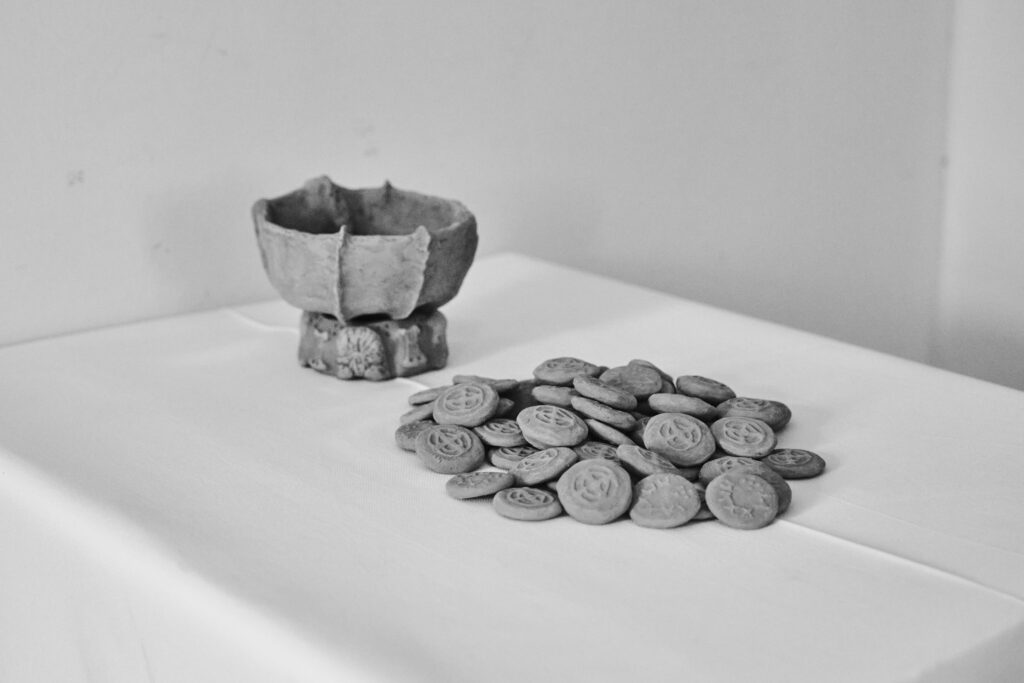
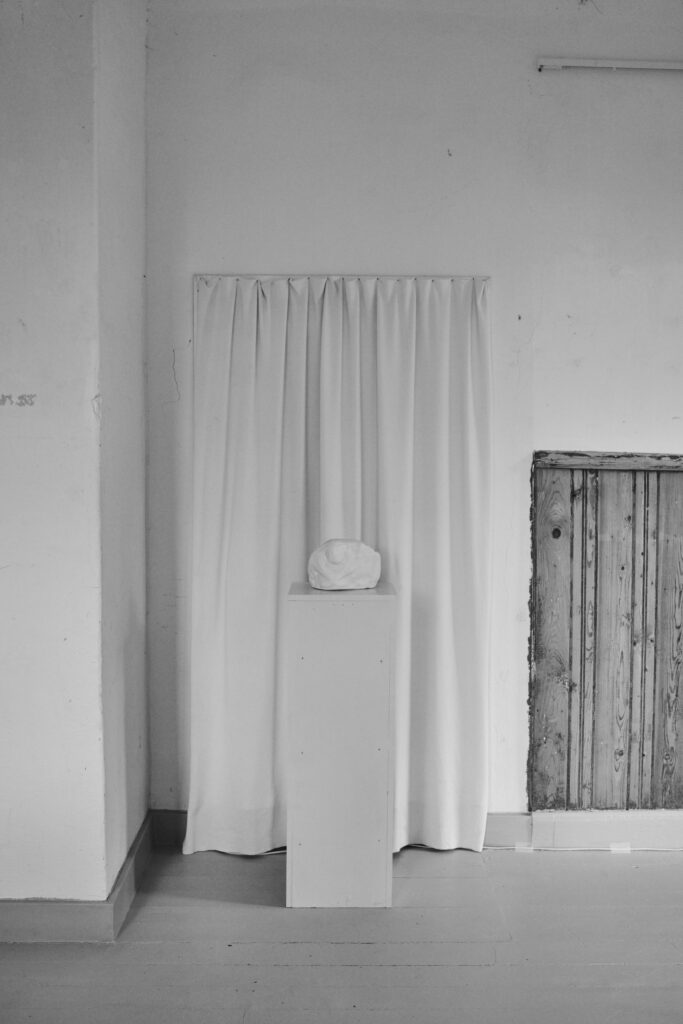
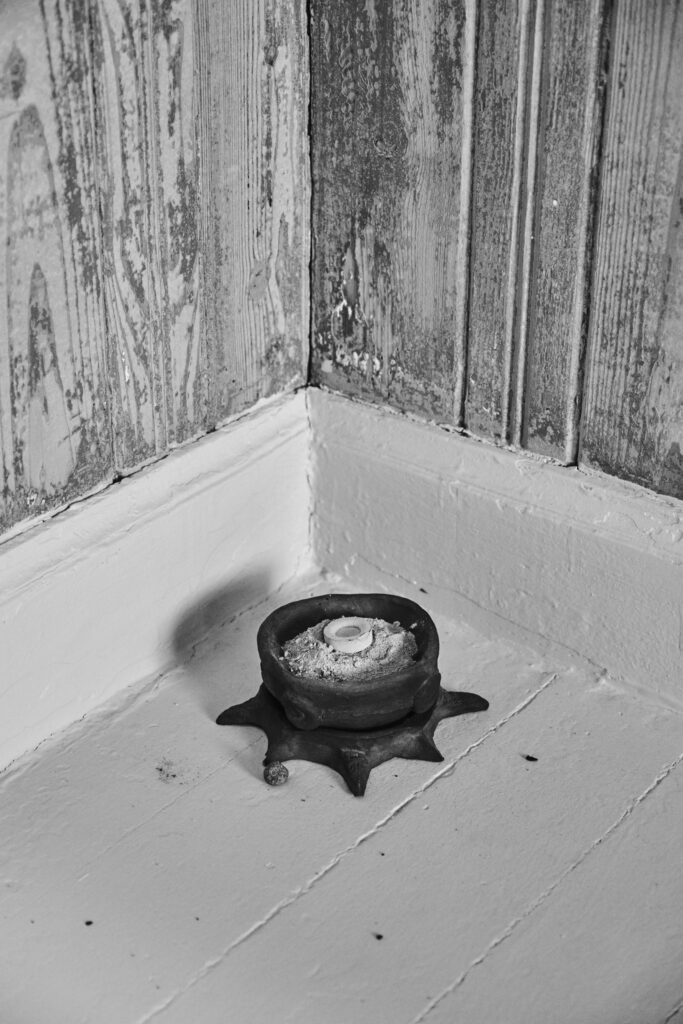
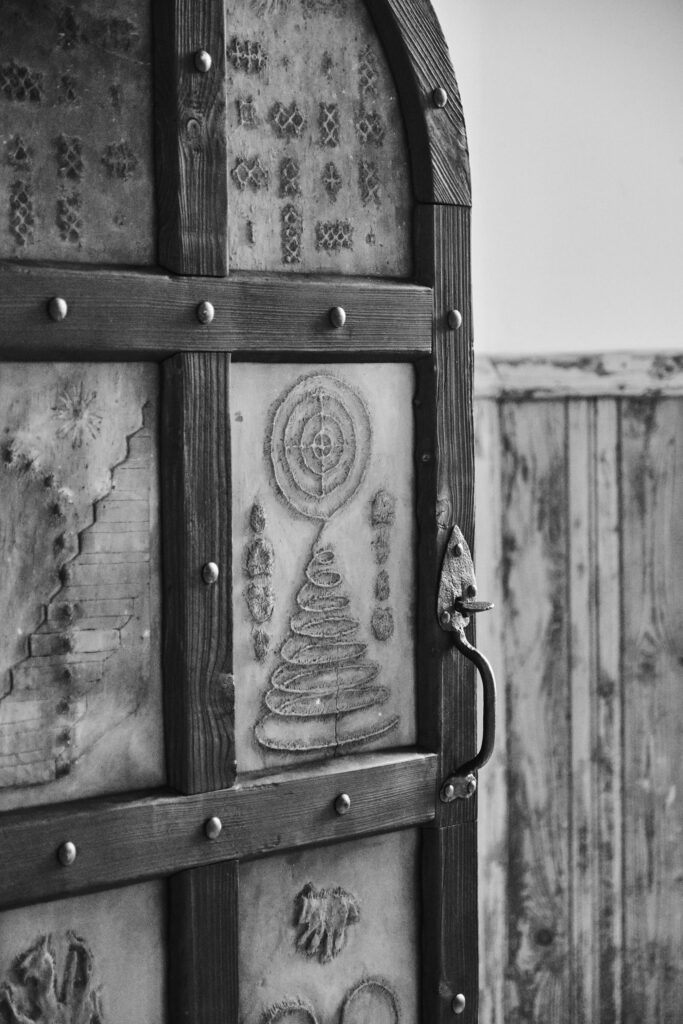
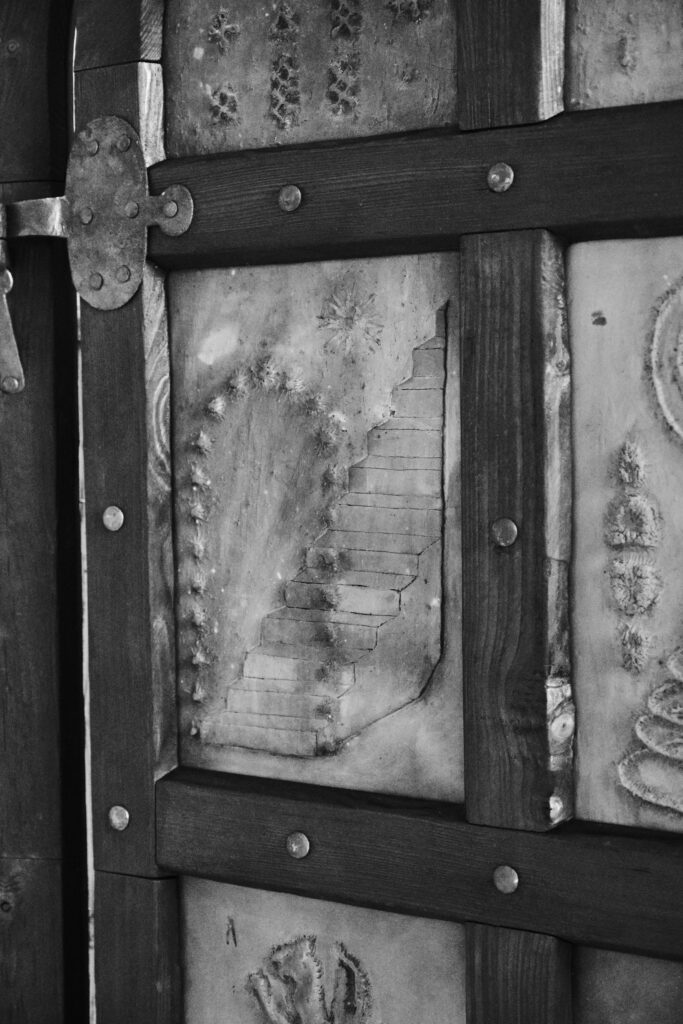
Tahame luua kujuteldava rituaalse ruumi. Januse kadunud templit Rooma Foorumil pole kunagi leitud. Selle ainus visuaalne jälg on vanal rooma mündil, mistõttu saame vabalt luua kujuteldud mälestused. Teame, et sellel oli kaarjas uks ning et selle avatud uksed kuulutasid sõjaaega, samas kui suletud uksed tähendasid rahu. See tundub praegu eriti asjakohane, küsida ukse avanemise kohta. Tahame, et inimesed kogeksid ruumi, mitte ainult loeksid selle kohta. Seetõttu toome kokku kõik meeled. Niimoodi saab ruum kuuluda ka külastajatele endile. Loodame, et see võimaldab inimestel leida oma osa kollektiivsest kujutluspildist mis on säilinud pühalikkusest või sellest mis selles avaldub.
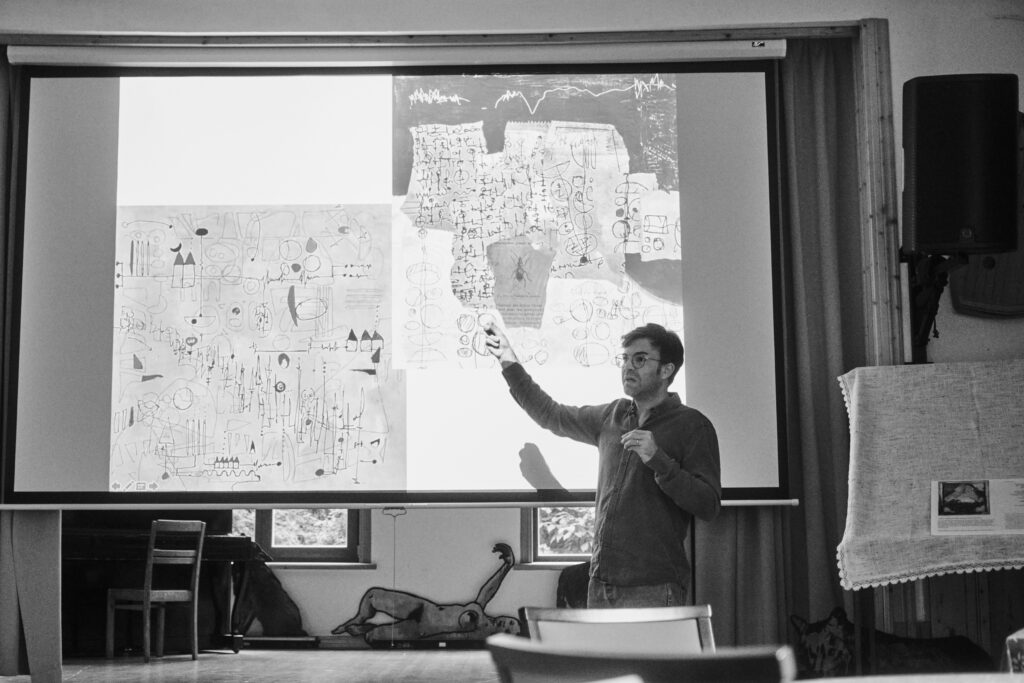
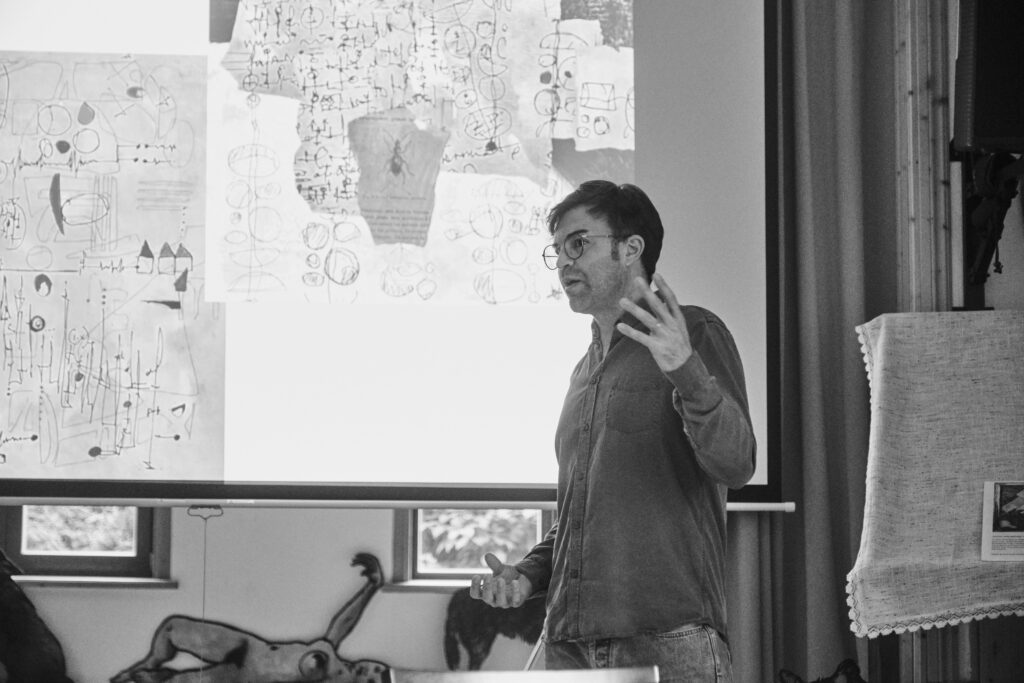
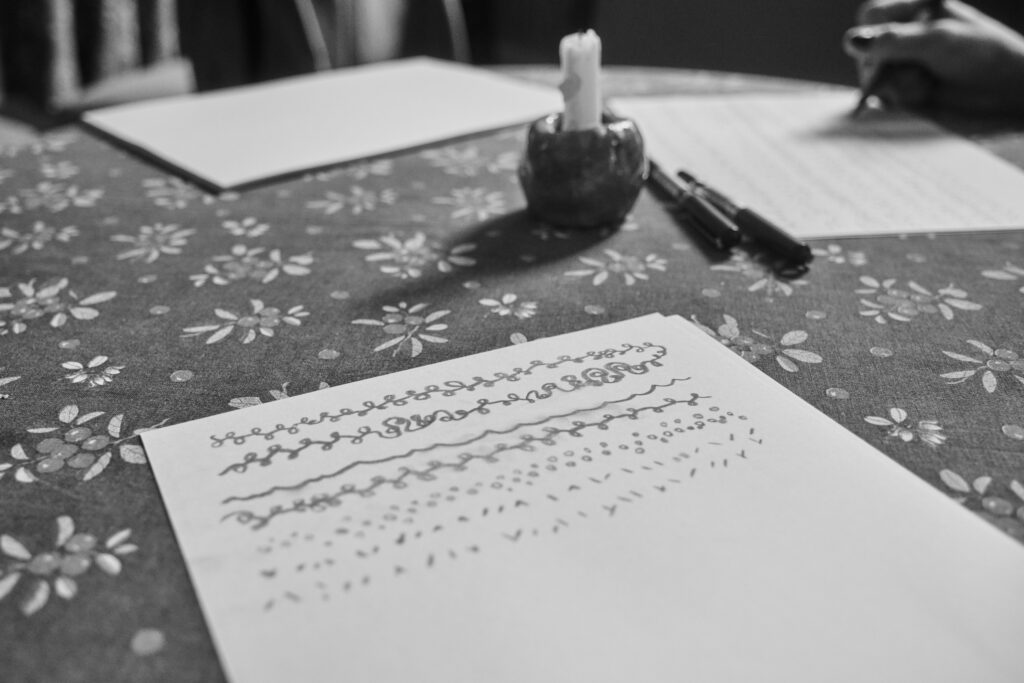
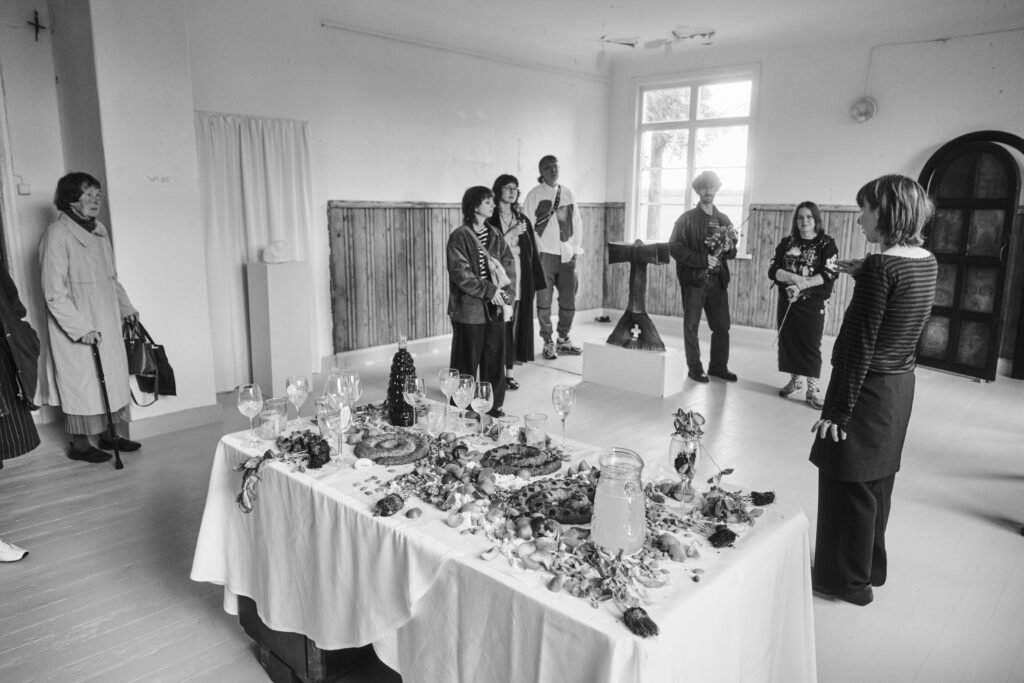
Avatud uste päeval toimus ka antropoloog Francisco Martínezi töötuba aseemilise kirjutamise teemas. Osalejad õppisid tundma aseemilise kirja ajalugu ja proovisid praktikas oma kirjutisi luua.
Crossing Thresholds: Cam Peeters and Ola Lewczyk on Pilgrimage, Ritual, and the Art of Finding Your Way
Cam Peeters is a musician and writer whose work moves between extreme sound distortion, archival recordings and deeply personal lyricism. Recurring themes of oscillation, death, rebirth and the search for freedom run through everything they make.
Ola Lewczyk is an artist and maker whose practice is rooted in craft practices, folk culture and material research. Working with beeswax, clay and natural materials, they explore the connections between the human and the other. The element of light, often in a form of fire or the sun, guides their practice connecting tacit memory, matter, and myth.
The two met while studying at Goldsmiths University in London and have since developed a long-standing creative partnership. On June 14th, they present a collaborative, multi-sensory installation rooted in a 13-day pilgrimage they undertook together through the Apennine mountains to Rome.
You did a pilgrimage together last year. What drew you to it?
We’ve always walked a lot together, but this was the longest trip so far. The idea was to cross from the Adriatic Sea to the Vatican through the Apennines in 13 days. Last year was a Jubilee year, in which the holy doors of the Vatican open. This only happens once every 25 years. It was also something deeply personal, questioning how we relate to Christianity, to older Roman and pagan traditions, and to ritual in general. Applying it to our own lives, to the rituals we plan in our lives and the slowness of taking a pilgrimage route, rather than the usual easy travel mode.
The project is really about what kept coming up while we walked, the boundaries between the natural and the modern world, or between Christianity and the much older Roman world underneath it. And then there’s the idea of the door, which led us to Janus, a two-faced Roman deity of thresholds, gates and beginnings and endings. That became central to the work.
How did the experience translate into your work?
A lot of symbols came up repeatedly along the way, bells, crosses, the act of crossing itself. People would stack stones on the route to mark the path for the next person. Those little improvised signs stayed with us. There was also this growing fascination with smell and how it connects to memory. Certain smells became tied to specific moments on the journey. That eventually led to making incense, which also tapped into the rest of the project since it’s been used in ritual spaces for thousands of years. Frankincense was burned in the Christian churches we passed through but also by the Romans for their many gods long before that. And then alongside that something much more everyday, like the smell of a lemon from a birthday cake, or the strong coffee we had every single morning. Something sacred next to something completely ordinary, that contrast keeps coming back. On the road it both felt equally meaningful, and that’s kind of the point. You can find your own sense of the sacred within daily life.
What will you be exhibiting?
We want to invoke an imagined ritual space. The lost temple of Janus on the Roman Forum was never found. The only visual record of it is on an old Roman coin, so we can dive freely into an imagined recollection. We know that it had an arched door, and that open doors announced times of war while closed doors meant peace. That feels relevant right now. To question the door opening. We want people to experience the space rather than read about it. This is why we bring all the senses together. This way the space becomes others’ too. We hope it allows people to tap into their side of this collective imagination of what remains of or appears within the sacred.
On the open doors day, there was also a workshop by anthropologist Francisco Martínez about asemic writing. Participants learned about the history of asemic writing and tried their own writing in practice.
Photos of the open doors day on June 14th 2026 taken by Ott Kattel
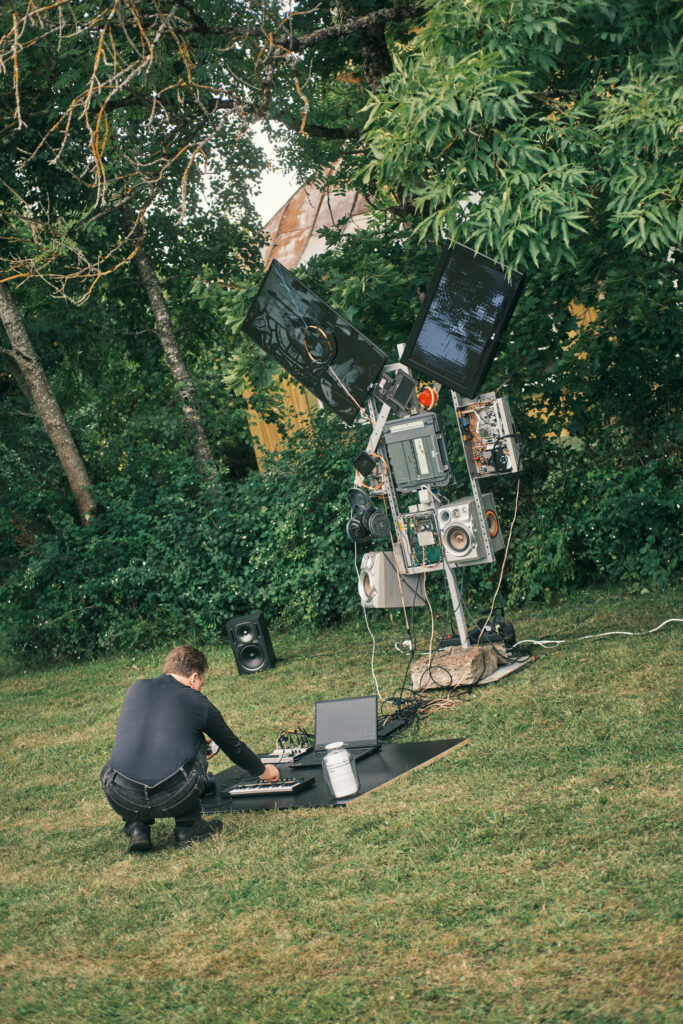
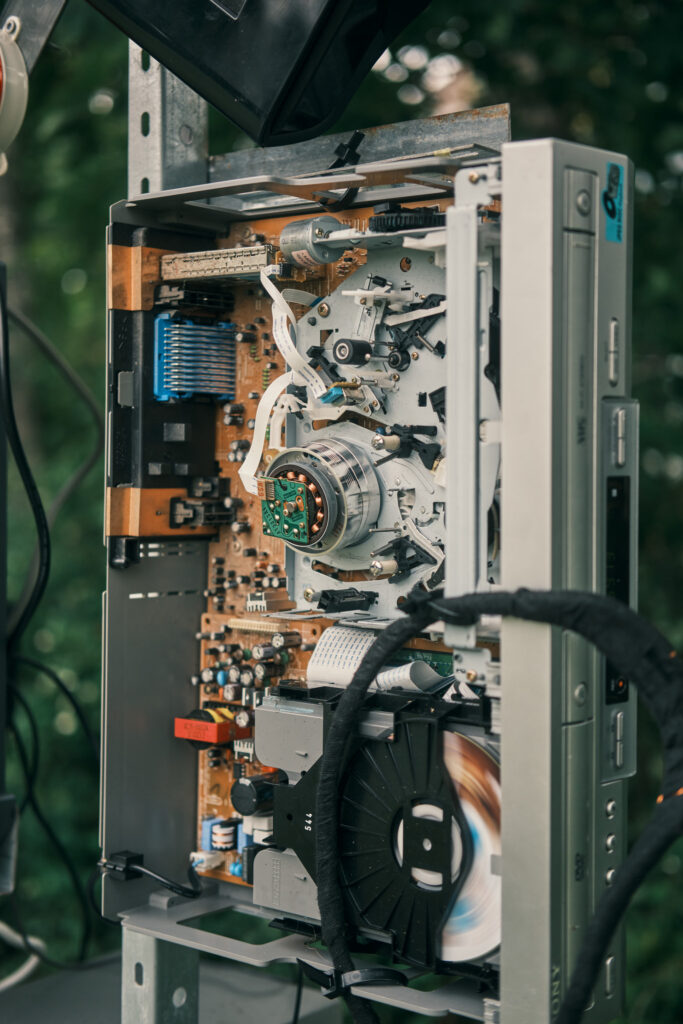
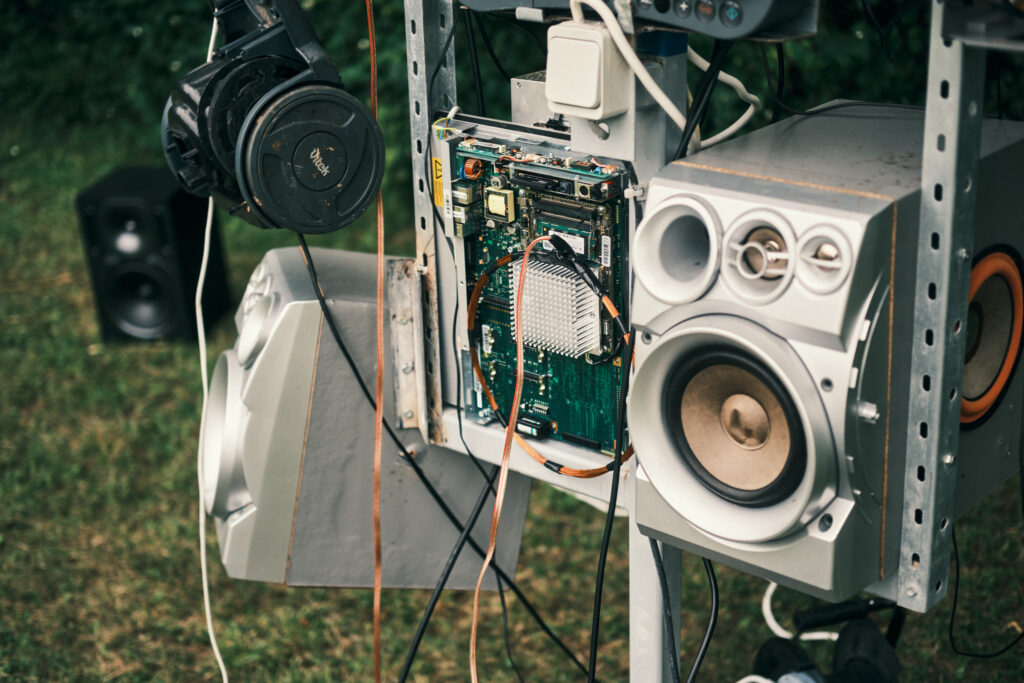
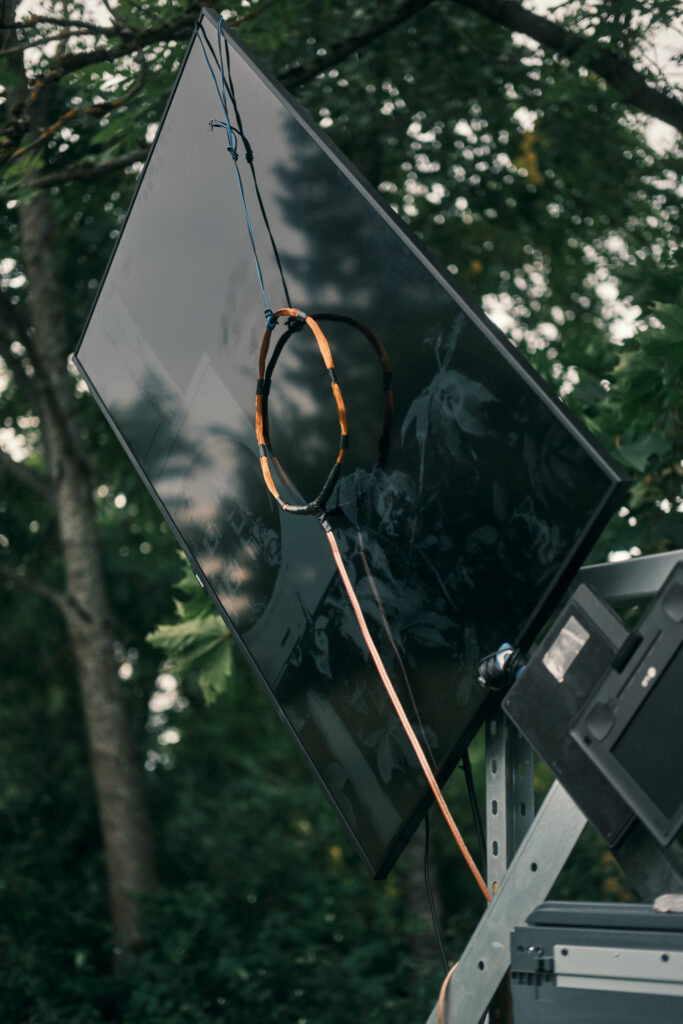
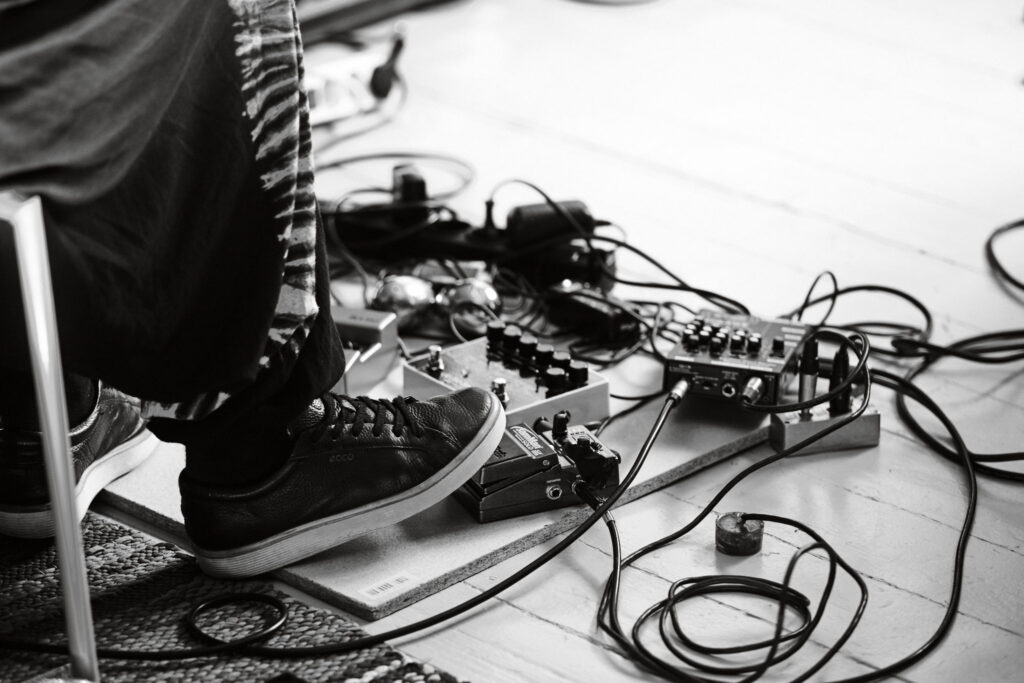
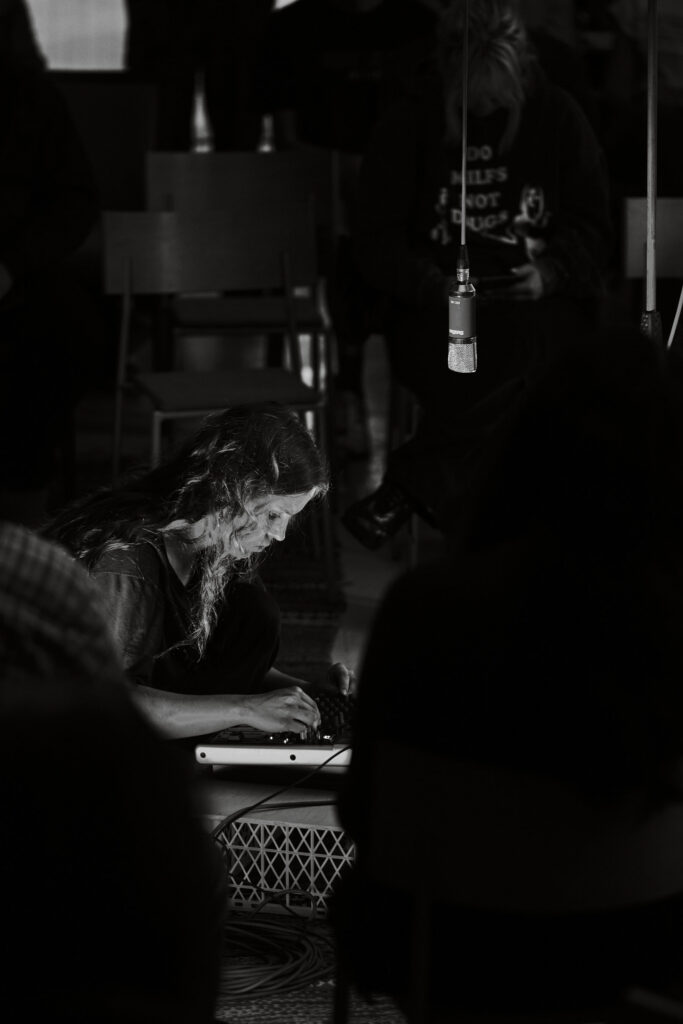
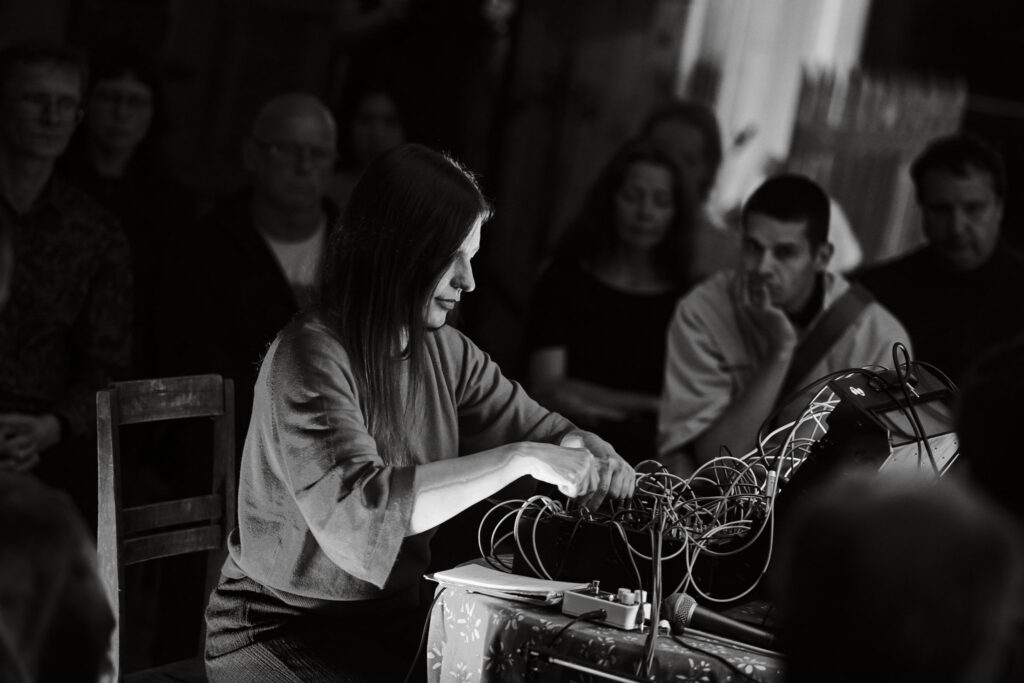
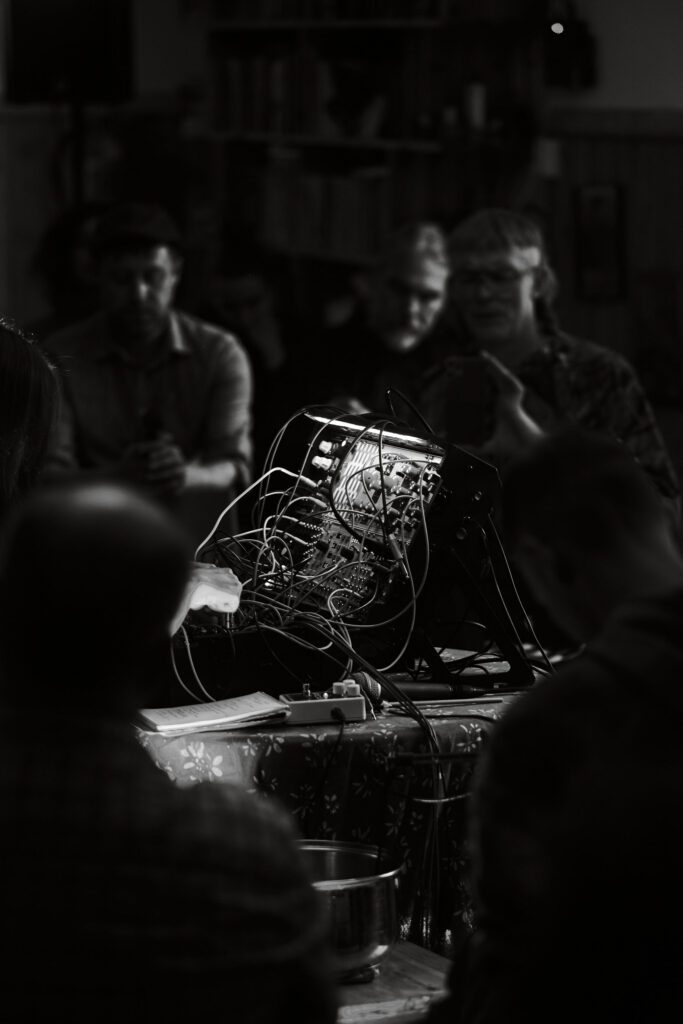
On June 5th, sound art was in the house. After enjoying fine drinks and grilled delicacies, Erik Alalooga, Indrek Palu and Theodore Parker presented pieces created during their 2-week residency period.
After a small break, MĐŠHMÂRIQ MÔDŲLŠĤTZÎN feat. MÂRIQ performed different songs in English, Estonian and Russian, including unreleased tracks.
Special thanks to our supporters: Atla Distillery and Itaaliapitsa!
5. juunil oli majas helikunst. Pärast häid jooke ja grillhõrgutisi esitlesid Erik Alalooga, Indrek Palu ja Theodore Parker teoseid, mis valmisid nende 2-nädalase residentuuri jooksul.
Pärast lühikest pausi esitas MĐŠHMÂRIQ MÔDŲLŠĤTZÎN feat. MÂRIQ lugusid eesti, inglise ja vene keeles, sealhulgas avaldamata lugusid.
Täname toetajaid: Atla Distillery ja Itaaliapitsa!
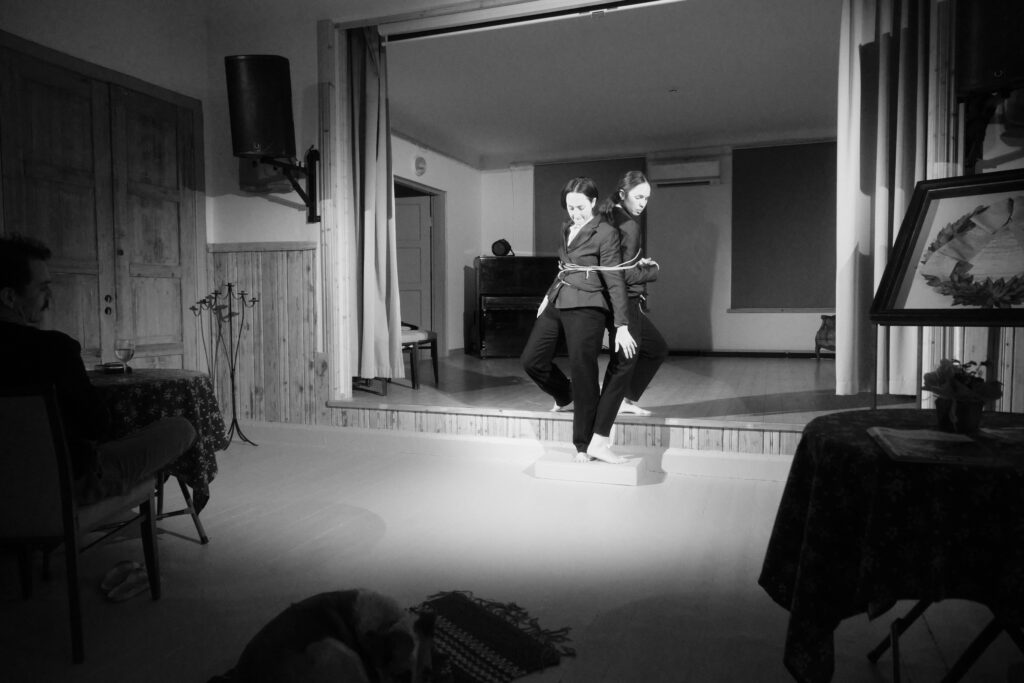
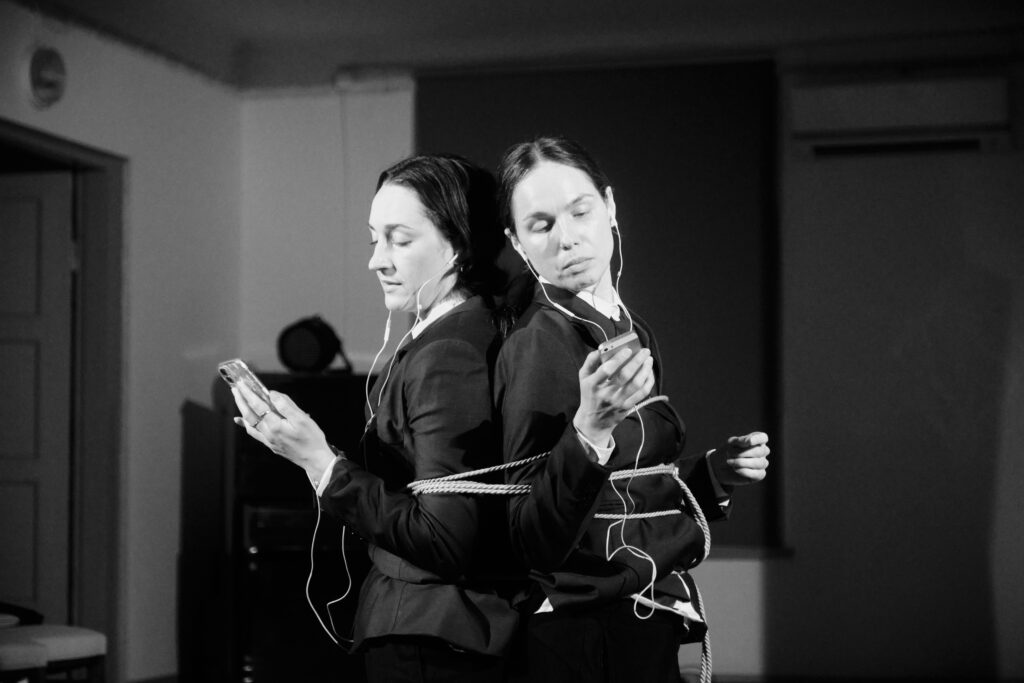
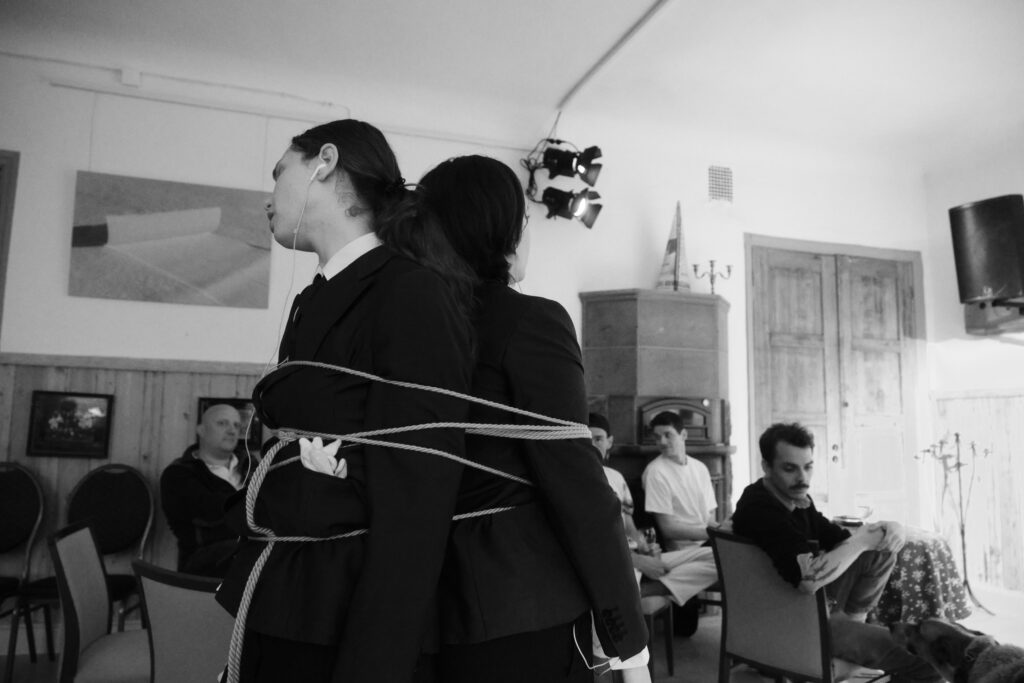
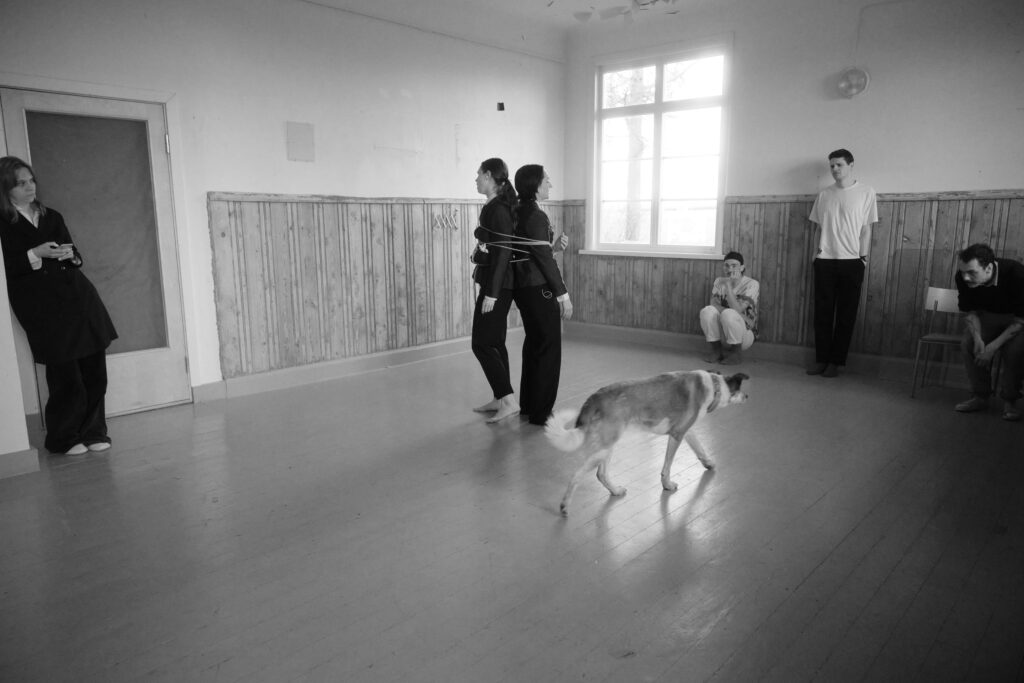
Becca Green is a performance artist from Los Angeles, based in Tallinn. A graduate of Estonian Music and Theatre Academy’s CPPM (Contemporary Physical Performance Making) master’s program, she works at the intersection of dance, physical theatre, and performance art currently researching verbatim text, photography, and whether intimacy can be mechanically reproduced.
Kirte Jõesaar is an Estonian performer and choreographer who met Becca during their shared studies at CPPM. Rooted in dance and contemporary performance, she collaborates with Becca on research-led work that exchanges personal histories between bodies and voices.
Daria Luchinina is a sound artist whose sonic landscapes thread through the project.
The following interview was conducted with Becca and Kirte during their residency in April 2026.
What are the themes you’re currently researching?
Obsession, infatuation, love, and the feminine nature of those altered states. What happens in your body when you’re in love, or when you have a crush? How does that relate to femininity and to communing with other women? The work draws on personal journals and explores what happens when very intimate, private texts are transferred onto another body or another voice.
How does that exchange work in practice and how does it feel to have someone else speak something that was only ever meant for you?
We brought our own private journals, writings from teenage years, never intended to be shared and began reading them aloud, to each other and as each other. What struck us was hearing something and thinking: I wrote almost the exact same sentence. There is a physical intensity to it; the fear of someone else speaking your most intimate words out loud, but also a kind of pleasure, even relief. Something so deeply personal turns out to be universal. Can you falsify intimacy in a way that it becomes real? That is the question we keep returning to.
We also collected photos from people. Images with an ex-partner that still hold something, a feeling or a memory. We then recreate those photos as precisely as possible: same angle, same expression, same composition. The process itself is very mechanical. Holding a pose, laborious and deliberate, yet the result carries a surprisingly similar emotional charge to the original. You look at the photo and begin imagining what they were saying, what they were thinking. You see a spark in their eyes and try to find that same spark in yourself. Can a reproduction hold the same emotional quality as the original, or does it create something else entirely, something uncanny? We don’t know yet. That is exactly where the research lives.
How does sound fit into the work?
We’ve been collecting songs from people. Breakup songs, the album someone played when falling in love, a mixtape made for an ex. Objects that hold memory inside them. Daria is working with these materials to build a soundscape that responds to the same ideas. On the 30th it will all come together: movement, text, and sound.
What has this residency offered you?
Time. In daily life there is always pressure to produce, to progress. Here, a concept gets space to breathe and grow on its own without urgency. We’ve been swimming in the topic: talking, gossiping, making connections, slowly discovering which specific directions we actually want to follow. Time is the biggest gift you can give a creative process. And it’s not so different from a relationship, really. Time is what everything needs.
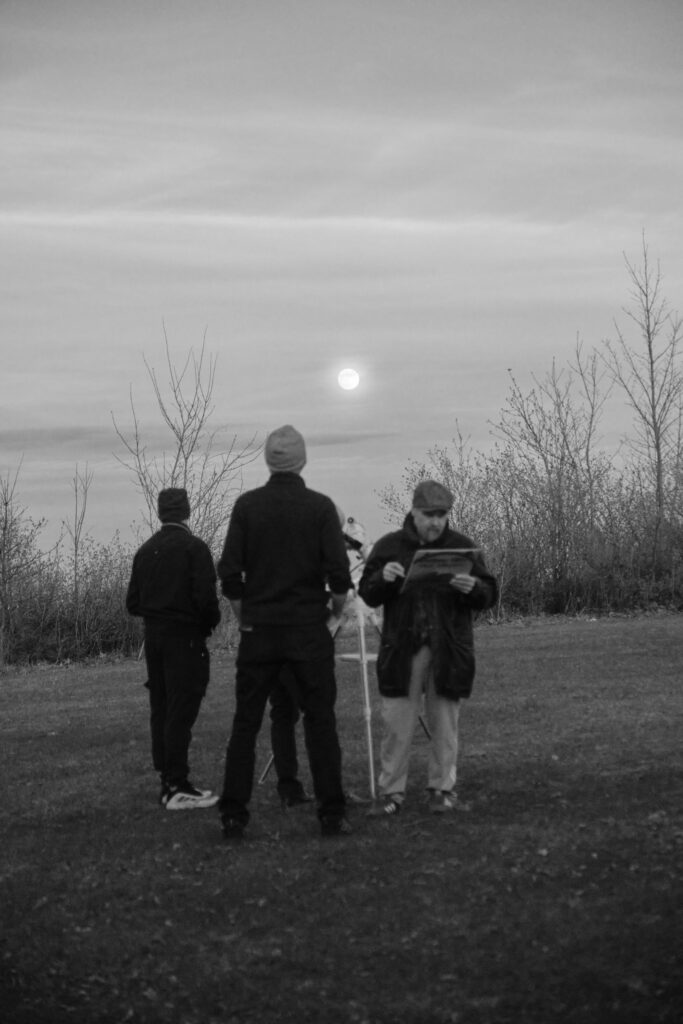
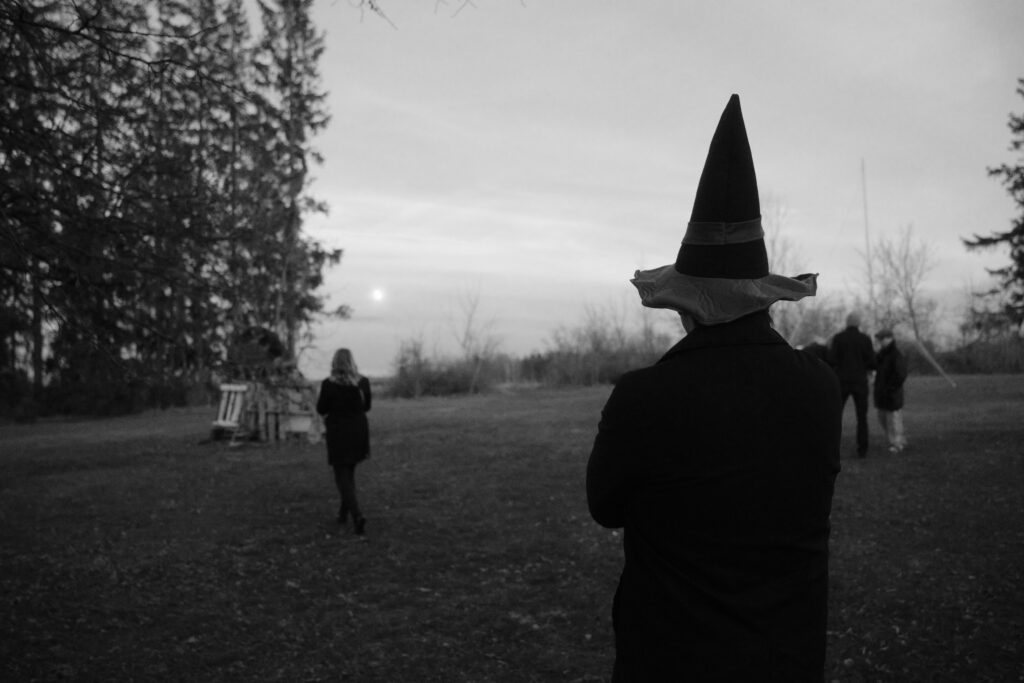
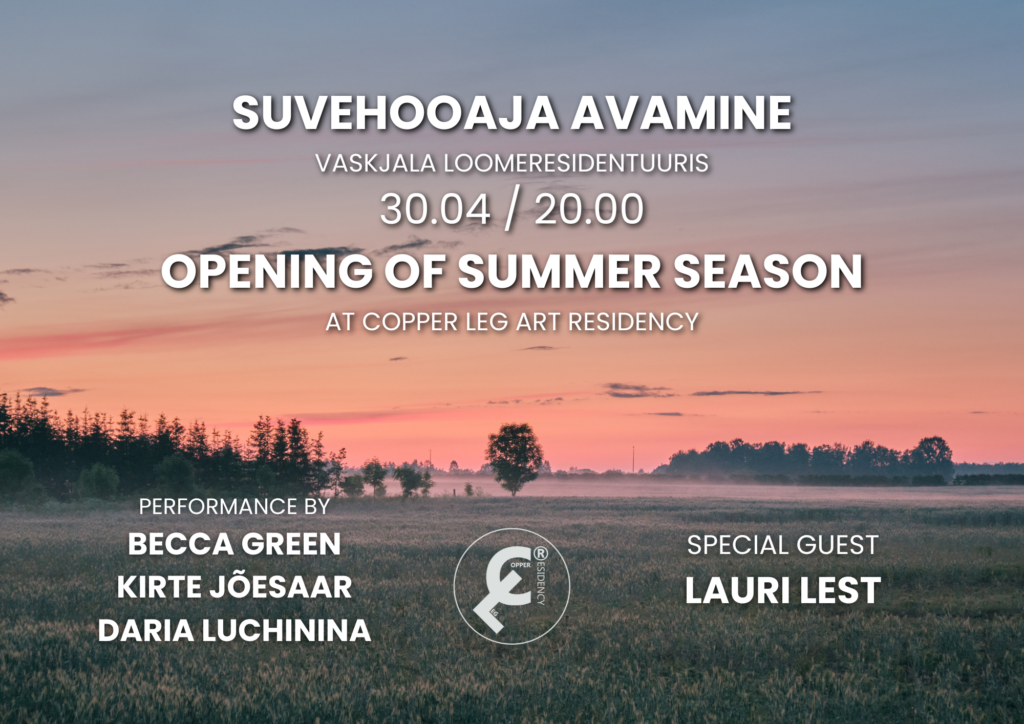
On April 30th at, starting 20.00, we celebrate the opening of the summer season at Copper Leg.
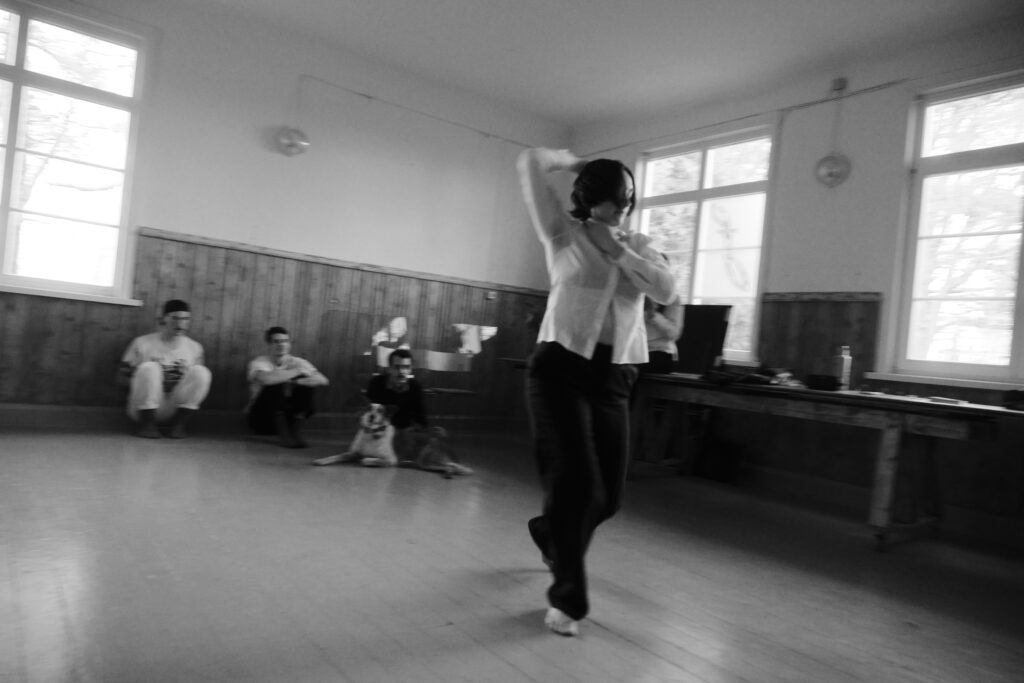
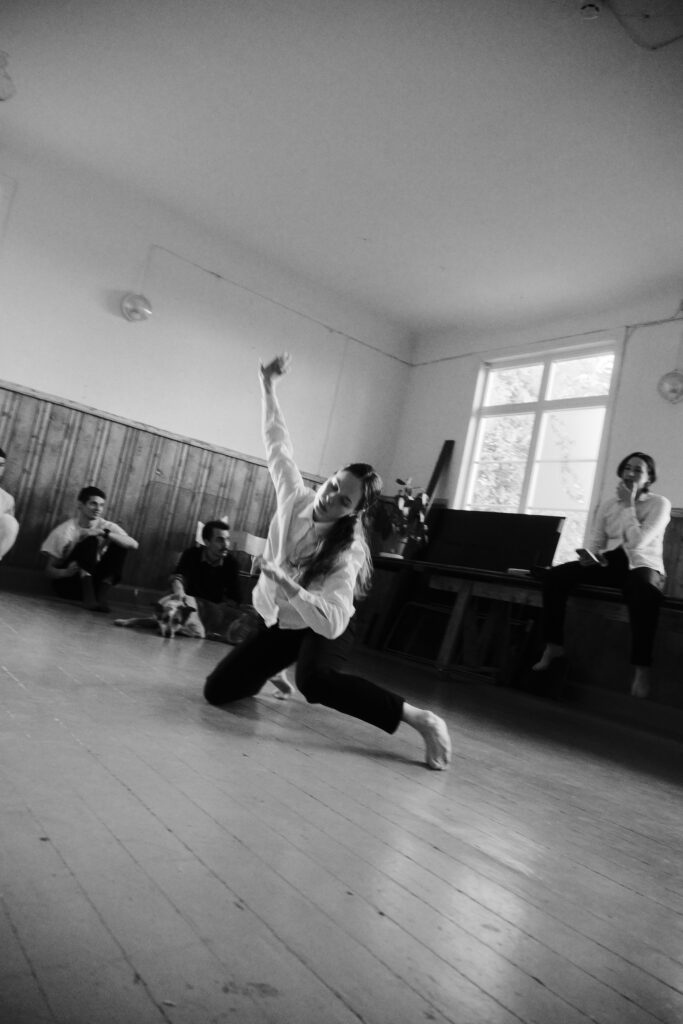
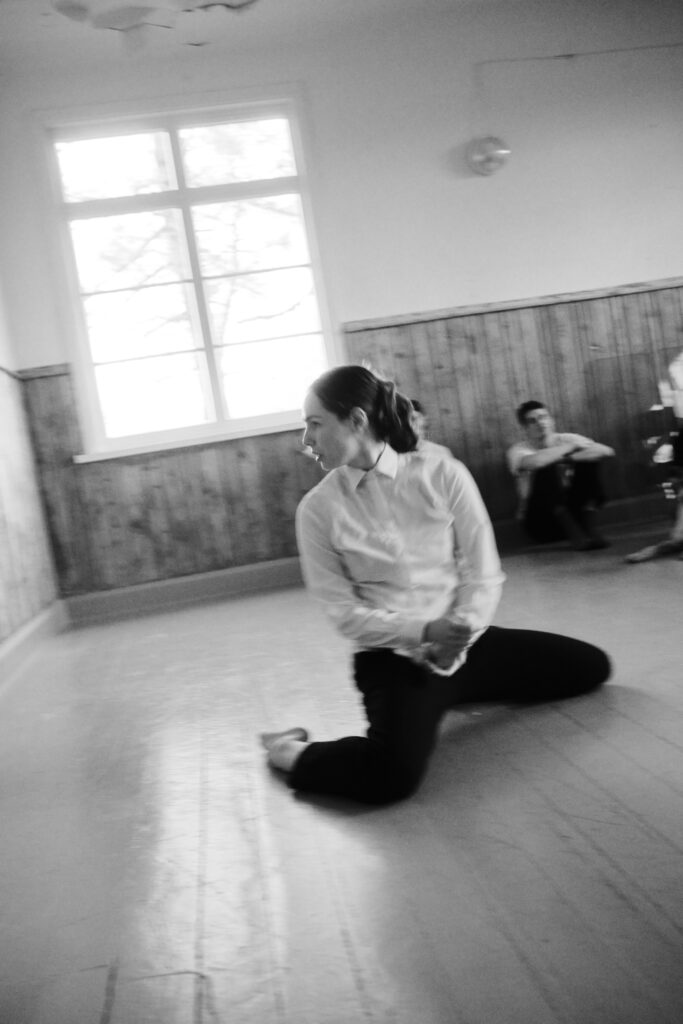
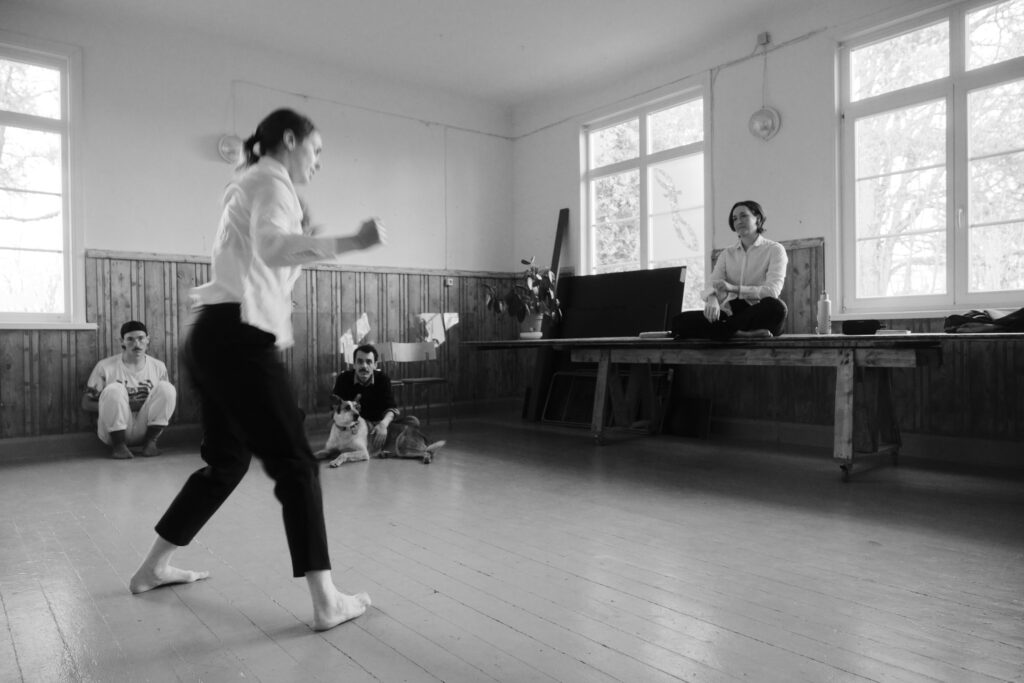
Artists Becca Green, Kirte Jõesaar and Daria Luchinina will perform pieces created during their residency.
We will also be joined by our former resident and acclaimed sound artist Lauri Lest. Lauri’s primary tools are found objects, vibration speakers, lights, and audio and video processing software. His work is characterised by melancholy, states of being, and experimentalism.
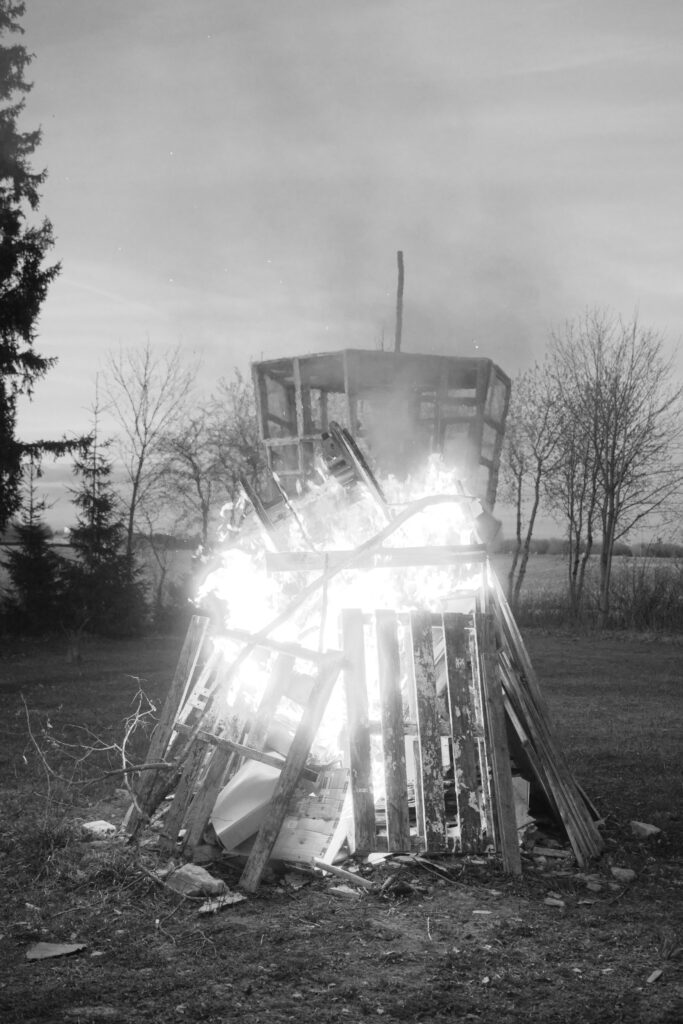
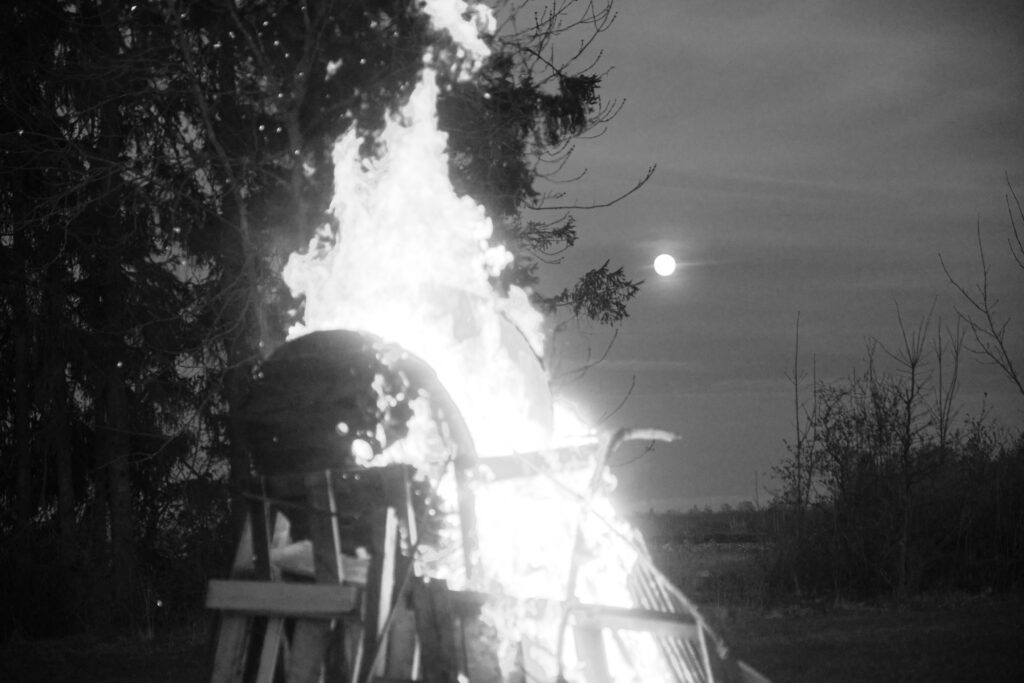
And in true Walpurgis Night spirit – we’re lighting a bonfire!
Millie Player is an artist living and working in Edinburgh, Scotland. Her practice drawsher to leftovers, sometimes food, but also whatsapp archives, sentiments, or what other people write down. The act of disappearing interests her, or perhaps making things last.Their work tends to sit in between spaces of drawing, photography and installation.They think a lot about phones, light and types of paper.
She has participated in numerous group exhibitions across the UK and was a memberof the 2023-24 Collective Studio co-hort at the Newbridge Project. Upon graduating,their work was purchased by Edinburgh University’s Centre for Research Collectionsand she was awarded a study scholarship by the Universität der Künste.
Tell us a bit about who you are and what you do. I was born in London and moved to Edinburgh to study at an art school, where I’ve livedfor about 8 years now. I run a space called Embassy Gallery – an artist-run organisationthat’s been going for over 20 years. We put on exhibitions, events, and workshops tosupport early career artists. Everyone who works there is an artist themselves, whichmakes it quite a unique place. It has a lot of DIY roots, but it’s grown into somethingmore established over the years. Alongside that, I have my own practice, workingmainly with photography, drawing, and film.
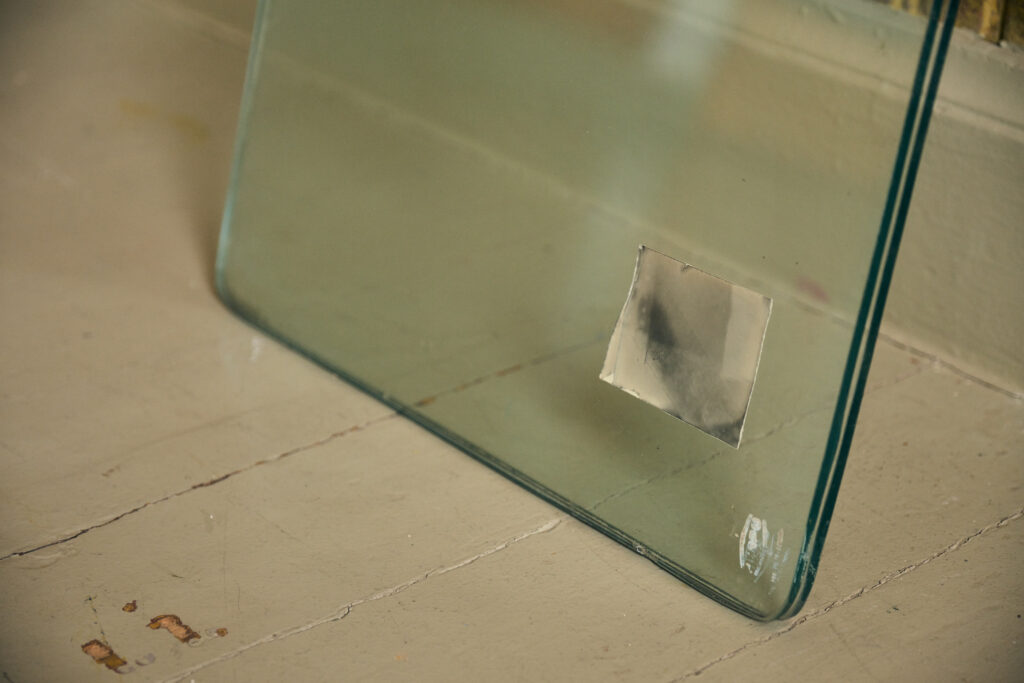
What kind of ideas do you explore in your work? A big topic for me is memory and how we preserve traces of a person. A lot of my workcenters around my grandmother. She lives far away, so our relationship is mostly builtthrough distance. She texts me constantly and sends photos through WhatsApp, whichautomatically saves images on my phone. At first, I thought it was strange to have allthese images I didn’t take and had no context for, but they became really important tome because they are so her – and honestly, they’re often very funny. There’s somethingtouching about watching an older person navigate technology in their own way. So Itake those images and reproduce them. Sometimes through contact printing, where Iliterally lay the phone face-down on photopaper and let it leave a mark or trace. Othertimes I make drawings from them, picking out the parts that feel meaningful.Photography feels very instant, but drawing takes time, so it becomes a way of reallysitting with an image rather than just scrolling past it. I also have negatives and printsmade by her late brother, who passed away when I was young and who was just gettinginto photography. Some only exist as negatives and some only as prints. I’ve beenthinking about what it means to reprint and preserve those – trying to piece togetherwho he was and what mattered to him through what he chose to photograph.
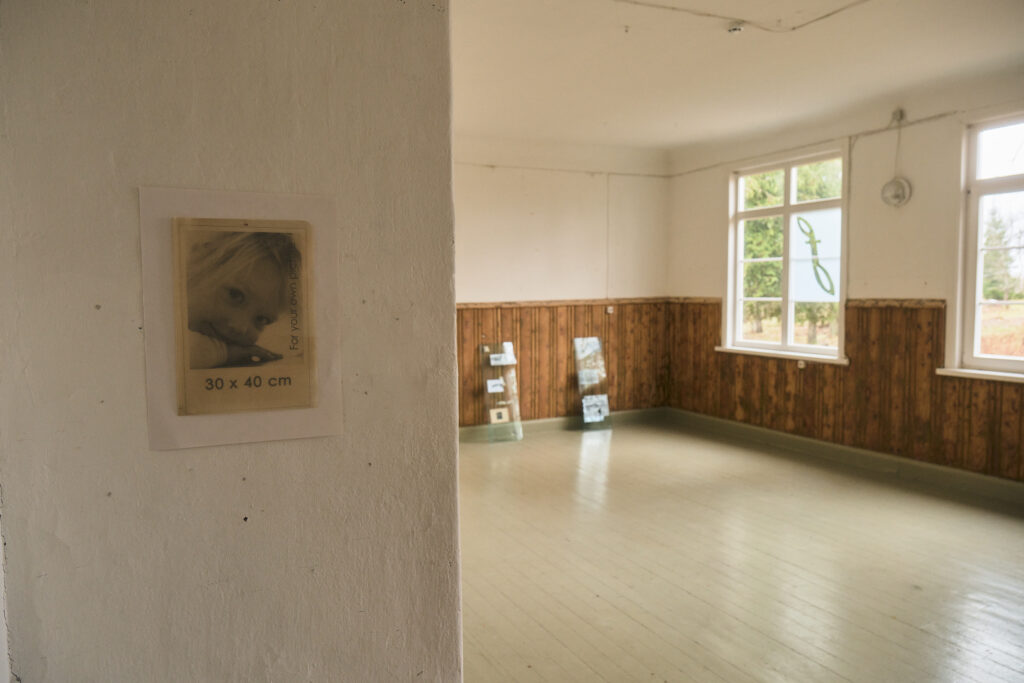
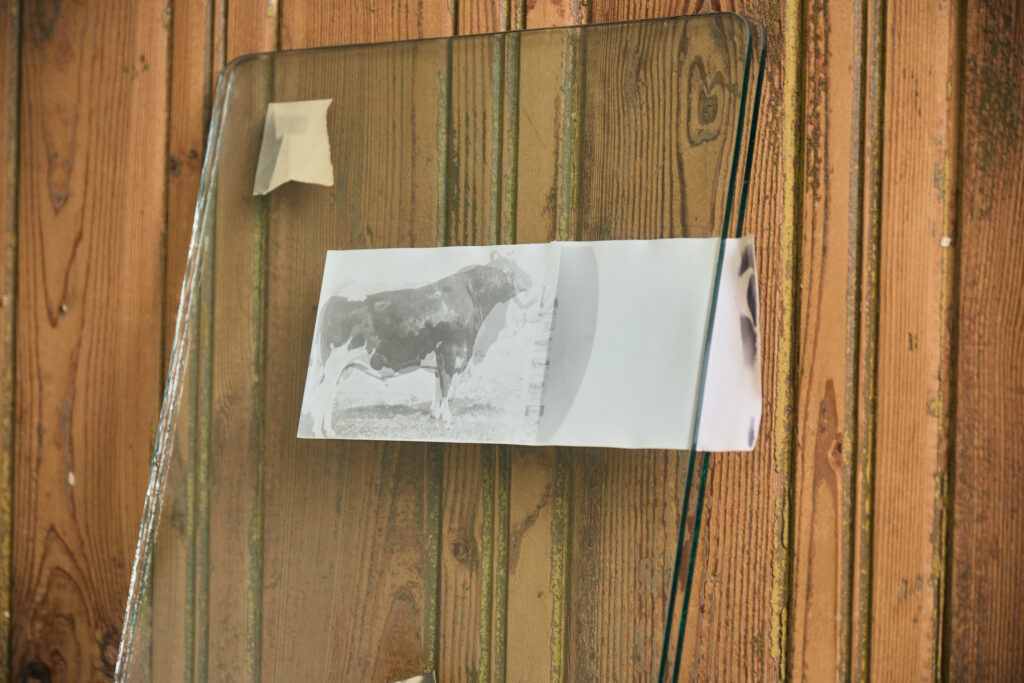
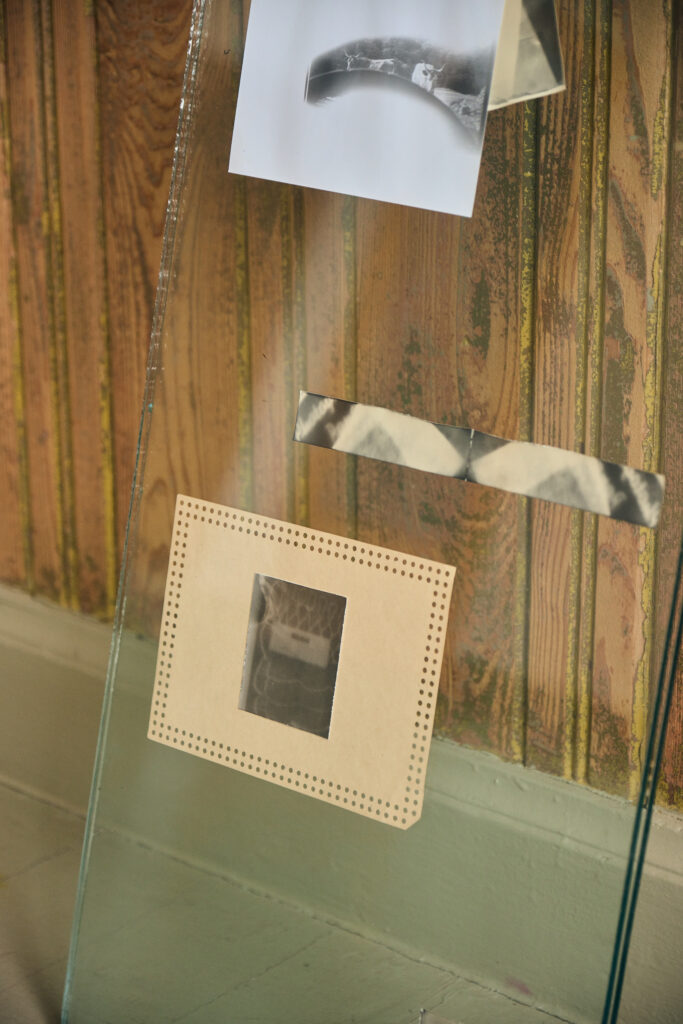
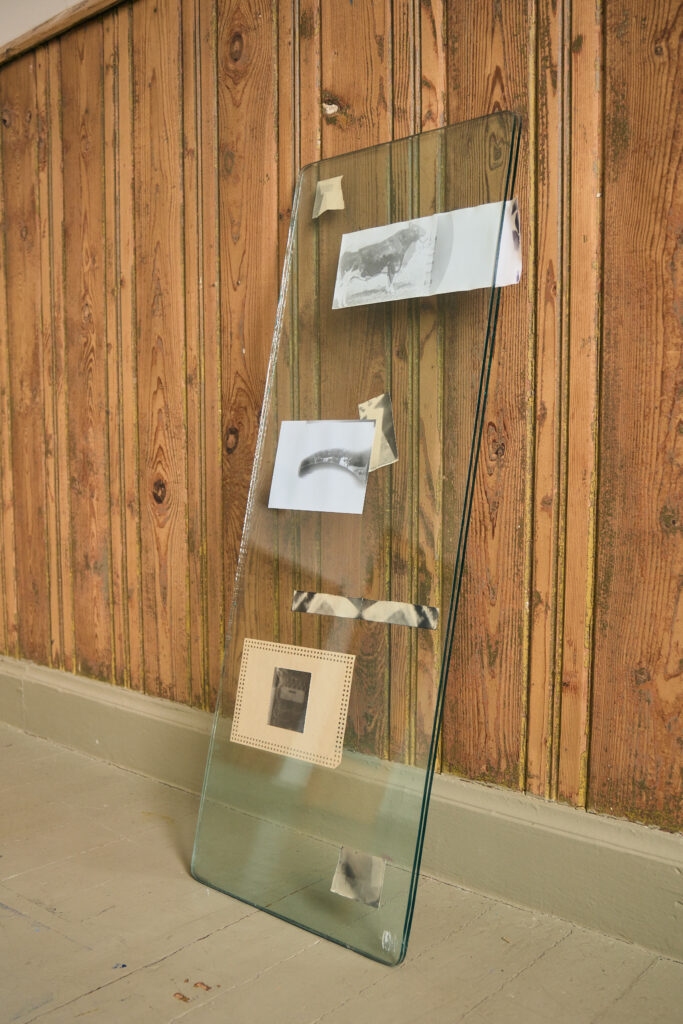
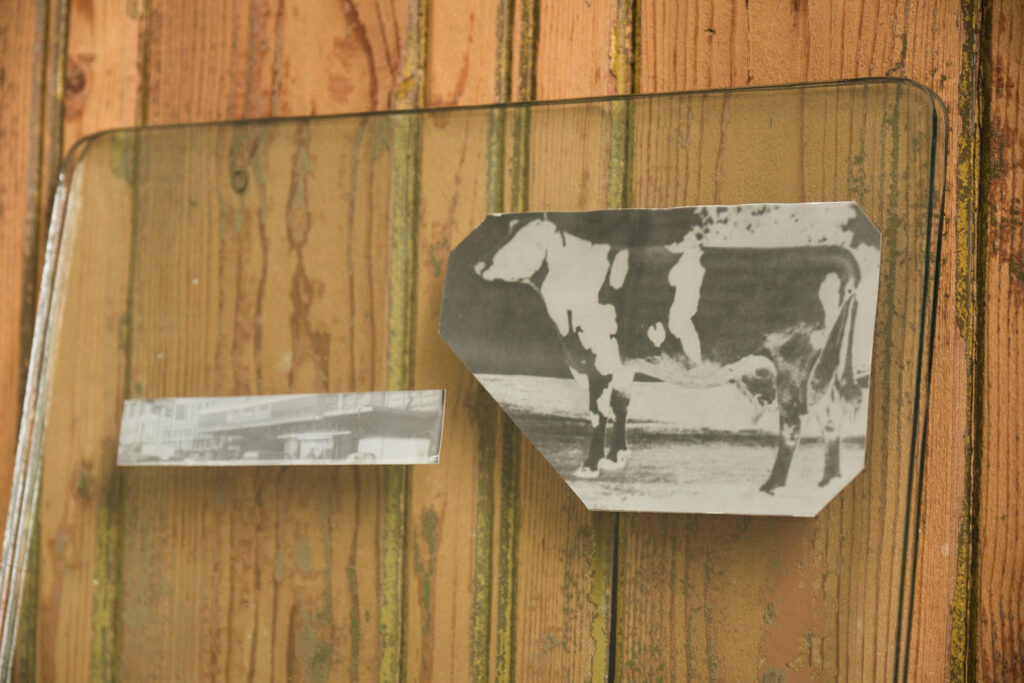
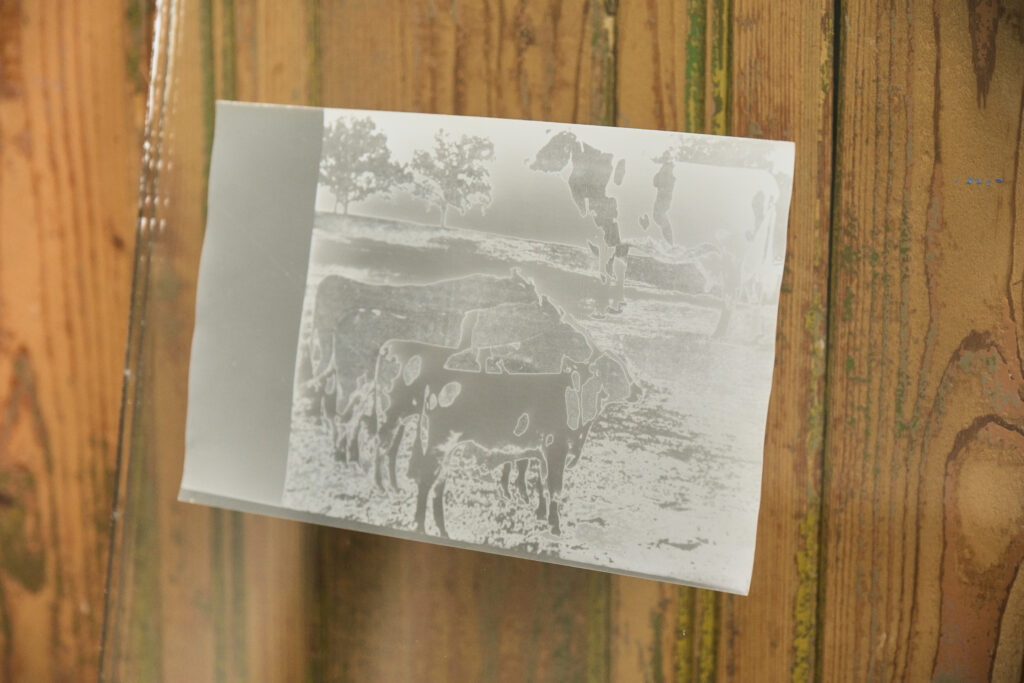
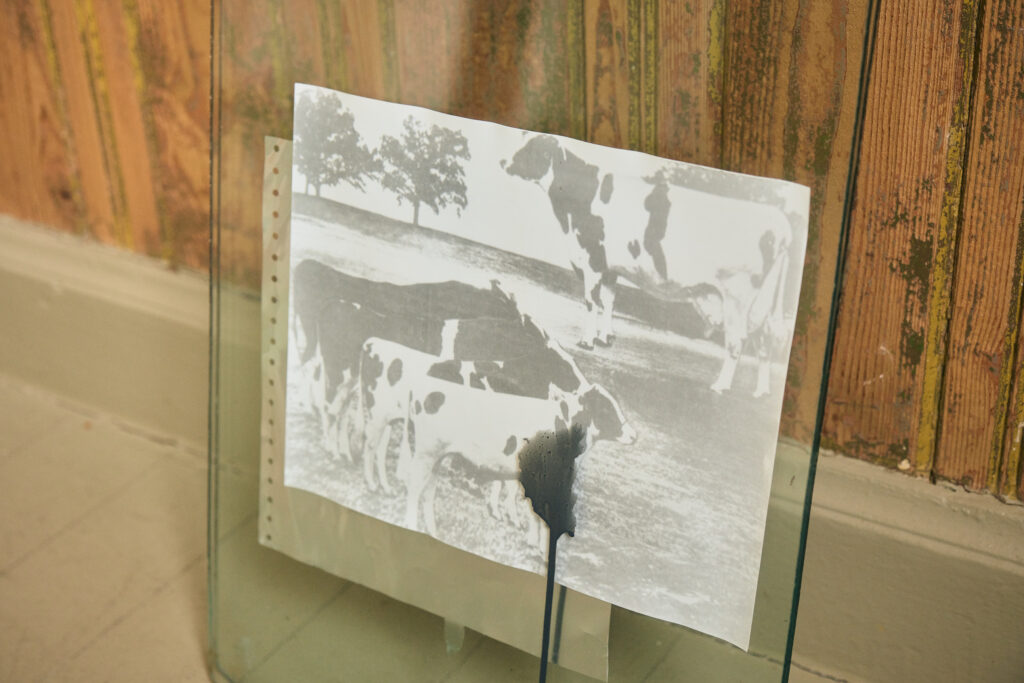
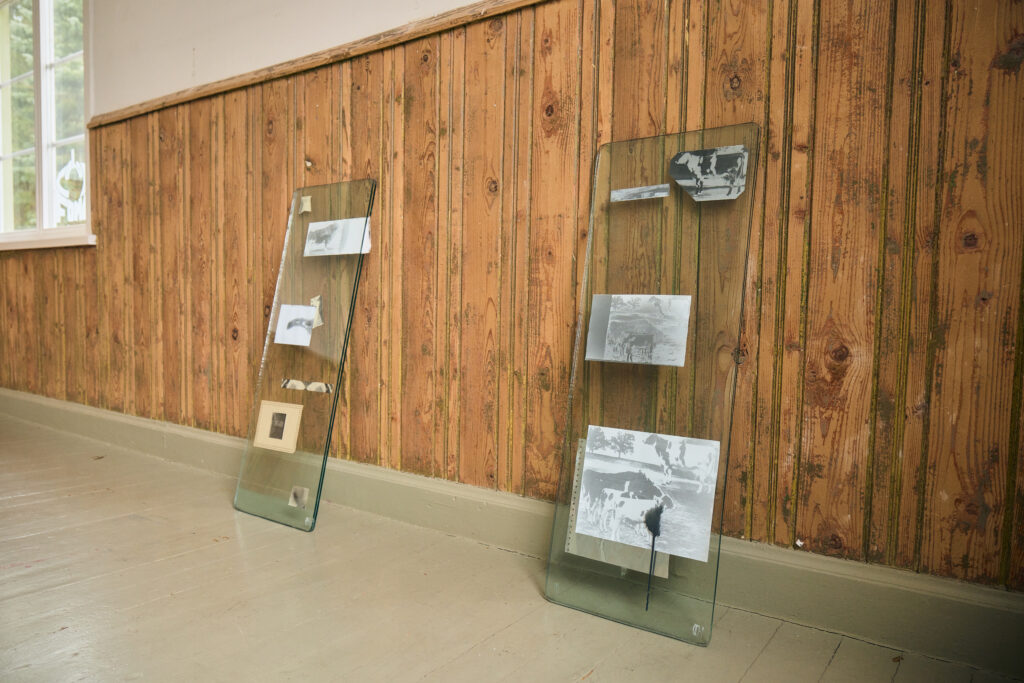
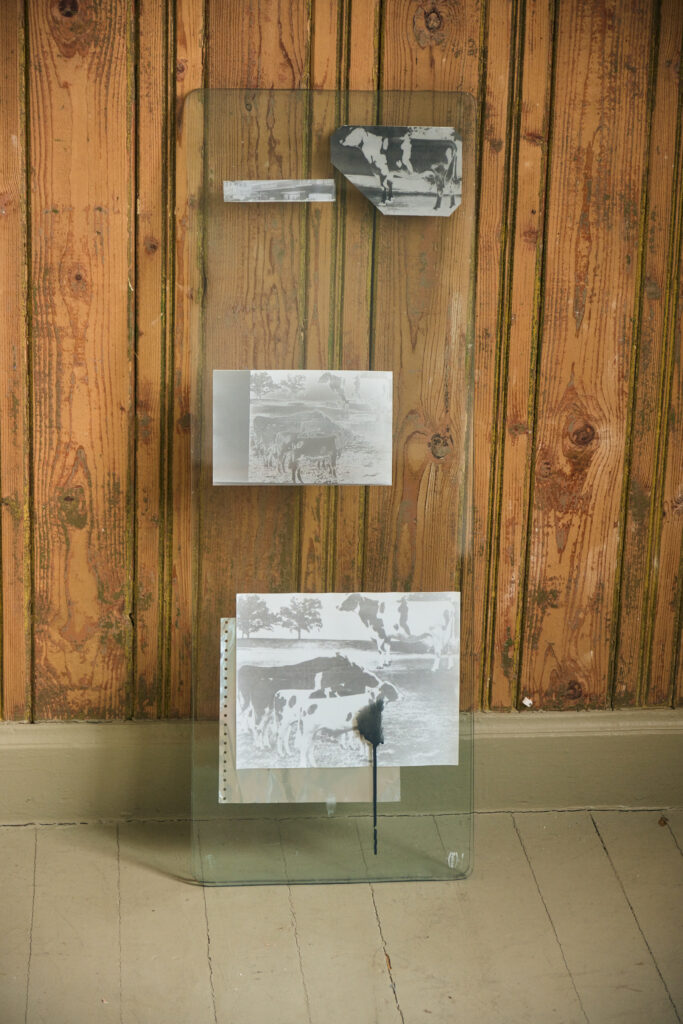
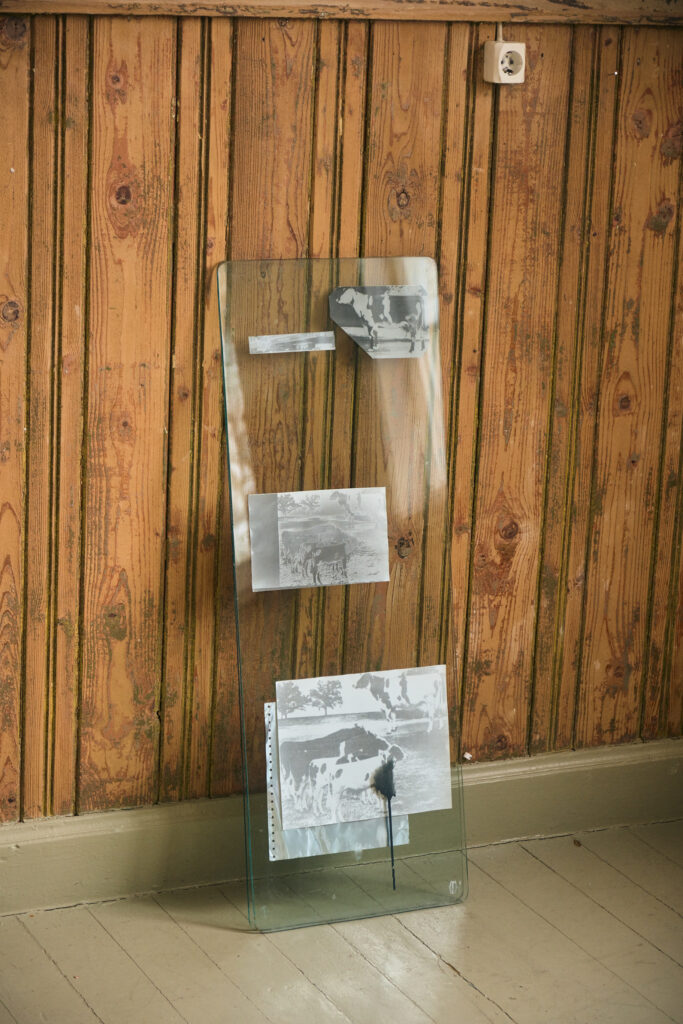
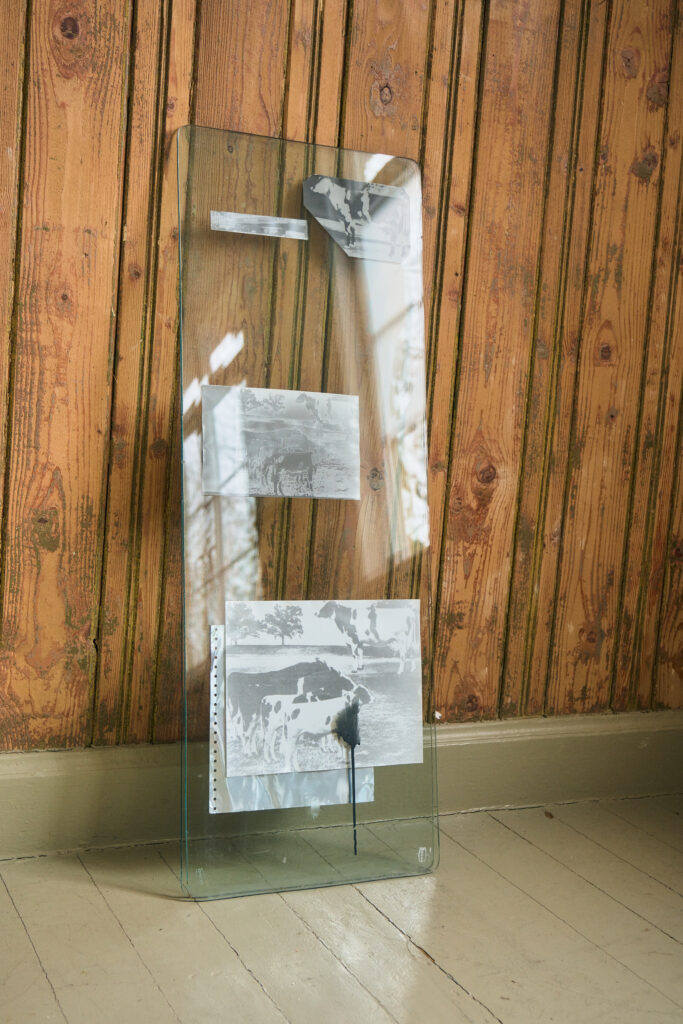
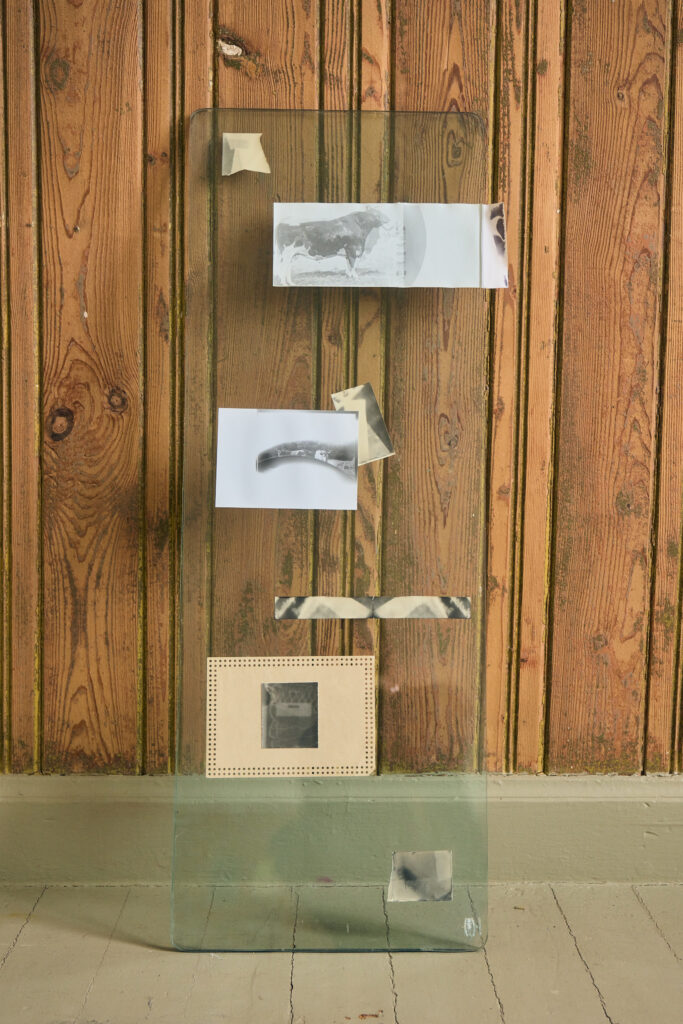
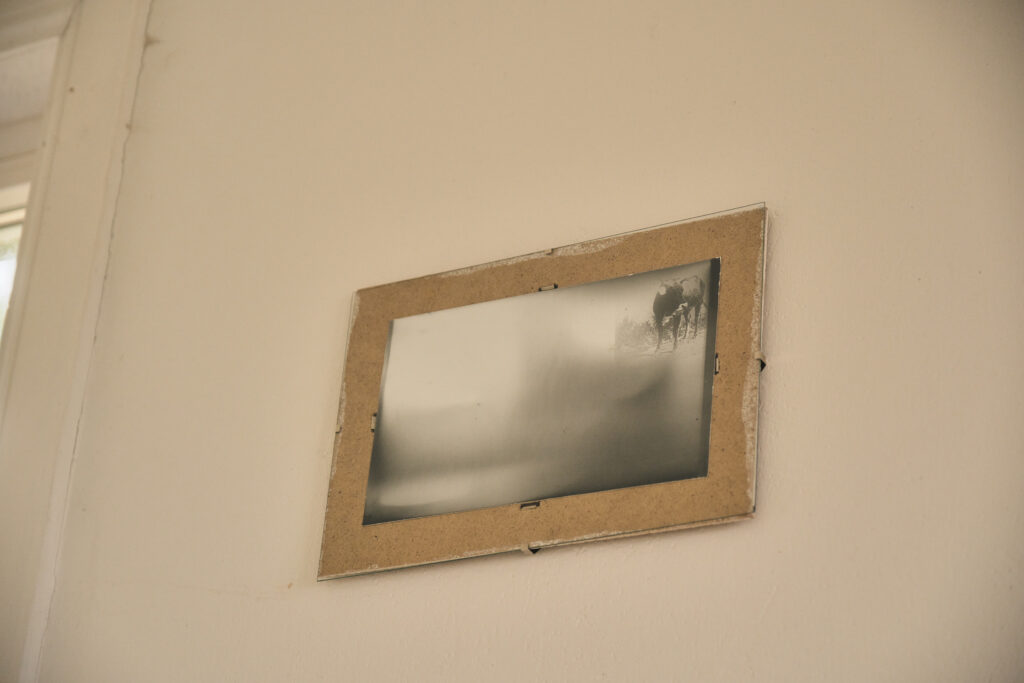
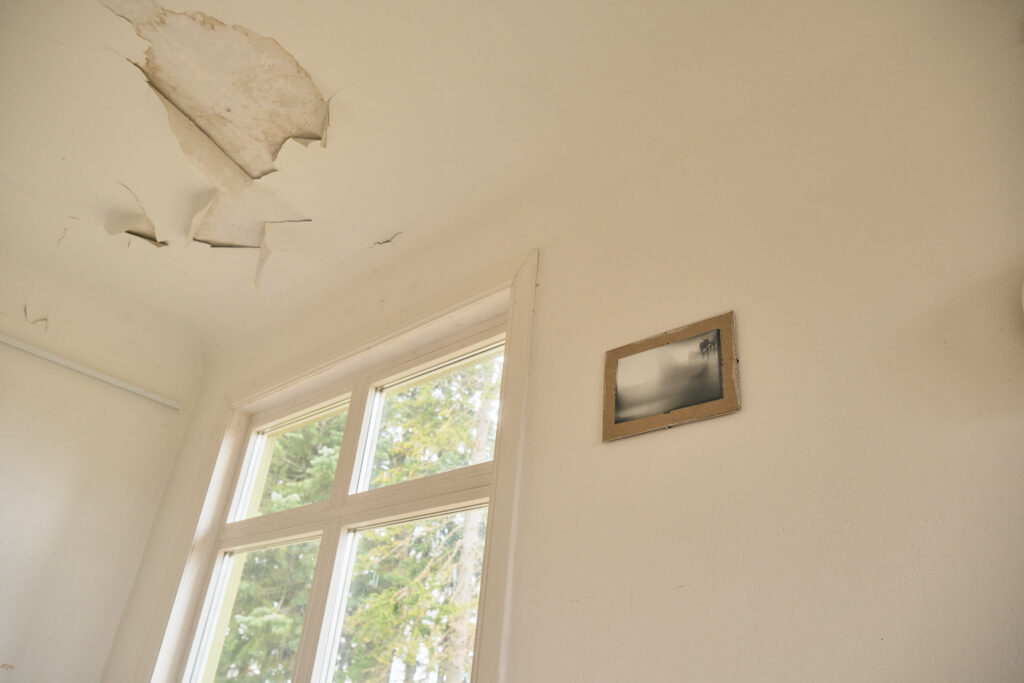
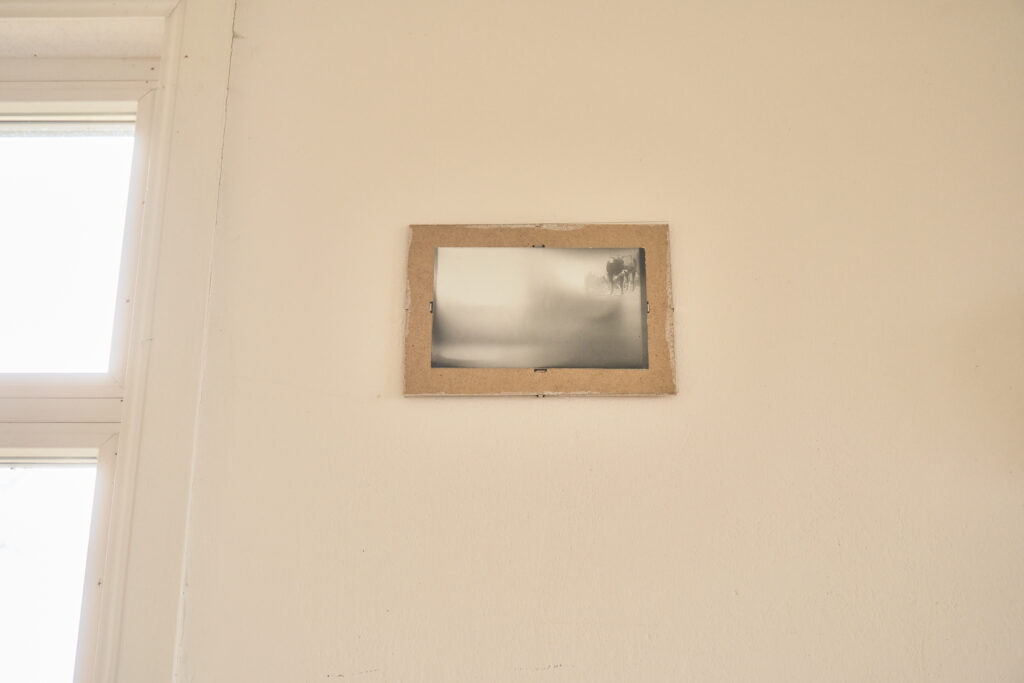
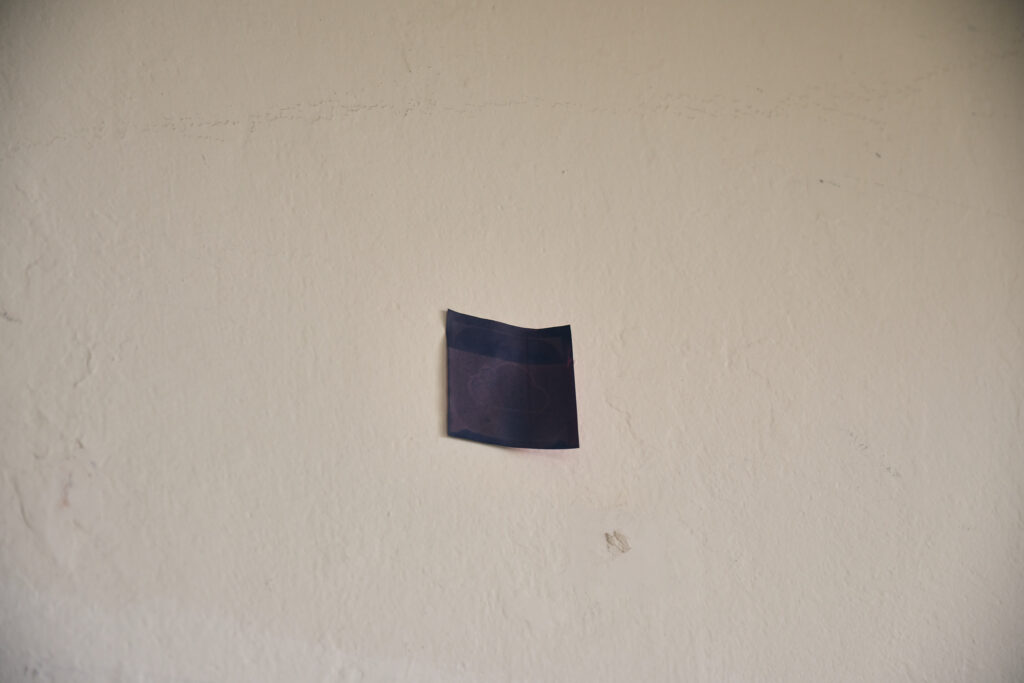
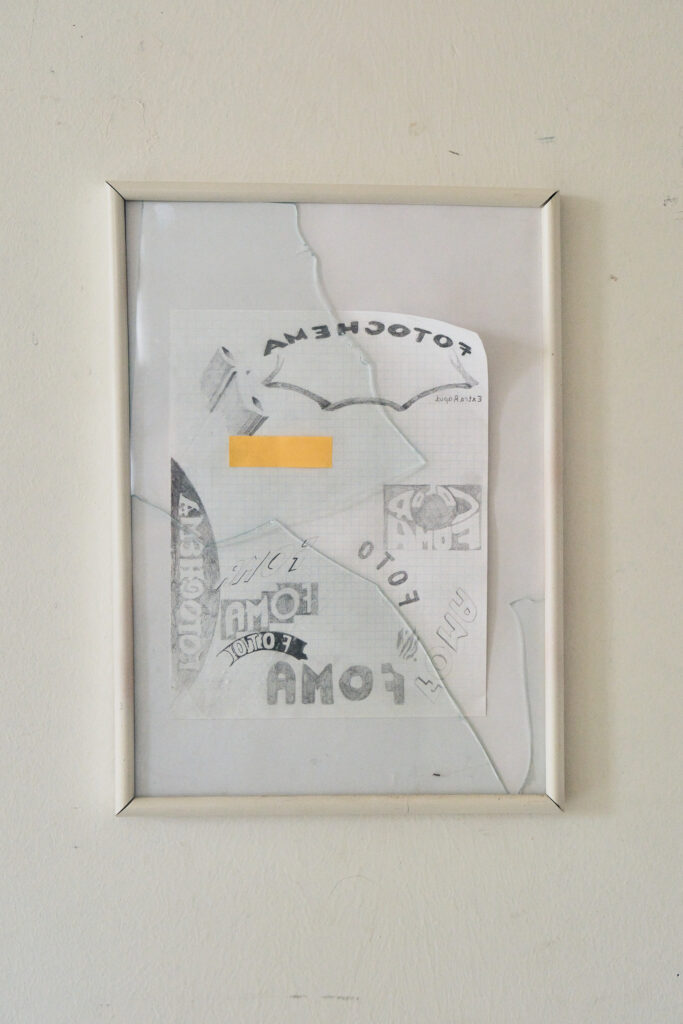
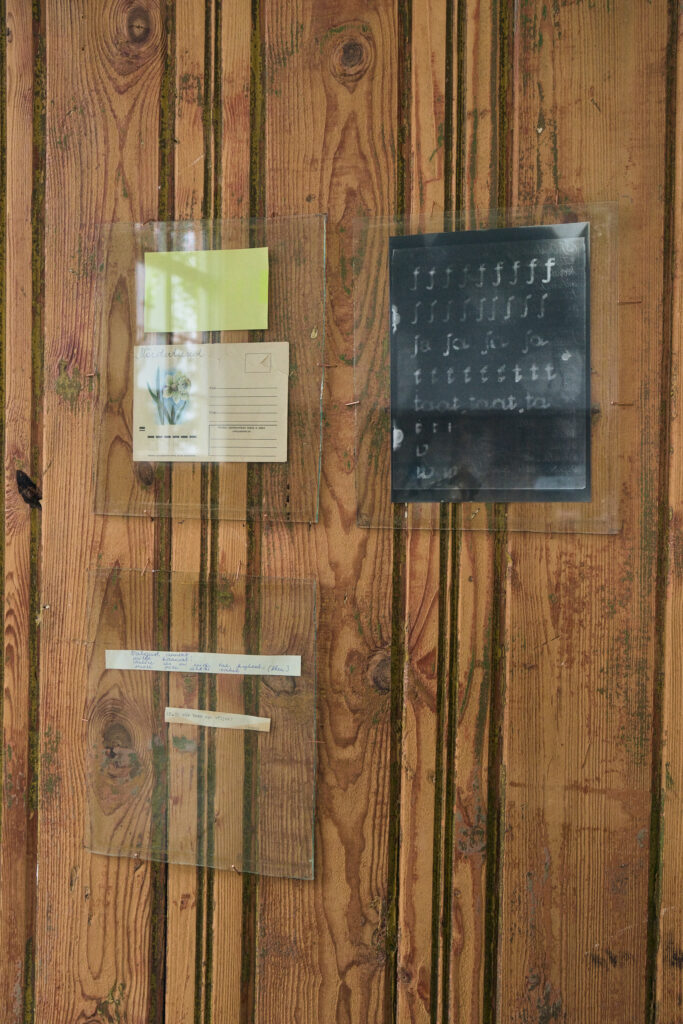
Have your surroundings here influenced your work? It’s hard to ignore where you are when you’re making work. I found a handwritingpractice sheet under a cracked frame in the main room, which immediately caught myattention. I’ve always been fascinated by how the structure of language gets embeddedin you as a child. It shapes how you think and communicate for the rest of your life. I’vebeen experimenting with printing those letters onto Post-it notes and leaving them out inthe sun. Cheap Post-it paper has poor ink quality, so the color gradually bleeds awayover time, which works in a similar way to how photographs fade. I also foundenvelopes full of old folk riddles, some dating back to the 18th or 19th century. Readingthrough them and seeing how completely stumped my friends were by them made methink about how much knowledge and humour is tied to a specific culture and time.Something that was once common sense becomes a mystery from the outside. Andthen there was a soviet agriculture magazine filled with black-and-white photographs ofcows that are oddly surreal.
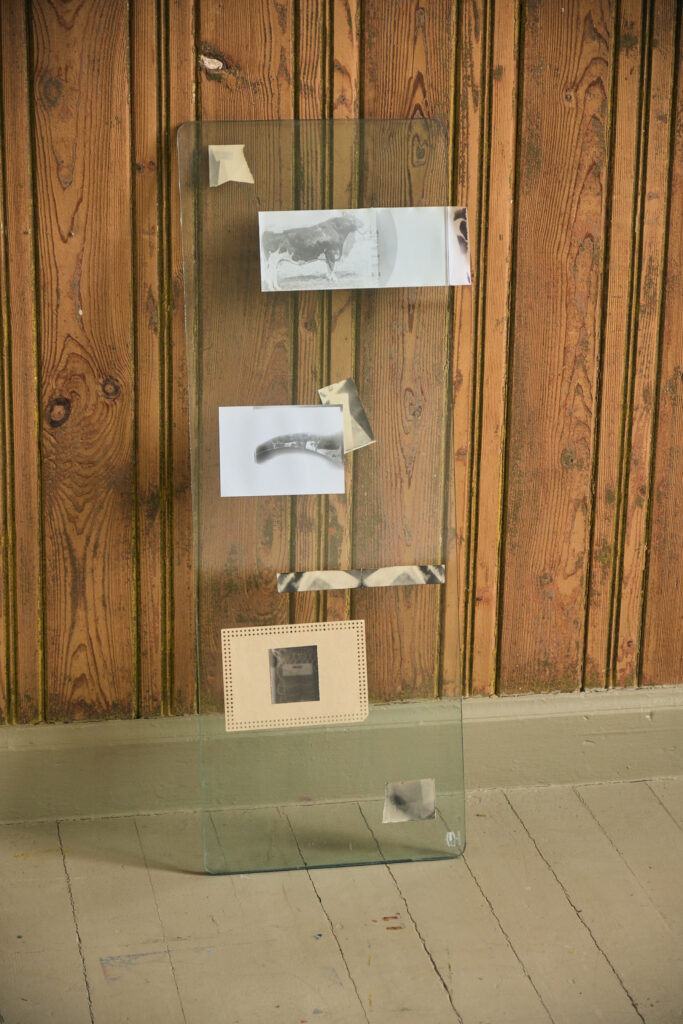
What will you be showing at the end of your residency? A mix of photographs, drawings, and some installation-based work that respondsdirectly to the space itself and the materials I’ve found and worked with since beinghere. It’s been a very research-driven time, and I hope the exhibition reflects that.